 钜亮五金-精密五轴数控加工服务


24H咨询热线:
180-2756-7310












定制服务热线
180-2756-7310

专业服务、快速报价
提供建模、免费改模
质量问题、免费重做
顺丰包邮、可开专票
CNC pin hole processing guide
发表时间: 2025-07-11 00:23:40
作者: 东莞市钜亮五金科技有限公司
浏览:
Master the accuracy: In-depth study of CNC pin hole processing
In a complex world of precise manufacturing, every detail is important. The most challenging and important feature is Pinhole. These small, precise holes and positioned holes are critical for alignment, fixation, rotation and fluid/gas channels in countless mechanical components. For part performance, the tolerances, surface surface and geometric accuracy required for pin holes cannot be achieved. This is CNC (Computer Numerical Control) Processingspecial 5-axis CNC machiningbecomes essential.
This guide explores the nuances of CNC pin machining, highlighting the process, its benefits, material precautions, challenges and why it works with experts like Great Improve your precise manufacturing results.
Understanding pinhole processing: core objectives
Pin hole machining involves creating cylindrical holes designed to accept pins, pins, shafts or used as precise bearing surfaces or channels. Key features define a critical pinhole:
- Accurate diameter: Meet tight dimensional tolerances (usually within microns).
- Precise location: Exact positioning relative to other features (critical for alignment).
- Straightness and roundness: Keep geometrically perfect along the hole length.
- Surface finish: Achieves the desired smoothness (RA value) of fitting, function or seal.
- Verticality: Make sure the hole shaft is perpendicular to the mounting surface (required).
- Depth and consistency: Uniform depth across multiple holes.
This process: How to achieve PIN hole perfection by CNC machining
CNC machining converts digital design (CAD model) into physical holes for significant accuracy:
- Design and Programming: Engineers design parts and generate CNC codes that define the tool paths for drilling, boring, or interpolated holes. Fixed strategies are crucial.
- Material selection and settings: The selected raw materials (metal, plastic, etc.) are securely clamped. Rigidity is essential to prevent vibration-induced errors.
- Pilot Hole Creation (Drilling): A drill bit creates an initial hole, but is usually not suitable for the final pin diameter.
- Semi-fixed (optional - boring): For larger holes or tighter tolerances, boring tools can perfect size, straightforwardness and position before the final operation.
- Completed (rotate or precise drilling):
- Reaming: The multi-faceted reamer passes through the pilot hole for accurate final diameter with excellent surface surface and geometric accuracy. Ideal for standard sizes.
- Precise boredom: Using single point boring heads on CNC mills (especially 5 axes) can be fine-tuned, achieving excellent tolerances, roundness and perpendicularity even for non-standard sizes. Interpolation with end mills is also common in highly accurate CNC applications.
- examine: Critical holes are measured using coordinate measuring machines (CMM), air measurements or plug measurements to verify all specifications.
Functions of CNC: Advantages of pinhole processing
- Unrivaled accuracy and repeatability: The CNC machine provides microscopic level of accuracy, producing the same holes after the section.
- Complex geometric shapes make it easy: Like Greatlight's system, the 5-axis CNC allows holes to be machined at complex angles in a single setup, eliminating the error of re-fixation and ensuring perfect orientation.
- Top surface finish: Advanced tools and precise controls produce very smooth surfaces necessary for sliding, sealing or fatigue resistance.
- Material versatility: CNC effectively fixes holes in different materials - from soft aluminum and brass to hard stainless steel, titanium and high temperature alloys.
- Efficiency and scalability: Once programmed, the CNC machine produces holes quickly and consistently, perfect for prototypes and mass production.
- Reduce human error: Automation minimizes inconsistencies inherent in manual operations. Complex operations such as drilling with deep holes with pecking cycles are easily controlled by CNC.
Material Notes: Match Metals with Missions
Pinhole performance depends to a large extent on the basic material:
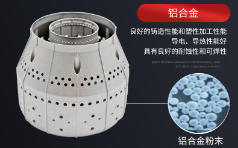
- Aluminum and alloys: Widely used, usually easy to machine, requires sharp tools to avoid smearing. Suitable for many bearing applications.
- Steel (carbon, alloy): Provides strength and wear resistance. Processing requires proper feed/speed, usually coolant. The bearing surface may require rough processing.
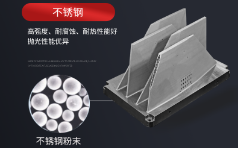
- Stainless steel: Durable and corrosion resistant but poses processing challenges such as working hardening. Requires rigid settings, sharp tools, correct speed/feed and coolant.
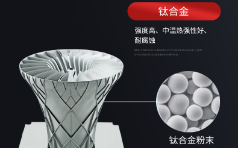
- titanium: High strength to weight ratio, excellent corrosion resistance, but difficult to process. Low speed, high feed, rigid tools and sufficient coolant are required to avoid heating and tool wear.
- Exotics (Inconel, Hastelloy): Extremely tough and heat/corrosion-resistant. Processing requires professional expertise, strong machines and advanced tooling strategies.
Challenge Challenge: Precise Requirements Solutions
Pin machining is not without obstacles:
- Tensional tolerances: Achieving micron-level accuracy always requires high-end machines, calibration tools and thermal stability.
- Tool Deflection: A gadget used for pilot holes or shots is prone to bend or vibrate, resulting in inaccuracy. Rigid settings and optimal tool paths are crucial. The 5-axis machine provides high tool angle control.
- Chip evacuation: Removing the chip from deep or small diameter holes is critical to prevent tool rupture and surface scores. Drill pecking cycles and high pressure coolant are essential.
- Burr Group: The holes, especially in ductile materials, can form burrs that interfere with the insertion of the pins. The strategy must be planned according to the strategy (mechanical, thermal, electrochemical).
- Heat generation: Friction during processing can harden the surface (cold work) or damage the material/tool. Proper coolant application and cutting parameters are crucial.
- Keep roundness and straightforward: Tool jump, machine stiffness and material consistency impact hole geometry. Accurate drilling usually exceeds drilling/rotating to demanding roundness requirements.
Where pin hole accuracy is very important: different applications
Accurate pinholes are the foundation of the entire industry:
- aerospace: Landing gear, turbine components, control connections, hydraulic systems.
- car: Engine block/head, transmission (gear, shaft), suspension system, fuel injection.
- Medical equipment: Surgical instruments, joint replacement, diagnostic equipment (biocompatible materials required).
- Robots and automation: Actuator, precise link, final effector.
- Hydraulics and pneumatics: Valve body, cylinder, pump.
- Mold and death: Core/cavity alignment, jet pin, cooling line.
- electronic: Precision fixtures, fixtures, radiators.
Why collaborate with Greatlime for CNC PIN hole processing?
When failure is not an option, choosing the right manufacturing partner is crucial. Great Stand out as your expert solution:
- Advanced 5-axis CNC features: Our state-of-the-art multi-axis machines enable complex angle holes, deep hole drilling and up to the highest positional accuracy – all in a single setup. This translates into faster turnaround and ensures accuracy.
- Material mastery: We specialize in machining a range of materials – from common alloys to the most challenging appearances like titanium and inconel. We bring expertise to ensure the best cutting strategy for each material.
- Unswerving quality commitment: Use advanced metrology equipment (CMM, optical comparator, surface tester) to perform rigorous process and final inspection to ensure that each pinhole meets your exact specifications.
- The real exact problem solver: Our engineering team has deep knowledge to solve even the most demanding PIN hole requirements, solve complex manufacturing challenges, and provide design of manufacturability (DFM) advice.
- One-stop manufacturing: From the initial concept to the finished part, Greatlight offers include Material Sourcing, Accurate CNC machining, Finishing (Anodization, Coating, Painting), Heat Treatment, Assembly and Final Inspection. Simplify your supply chain.
- Agility and competition: We specialize in research Prototype and quantity production,supply Quick turnaround A time of no harm to quality, all of which are driven by our efficiency and expertise in competitive prices.
Conclusion: Accurate holes, peak performance
CNC pin machining is the cornerstone of high-precision component manufacturing. Its success depends on advanced technology, expertise, meticulous process control and a strong commitment to quality. Understanding processes, challenges and material interactions is key to designing and producing reliable parts.
For mission-critical pin holes that require perfect size and perfect functionality, work with manufacturers Great Provides a decisive advantage. Our combination 5-axis masteryextensive material experience, rigorous quality systems and comprehensive manufacturing solutions allow you to confidently bring high-performance designs to the market.
Don't let the jack accuracy be a weak connection in assembly. Contact Greatlight now for consultation and quote. Customize your precision parts with industry leaders - effective, accurate, and best price.
Frequently Asked Questions on CNC Pin Hole Processing (FAQ)
Q1: What is the minimum pin hole size that can be achieved in CNC machining?
Answer: Although the functions are different, Great Accurate CNC tools often produce reliable holes 0.3mm (0.012")diametersometimes depends on material depth, tolerance and pore depth ratio. This limitation is further promoted by the use of micro-drilling of specialized equipment.
Q2: What is the difference between drilling, rotating and boring pinholes?
one: drilling Create the initial thick hole. Rotate Use a variety of tools to complete the precise dimensions of the pre-drill bits and improve finish/roundness (best for standard sizes). Boring Use single point tools (adjustable) on a mill or lathe for very high dimensional accuracy, straightness and perpendicularity, especially for non-standard sizes or critical geometry. The 5-axis CNC performs excellently in precision drilling.
Q3: What tolerances can I have for the actual expectations of CNC machining pin holes?
Answer: Standard processing can fix the diameter at ±0.025mm (0.001") or IT7-IT8 grade tolerance. For precise pin holes, use dedicated rotation or boring process, Great More stringent tolerances can usually be achieved, usually the following ±0.005mm (0.0002")depending on the material, size and depth of the hole.
Q4: How to ensure the accuracy of the position of the pin hole?
A: Highly accurate CNC machines (such as our 5-axis system) provide excellent positional accuracy with accurate feedback systems. Position accuracy is Process all key functions to reference the same benchmark in a single setup possible. The CAD model was verified by the coordinate measuring machine (CMMS).
Q5: Why is 5-axis machining particularly beneficial for pin holes?
A: 5-axis machining allows cutting tools to approach the workpiece from almost any angle. This is for:
- Drill/reach holes at complex angles or deep within the profile without special fixtures.
- Maintain optimal cutting angle and tool stiffness.
- Achieve perfect perpendicularity relative to complex surfaces.
- Complete multiple complex holes/fixes A settingeliminates setting errors and saves time.
Q6: Can Greglight Machine be a small pinhole with deep and diameter?
A: Yes, Deep hole drilling It is the core capability. We adopt professional technology Drill pecking cycle (retract to break and clear the chip) and High pressure pass through coolant Effectively create deep, small diameter holes while maintaining accuracy and preventing tool breakage.
Q7: How do you prevent burrs in pinholes?
Answer: Burr minimization starts with optimization Tool clarity, feed rate and cutting parameters During processing. We also hired verified Secondary burr technology Customized to the requirements of the material and holes, including tumbling, hand burrs, hot hair or electrochemical burrs (ECM).
Question 8: Will Greatlight provide completion services for machining pin holes?
Answer: Absolutely! As One-stop manufacturerWe offer a variety of completion options including Anode (aluminum), electroplating (nickel, chromium, zinc), passivation (stainless steel), painting and heat treatment. This ensures that the final part, including its pin holes, meets all functional and aesthetic requirements.

点击右上角
分享给朋友吧







 长按图片保存/分享
0