 钜亮五金-精密五轴数控加工服务


24H咨询热线:
180-2756-7310












定制服务热线
180-2756-7310

专业服务、快速报价
提供建模、免费改模
质量问题、免费重做
顺丰包邮、可开专票
CNC processing of electronic cigarettes: precision parts
发表时间: 2025-07-11 01:40:48
作者: 东莞市钜亮五金科技有限公司
浏览:
Your vape's invisible heart: Accurate CNC machining shape E-CIG excellence
In the fast-paced e-cigarette world, performance is more than just an effective e-liquid or glitz display. It fundamentally depends on the quality and accuracy of components deep in the equipment - the atomizer housing, airflow control ring, shooting mechanism, drip tip and key structural elements. This is where computer numerical control (CNC) processing is especially advanced Five-axis CNC machiningtransition from the manufacturing process to an essential art form, directly affecting the smoke experience. Forget mass-produced castings or cheap stamping; the harsh environment of E-CIG components is nothing more than surgical accuracy.
Harsh environment: Why "Good enough" no
E-CIG components face unique challenges:
- Extreme calories: The coil produces strong heat and must be effectively dissipated to prevent damage and maintain consistent vapor generation and flavor. Materials and precise thermal paths are crucial.
- Complex liquids and chemistry: Electronic liquids and residues require corrosion-resistant and leaching materials – think medical grade stainless steel (SS316L) or specific aluminum alloys – processed to seamlessly perfect to eliminate gaps where contaminants may persist.
- Ergonomic and aesthetic requirements: Vapers require stylish designs, satisfying tactile feedback (buttons), smooth airflow adjustments, and a visually appealing finish. This requires complex geometry and perfect surface quality.
- Mechanical Durability: Withstand the threads of constant tanks, the buttons last thousands of buttons and the connectors that maintain the demand for safe electrical contacts with excellent dimensional accuracy and material integrity.
- Tensional tolerances: The airflow holes measured in the fraction of mm significantly affect the attraction resistance (DTL/MTL preference). Leaked atomizers or poorly seated coils are often traced back to inaccurate manufacturing.
Input five-axis CNC machining: an accurate solution
Traditional three-axis CNC machining (moving in X, Y, Z) has limitations when dealing with complex E-cig parts, often requiring multiple settings and impairing geometric accuracy. Five-axis CNC machining Go beyond these limitations:
- Unparalleled geometric freedom: Two additional axes of rotation (A and B) allow the cutting tool to approach the workpiece from almost any angle in A Single Settings. This is revolutionary:
- Complex internal channels to optimize airflow and electronic liquid chips.
- Complex contoured exterior surfaces and ergonomic grips/grooves.
- Perfect straight or non-orthogonal drilling (side holes, tilted ports).
- Detailed engraving and intricate logo/design.
- Highest accuracy and consistency: Reduced settings minimize cumulative error. Five-axis machines can be reused tolerated below 20 microns - for perfectly mating threads (510 connections!), seal seals and smooth friction fit are essential.
- Upper surface surface: Strategic tool routing angles and consistent chip evacuation result in a very smooth surface away from the machine. This minimizes the abrasive secondary finish (which can change dimensions) and reduces the need for potential contamination sites.
- Material versatility: From lightweight thermally conductive aluminum alloys (6061, 7075) to strong, corrosion-resistant stainless steels (303, 304, 316l), brass, copper and high-quality plastics (such as PEEK), like PEEK, five-axis, five-axis, and five-axis to precisely handle them.
- Efficiency and scalability: While the setup is more complex, complex parts complete faster without repositioning. Once programmed, modern five-axis machines can be unexpectedly produced.
Five-axis for specific electronic cigarette components
- Atomizer base/chimney: Complex wicking channels for precise threads of coil seats and tank accessories, drilling holes at specific angles for optimized airflow paths for turbulence control.
- Airflow control ring (AFC): Complex, variable-sized ports drilled around curves requiring smooth rotation and consistent airflow profile. Tolerance is crucial here.
- mod body/button: Ergonomic profile, seamless seams, complex switching cutouts and perfect holes for electronic components integration. Thermal fins are usually maximized by complex milling.
- 510/Euro connector: Accurate internal and external threads ensure a robust mechanical and electrical connection between the battery model and the atomizer - one of the most prone areas on cheap equipment.
- Drip irrigation: Complex internal holes (for the required resistance), unique cosmetic appearance, comfortable cigarette holder with delicate profile.
Why material selection is as important as processing
Precision machining unleashes the potential of materials:
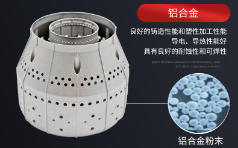
- Aluminum alloy (6061-T6, 7075): Lightweight, excellent thermal conductivity (quickly reduces heat), easily anodized for color/durability. Corrosion-resistant anodization is required to extend the life of certain electronic liquids.
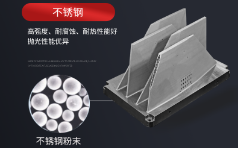
- Stainless steel (303, 304, 316l): Super corrosion resistance, high strength, natural biocompatible, maintains a perfect finish (polished, brushed, beaded bundle). Heavier than aluminum, but durable. For high-end direct contact parts, 316L is preferred.
- Brass and copper: Excellent thermal conductivity (for radiator/modbody), provides a unique aesthetic (PATINA), but requires plating/care to prevent oxidation and potential metallic smell/toxicity issues if not done correctly. Direct contact with parts is less common.
Post-processing: Endpoint
The original machining marks are usually literally polished. Professional one-stop post-processing ensures that parts are not only accurate, but also perfect:
- Deburring: Remove the microscopic sharp edges that are essential for safety and feeling.
- Surface finish: Vibration tumbling, media blasting (beads, sand), hand polished to achieve the desired texture: mirror, satin, matte.
- Anodized (aluminum): The electrochemical process produces a corrosion-resistant porous oxide layer that accepts rich, durable dyes (colors) and improves wear resistance.
- plating: Use thin layers such as nickel (corrosion resistance, welding), gold (conductivity, corrosion, aesthetics) or chromium (hardness, hardness) and other thin layers.
- Laser engraving: Permanent, precise logo, mark or design.
GRESTLIGHT: Your partner’s precise evaporation perfectly
Navigating the complexity of advanced e-cigarette parts manufacturing requires more than just capability. It requires experience and a commitment to excellence. Great Not just another machinery workshop. We use the cutting edge Five-axis CNC machining technology and deep manufacturing expertise tailored to the unique needs of the Vaping industry.
What sets us apart?
- Advanced five-axis machinery: Precision tilts to incredible tolerances every time.
- Materials Science Expertise: Instruct customers to select the best material choice (aluminum, SS, brass, copper) for performance, aesthetics and lifespan.
- End-to-end solution: From sophisticated CAD/CAM programming to careful machining and comprehensive decor (anodized, gilded, polished, engraved), we all handle it under one roof.
- The focus of the vape industry: We understand airflow dynamics, thermal management, and the key tolerances that define advanced e-cigarette performance. We have made key elements intricately: AFC ring, Mod fence, connector, atomizer base.
- Production prototype: Whether you innovate with a unique design or scale, we offer cost-effective solutions with fast turnaround times.
- Uncompromising quality: Strict inspection ensures that each section meets the highest standards of fit, function and finish.
Don't let manufacturing restrictions hurt your vision for the final evaporation device. Bring us your most challenging design - a complex atomizer chamber that requires perfect fan flow, requires both a solid and elegant mod body, and a complex airflow system with zero space of zero.
Experience the huge difference: Where to meet smoke innovations in advanced five-axis CNCs. Contact us today to discuss your custom vaping component needs and get a competitive offer.
in conclusion
The evolution of high-performance electronic cigarettes is essentially related to advances in precision manufacturing. CNC processing, especially Five-axis CNC machininghas become the backbone of quality, allowing for the creation of complex, durable and aesthetic components that can directly improve the user experience. From ensuring leak-proof seals and optimal airflow control to providing durable wires and effective heat dissipation, the accuracy this technology provides is not a luxury – it is the necessity of reliability, safety and satisfaction. With innovation in hardware, mod design and atomizer performance, working with manufacturers with deep-seated levels Five-axis expertisecomprehensive finishing ability and a real understanding of smoke dynamics - Great - It will be the most important for brands that aim to lead the market. Accuracy is not only processed; it has been mastered.
Frequently Asked Questions about CNC Processing of Electronic Cigarettes
Q1: Why choose CNC machining instead of cheaper methods, such as casting or MIM for e-cigarette parts?
A1: While in cheaper quantities, casting and metal injection molding (MIM) often struggle with quality details, tight tolerances, internal channels, and the original surface surface required for advanced E-cig components. They can introduce porosity, flicker and have limitations in geometric complexity and material selection (especially harder alloys). CNC machining, especially five-axis, ensures higher accuracy, superior strength, better surface integrity, and greater design flexibility for high performance or low to medium volume generation.
Question 2: Is the five-axis CNC really worth the extra smoke parts cost?
A2: Absolutely, especially for key components. Values from:
- Leak/failure rate reduction: Perfectly processed wire and seal.
- Enhanced performance: Optimized, precise airflow paths directly affect vapor quality.
- Superior durability: Higher material integrity and precise fit.
- Complex design feasibility: 3-axis cannot achieve innovative geometry.
- Overall cost-effectiveness: Fewer settings reduce labor and potential error costs for complex parts. This investment brings benefits in product quality and user satisfaction.
Q3: Which materials are the safest and most recommended for electronic cigarette components?
A3: For parts in contact with electronic liquids or vapors:
- Stainless Steel 316L: Highly recommended. Excellent corrosion resistance, biocompatible, easy to clean. Ideal for tanks, chimneys, coil housings.
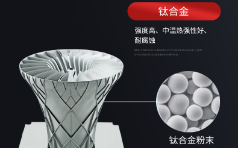
- Medical grade titanium: Excellent biocompatibility and corrosion resistance, lightweight, but expensive, and harder to process.
- Appropriate anodized aluminum (AL 6061, 7075): A protective stable oxide layer is produced. Maximum shielding is used with Type III (hard anodized). Avoid using exposed aluminum for interior.
- Avoid brass/copper in direct liquid contact unless properly laid (e.g., gold, if ix) to prevent oxidation and undesirable metallic odor. Always ensure that the plated plate is biocompatible and robust. Glass and certain premium plastics (PEEK, ULTEM) are also ideal for specific parts.
Question 4: How to improve safety by precise CNC machining?
A4: Accurate manufacturing minimizes risk:
- Leak prevention: Perfectly machined seals and threads eliminate electronic liquid leakage on battery/mod electronics.
- Material integrity: Minimizing contaminants can hide or reproduce bacteria to minimize microporosity.
- Appropriate installation: Make sure to prevent safe electrical connections to the shorts (510 pins) and maintain consistent coil seats to prevent dry burning.
- Thermal management: Precise thermal fins and routes prevent dangerous overheating.
- consistency: Ensure that each section meets the tolerance that is critical to safety every time.
Q5: Which surface surfaces are most suitable for different vape parts?
A5:
- Internal wicking/air path: Smooth roll or light polish to minimize residue buildup and maximize flow. Avoid rough surfaces.
- External mod/atomizer body: Popular options include fine bead blasting (matte, tactile), brush finish (satin), mirror polishing (high gloss), anodizing (durable color/variety).
- Drip irrigation: Highly polished feel, with possible textured (knurled) grip. Consider the taste.
- Thread: Smooth machining or gently rolling to smoothly engage. Avoid excessive abandonment, which will loosen the tolerances.
Q6: Can Greatlight handle prototypes and production runs?
A6: Yes, Great Both are good at it. We use our Five-axis CNC capacity Effectively used for rapid prototyping, allowing you to quickly verify your design. For production, we utilize optimized tool paths and processes to effectively scale to maintain speed and cost-effectiveness while ensuring the same uncompromising quality and accuracy that E-CIG components are essential. We offer flexible solutions tailored to your specific volume requirements.
Q7: How important is prototyping before complete production?
A7: Criticism. Prototyping allows you to:
- Test form, fit (especially thread/seal) and function.
- Verify airflow performance and thermal management.
- Verify aesthetics and ergonomics.
- Identify any unforeseen manufacturing challenges.
- Improve the design before committing to expensive tools or large material orders. This iterative process saves a lot of time and costs and ensures that the final product works perfectly.
Question 8: Can I use your machining to rebuild coil RDA or other complex atomizer?
A8: Absolute. Five-axis CNC machining Ideal for complex decks, rear holes, juice wells and airflow systems found in reconstructible drip atomizers (RDAS), reconstructible tank atomizers (RTAs), and reconstructible atomizer atomizer tanks (RDAS) (RDAS). We can precisely install the precise coils, optimal wicking and complex airflow control required functions for the audiophile. We can make the advanced features required for excellent coil installation, ideal wicking channels and intricate airflow patterns Vapers Clave.

点击右上角
分享给朋友吧







 长按图片保存/分享
0

