 钜亮五金-精密五轴数控加工服务


24H咨询热线:
180-2756-7310












定制服务热线
180-2756-7310

专业服务、快速报价
提供建模、免费改模
质量问题、免费重做
顺丰包邮、可开专票
Key points of CNC case design
发表时间: 2025-07-11 14:19:44
作者: 东莞市钜亮五金科技有限公司
浏览:
Key points of CNC case design: engineering excellence in precision manufacturing
In today's demanding technological landscape, shells and cases (whether electronics, robotics, medical devices, or aerospace components) can provide more than just protection. They demand precision, reliability and seamless integration. As a professional five-axis CNC machining manufacturer, Greatlight learned that the journey to a perfect functional shell started long before the metal met the spindle. It begins with meticulous design. Let's dig into the key design points required for successful CNC case manufacturing.
Why CNC case design needs special attention
Unlike simple components, cases are complex components that are often used as structural frameworks, thermal management systems, RF shielding and user interfaces. A well-designed case may lead to:
- Conference Nightmare: Inappropriate parts.
- Function failed: Interfere with internal components, poor heat dissipation or insufficient shielding.
- Spiral cost: Excessive processing time, waste of materials or require a lot of secondary operations.
- Damaged durability: Weaknesses are prone to fracture or damage.
Utilizing our expertise and advanced five-axis technology, Greatlight emphasizes smart design from the outset to help you avoid these pitfalls.
Things to note when designing basic CNC cases:
Material Selection Mastery:
- Functions first: Match the material with the role of the case. Is the weight critical (aluminum alloy, etc. 6061-T6)? Is extreme strength required (stainless steel 316L, titanium)? Does it require non-corruption performance or EMI shielding? Discuss thermal characteristics and environmental exposure with your CNC partners.
- Processability is important: Consider the effective efficiency of choosing the selected material (aluminum, steel, brass, copper, plastic (such as Peek or uletem machines). Highly abrasive or difficult material impact tool wear, cycle time and cost. Greatlight can effectively handle various metals and exotic alloys.
Design Manufacturability (DFM):
- Consistency of wall thickness: Avoid sharp transitions. Thin walls (<1mm of metal) risk distortion or tool deflection; excessively thick wall waste materials and extended processing.
- Internal radius and corners: CNC tools have limited diameters. Specifies that the internal radius is slightly larger than the radius of the milling cutter to be used. Sharp inner corners are impossible on the body. Always design fillets.
- Hole depth and diameter ratio: Deep, small diameter holes challenge chip evacuation and increase the risk of tool rupture. The best results, especially in challenging materials, have a target depth to diameter ratio of less than 10:1.
- Feature Accessibility: Consider how the cutter reaches the surface. Functions that require deep cavity or complex undercuts benefit greatly from multi-axis machining. Greatlight's five-axis capability allows us to dynamically rotate parts, reducing settings and accessing complex geometric shapes that are impossible on standard 3-axis computers.
Accuracy and tolerance:
- Realistic call: Definition based on tolerance The only one About functional requirements. Due to machining, professional tools and complex inspections, overly tight tolerances greatly increase costs. ISQ IT7 or IT8 ratings are typical of the exact case; specify tighter tolerances only where they are critical to fitting, aligning, or sealing surfaces. Clearly identify these key areas on the drawings.
- Geometric Dimensions and Tolerances (GD&T): Use GD&T where possible for more control and functional specifications of form, orientation and position, rather than just +/- dimensions.
Surface finish requirements:
- Specify on function: Determine the finish according to requirements: cosmetic appearance, wear resistance, lubricity retention, electrical contact or paint/powder coating adhesion. Common CNC finishes include: orthogonal, bead blasting, anodizing (hard jackets for wear, type II for corrosion/cosmetics), powder coating, passivation (stainless steel), coating.
- Cosmetics and Key: Highly polished finishes or professional coatings add to the cost. definition "Cosmetic surface" Clear on your drawings.
Rally and Integrate Intelligence:
- Decoration and interference: Model the entire assembly (shell, cover, internal assembly, fastener, seal/wash). Explain thermal expansion, assembly stacking tolerances and head clearance of fasteners.
- Fixed strategy: Design features (boss, alignment pins, pins, snapshots, keyholes) are explicitly targeted to the selected connection method (screws, bolts, pressure fixation, adhesive, welding). Ensure sufficient tool clearance for assembly.
- Sealing surface: If waterproof or waterproof, design sufficient continuous flat surfaces or grooves for sealing/O-rings. Specifies the surface flatness tolerance of the groove.
- Take advantage of five axes:
- Reduced settings: Complex situations usually require processing from multiple angles. Five-axis machining greatly reduces the setup (usually only one or two), thereby improving overall accuracy and reducing lead time. This is Greatlime's core competitive advantage.
- Simplified complex geometry: Allowing controlled tool access from any direction can achieve complex profiles, organic shapes, deep cavity and comprehensive functions such as dovetails or curved cooling channels that would otherwise not be feasible.
- Improved finish: Continuous five-axis motion allows uninterrupted tool paths on complex curves, resulting in high-quality surface quality with fewer unique machining marks.
How Greatlight improves your CNC case manufacturing:
At Greatlight, we transform your CNC case design into accurate reality:
- Advanced 5-axis functions: Our state-of-the-art equipment can effectively and accurately handle the most complex overall situation structures.
- Comprehensive material expertise: We provide guidance and capabilities for a wide range of metals and alloys to ensure optimal performance.
- DFM Collaboration: We work with designers early to optimize the manufacturing and cost of parts, leveraging our in-depth machining knowledge.
- A true one-stop service: In addition to complex five-axis milling, we also offer wire EDM, rotation and complete post-treatment and finishing services (heat treatment, surface treatment, silk screening, assembly) - ensuring finished parts arrive at your door.
- Quick customization: Need to quickly customize the shell? Our efficient process and capacity enables rapid production cycles to achieve precise quality parts.
- Competitive accuracy: We provide excellent accuracy and repeatability while providing the best value.
Conclusion: Accuracy born from collaboration and capability
Designing CNC machining cases is a complex dance between functional requirements, physical constraints and manufacturing reality. Ignoring productiveness in any aspect of the design can lead to avoidable delays, cost overruns, or performance compromises. With a focus on smart material selection, realistic tolerance, design for multi-axis accessibility, and powerful assembly capabilities, you can lay the foundation for a successful production run.
Working with experienced five-axis CNC manufacturers like Greatlight provides the basic features and expertise in driving this complexity. We combine cutting-edge technology with deep manufacturing knowledge to guide your designs and effectively create precise cases that meet the highest standards of quality, performance and aesthetics. Don't let the case design bottleneck stagnate your innovation - leverage advanced CNC machining to build a shell designed for excellence.
FAQs for CNC Case Design and Manufacturing
Q1: Why choose CNC machining of metal shells instead of sheet metal manufacturing or casting?
A1: CNC machining provides superior accuracy, tighter tolerances, the ability to create complex internal features and billet material solid structures as well as excellent surface effects, especially for complex 3D geometry or critical seal applications. While sheet metal is ideal for thin-walled shells, CNCs perform well in monolithic structures with high precision, complex or high strength.
Question 2: What is the biggest cost driver in CNC case processing?
A2: Key factors include raw material cost, geometric complexity (increased processing time), strict tolerances (requiring slower/higher passes), number/length/number/length of deep cavity or thin walls, total material removal and required surface finish/after-takeover process. Designs that take into account manufacturability can optimize costs.
Question 3: How can five-axis machining specifically improve the possibility of case design?
A3: Five-axis unlock creation capability:
- Complex organic shapes and profiles without repositioning.
- Deep cavity or groove with best tool access.
- Complex features on multiple faces in a setting.
- Smoother, uninterrupted finishes on complex curves.
- Combination features (such as curved channels or dovetails) that require simultaneous machining.
Q4: Which materials are most suitable for CNC processing cases?
A4: Common choices are:
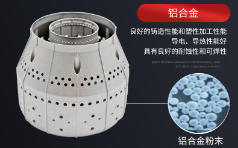
- Aluminum (6061-T6, 7075): Lightweight, good strength and weight, excellent processability, corrosion resistance (especially anodizing). Most popular.
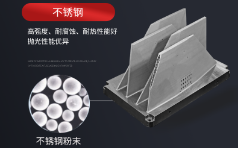
- Stainless Steel (304, 316L): High strength, excellent corrosion resistance, suitable for heavy or sterile applications. More challenging/expensive machines.
- brass: Good corrosion resistance, excellent conductivity (shielding), decorative.
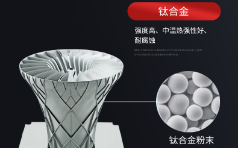
- titanium: Special strength to weight ratio, biocompatibility, corrosion resistance. Very expensive and difficult to process. Greatlight handles all of these materials efficiently.
Question 5: How can tolerances be reasonably maintained in CNC cases?
A5: Highly dependent on size and material, but depending on typical situations:
- Dimensions: ±0.025mm to ±0.1mm (±0.001" To ±0.004"For critical functions, it is usually the achieved accuracy that can be achieved.
- Geometry (flat, position): IT7 level (finite) tolerances can usually be achieved through careful machining and fixtures. Discuss specific needs with your CNC partner early; do not exceed the specification.
Question 6: Can Greatlight provide finishing and assembly services for my CNC cases?
A6: Absolute. As part of our truly one-stop service, we offer a comprehensive post-processing including:
- Mechanical: The beads burst, polish, roll.
- Chemical: Anodized (type II/III), passivation, chromate conversion coating (Alodine).
- Paints and coatings: Powder coating, wet spray paint.
- project: Heat treatment, laser marking/engraving, silk screening.
- assembly: Press fit, bond, fastener installation, seal (gasket installation).
We make sure your case is fully completed and ready to use.
Question 7: How to optimize my case design with optimal cost and manufacturing?
A7: Participate soon! Early DFM feedback was priceless. Key principles include standardizing functionality where possible, avoiding the use of spacious radius/rounded corners to avoid unnecessary deep bags/thin walls, specifying wise tolerances only in critical cases, minimizing complex inadequate places (or explicitly utilizing 5 axes on them), and choosing ready-to-use material stocks. Our engineers are ready to work together.
Unlock the potential of precision case design. Customize Precision CNC machining parts now with Greatlime - Ask for a quote and experience the five-axis advantage at the best price.

点击右上角
分享给朋友吧







 长按图片保存/分享
0