 钜亮五金-精密五轴数控加工服务


24H咨询热线:
180-2756-7310
















定制服务热线
180-2756-7310

专业服务、快速报价
提供建模、免费改模
质量问题、免费重做
顺丰包邮、可开专票
Mold CNC machining guide: basic steps
发表时间: 2025-07-12 15:37:48
作者: 东莞市钜亮五金科技有限公司
浏览:
Your comprehensive guide to CNC mold machining: Accuracy from design to completion
Durable, complex and accurate molds are the unsung heroes of modern manufacturing, responsible for everything from complex automotive components to plastic bottles in hand. Accuracy to this level is consistently dependent on the mold manufacturing process. Although there are many ways CNC (Computer Numerical Control) Processing as the Cornerstone Technology Used to produce high-quality mold production. Let's dig into the basic steps involved in CNC mold machining and why it is usually a higher choice.
Why CNC processing ruled the highest mold making
Compared with traditional manual methods, CNC machining provides unparalleled advantages for mold manufacturing:
- Excellent accuracy and repeatability: CNC machines execute programming instructions with micron-scale accuracy, ensuring that each mold cavity and core is the same and is critical for mass production.
- Complex geometric processing: Advanced multi-axis (especially 3-axis, 4-axis and critical 5 axes) CNC machines can process complex contours, undercuts and complex details on manual, impossible or incredibly time-consuming details.
- Top surface finish: Modern CNC technology and tool paths enable excellent finishes directly on the machine, greatly reducing manual polishing time.
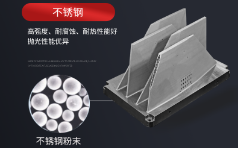
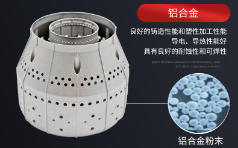
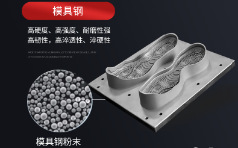
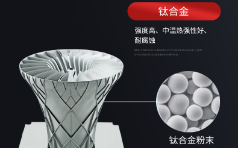
- Material versatility: CNC can easily handle the tough materials needed for molds - hardened tool steel, stainless steel, aluminum alloy, copper alloy, and even engineering plastics for prototypes.
- Efficiency and speed: Once programmed and set up, CNC machining will run continuously with minimal operator intervention, with a significantly reduced lead time compared to manual methods.
- Reduce errors and scrap: Digital design data directly drives machine tools, minimizing human transcription errors and material waste.
Basic steps for CNC mold processing (from CAD to finishing the mold)
Creating precise molds through CNC is a meticulous multi-stage process:
Design and Engineering (CAD/CAM):
- The concept of CAD: The process begins with the final detailed 3D CAD model part and what is needed Mold. Key factors include draft angle, isolation lines, gate system, cooling channels and pop-up mechanism.
- Mold flow analysis (optional but critical): Advanced simulation predicts how molten materials (plastics, metals) will fill mold cavity, identifying potential problems such as air traps, welding lines, or uneven cooling forward Steel is cut. This saves a lot of time and cost.
- Cam Programming: Using specialized CAM (Computer Aided Manufacturing) software, the mechanic creates step-by-step instructions (G-code) for CNC computers. This involves:
- Define tool paths (rough, finishing, drilling, engraving).
- Select the appropriate cutting tool.
- Set accurate cutting speed, feed rate and cutting depth.
- The machining process is actually simulated to prevent collisions and ensure accuracy.
Material selection and preparation:
- Depending on the final part of the material, the expected production volume, the required finish and budget, it is crucial to choose the right mold material (e.g. P20, H13, S7, aluminum, copper).
- Before detailed CNC work begins, the selected blocks of material (usually pre-fixed or annealed) are square, faced, and it is possible to pretreat to approximately size on a conventional mill.
Precision CNC machining (core process):
- Setting and Fixing: Use specialized lamps, fixtures or custom boards to clamp the raw material blocks firmly onto the CNC machine tool. Accurate alignment is crucial.
- roughing: Powerful cutting using larger, robust end mills quickly removes large amounts of material ("Jump out") To get close to the final profile, leave a small amount of stock (~0.5-1.0mm).
- Semi-fixed: Intermediate steps to further refine the shape and remove more remaining inventory, prepare the surface for finishing ("Rest and processing"). Usually, emphasis is placed on maintaining consistent tool load and thermal stability.
- finishing: The most critical stage. Use smaller, more refined ball nose end mills, mold cavity and core to achieve its final dimensions, complex details and finishes. High spindle speed, accurate tool paths (e.g. Trochoidal milling), and possible 5-axis simultaneous machining It is crucial for complex curves and tight tolerances.
- Detail processing: Using drilling, milling and EDM (electrical emission machining – usually complementary processes), if very deep cavity or sharp inner corners are needed, catapult pin holes, water lines (cooling channels), runner systems, and engraving logos or information (usually complementary processes) that are not accessible to the milling tool.
Quality control and inspection:
- Continuous verification is performed using direct in-program detection on the CNC computer.
- The finished mold assembly is compared with the original CAD model using a coordinate measuring machine (CMM), optical comparator, laser scanner and surface profiler. Strictly check critical dimensions, tolerances and surface finishes (RA, RZ).
Surface finishes and treatments:
- Final manual or automatic polishing to achieve the desired surface texture (polishing, textured, EDM finish). The surface quality of the mold directly affects the appearance and release characteristics of the final part.
- Potential surface treatments such as nitrification, chrome plating or tin/PVD coatings are used to enhance hardness, wear resistance, corrosion resistance and improve release properties, thereby significantly extending mold life.
- Mold assembly and testing:
- Carefully assemble all processed components (cavity, core, insert, plate, plate, injector system).
- Complete molds are tested on injection molding machines (or related molding machines) to verify:
- Correct fit and function.
- Fill the cavity correctly.
- Partial ejection.
- cycle.
- The quality of the first part.
- Adjustments are made according to the test results.
Why Advanced 5-axis CNC machining is a game-changer for molds
Although 3-axis CNC is basic, 5-axis CNC processing and innovative mold manufacturing:
- Complex geometry in a single setup: The machine's complex profile, deep cavity and undercut requires multiple settings (and the included error) on a 3-axis machine. This is crucial for complex cores and complex dividers.
- Top surface finish: The ability to maintain optimal tool orientation relative to complex mold surfaces makes tool paths smoother, reduce tool marking, better scallop control and ultimately reduce manual polishing.
- Extend tool life and efficiency: Better access allows for shorter, more rigid tools at the optimal cutting angle, which reduces vibration and deflection, resulting in improved accuracy and tool life.
- Delivery time: Eliminating multiple settings greatly reduces processing time and readjust time, thus speeding up the entire mold process.
- Improved accuracy: Minimizing settings can inherently reduce potential errors in relocation.
Benefits of Maximizing Projects: Successful Partnership with CNC Molds
To use CNC machining for molding, work with experienced partners Great It's the key. As a professional five-axis CNC machining manufacturer, Greatlime has:
- Advanced Technology: The state-of-the-art multi-axis CNC machining center is equipped with high-speed spindles and precision controls.
- Deep expertise: Extensive experience in processing difficult mold materials (hardened steel, outsiders) to make them tolerate.
- Comprehensive Services: End-to-end functionality, from design support and CAM programming to precision machining, finishing, surface treatment and quality assurance. A true one-stop solution.
- Speed and value: Effective processes can be used for fast turnaround time without compromising quality, providing customization at the best price.
in conclusion
CNC mold machining, especially leveraging the power of advanced 5-axis technology, is the gold standard for the production of high-precision, durable and efficient molds, which is essential for modern manufacturing. The journey from CAD models to production and preparation of molds involves meticulous planning, from sophisticated CAM programming and demanding material processing to rigorous inspection and completion. Understanding these key steps enables designers and manufacturers to create better parts. For projects that require the highest levels of accuracy, complexity and surface quality, especially where speed and cost-effectiveness are critical - choose a dedicated CNC machining expert Great Ensure that your mold production requirements are met with excellent satisfaction so that you can bring great products to the market faster. Ready to experience the exact mold? Explore how Greatlight transforms your design into reality – now customize the precision parts.
Frequently Asked Questions about CNC Mold Processing (FAQ)
Q1: Can CNC machining handle prototype molds and mass production molds?
Answer: Absolutely! CNC processing is widely used. For prototypes or lower volumes, soft materials such as aluminum or pre-hardened steel are common for faster processing and lower costs. For high volume production (>100,000+ cycles), hardened tool steel (usually requiring EDM support) is processed for maximum durability. The CNC process is still similar, and substance selection is the key difference.
Q2: What are the tolerances that can be achieved in CNC mold processing?
Answer: CNC processing is very accurate. Typical tolerances for mold components range from +/- 0.01 mm to +/- 0.05 mm (0.0004" To 0.002"), depending on the machine, size, complexity and material. Critical mating surfaces and closed areas usually require the most stressful tolerances. High-precision 5-axis machining centers are always maintained at tighter ends in this range by experts (such as Greatlight).
Q3: The most commonly used CNC is used for injection molds. CNC is most commonly processed?
A: Choice depends to a large extent on the molding material and the production:
- Aluminum (e.g., 7075, 6061): Thanks to its excellent processability, it is ideal for prototypes, low volume production and soft plastics. Faster processing speed and lower cost.
- Pre-hardened steel (e.g., P20, 420): For medium volume production, a good balance of processability, toughness and polishability is common.
- Tool steel (e.g. H13, S7): Best for large volume production (> 100k+ cycles). Highly durable and wear-resistant, but challenging to the machine, often requiring hard milling or EDM. Stainless steel (420SS, 17-4PH) is used in corrosive materials or high-quality applications.
- Copper alloys (e.g., Ampcoloy, beryllium copper): Very suitable for inserts that require high temperature conductivity (core).
Question 4: How does CNC processing compare to 3D printing of molds (additive manufacturing)?
A: Both have roles:
- CNC machining: Best for final production molds, requiring maximum strength, durability, thermal stability and fine surface finish. The gold standard of metal.
- 3D printing (metal/resin): Mainly used for:
- Complex conformal cooling channel in Traditionally processed mold blocks.
- Rapid prototyping or bridge tools (soft tools) are used for low-capacity verification.
- Very complex geometric shapes that are difficult to process.
CNC-produced molds generally provide excellent mechanical properties, accuracy, surface finish and production life.
Q5: What are the completion options for molds produced by CNC?
A: The finish after surgery is crucial:
- polishing: From manual abrasive polishing to diamond sauce polishing, mirror finishing (SPI A1) to texture finishing (SPI C1, D1), ranges through EDM or specific abrasives.
- Texture: Use chemical etching (photochemical processing) or laser texture techniques to apply customized surface textures (leather grains, wood grains, mattes).
- Paint/electroplating: Hard chrome coating (enhanced durability, release), nickel Teflon (improved release), titanium nitrate (TIN) or similar PVD/CVD coating (increased hardness, hardness, wear resistance, reduced friction). Nitration (via surface hardening by diffusion of nitrogen).
Q6: Why should I consider using Mold Project 5-axis CNC experts like Greatlight?
A: Working with experts provides important advantages:
- Unparalleled complexity treatment: Expertise on efficient programming and machining complex geometry in a single setup.
- Excellent accuracy and surface quality: Advanced 5-axis functionality provides tighter tolerances and a smoother finish, reducing expensive handwork.
- Material mastery: Proven ability to effectively and accurately process the strongest tool steel.
- End-to-end solution: From design feedback and mold flow analysis to processing, finishing, handling and QC – simplifying your supply chain.
- Cost and speed of optimization: Process optimization and advanced technology translate into faster turnaround time and cost-effective manufacturing. For advanced mold quality without advanced delays or costs, Greatlight offers the expertise and features you need.

点击右上角
分享给朋友吧







 长按图片保存/分享
0