 钜亮五金-精密五轴数控加工服务

24H咨询热线:
180-2756-7310












定制服务热线
180-2756-7310

专业服务、快速报价
提供建模、免费改模
质量问题、免费重做
顺丰包邮、可开专票
Basic knowledge of CNC laser processing
发表时间: 2025-07-13 06:55:48
作者: 东莞市钜亮五金科技有限公司
浏览:
Introduction to CNC laser processing
CNC laser machining is the backbone of modern manufacturing, combining precision, speed and versatility. At Greatlight, we leverage this technology and our advanced five-axis CNC capabilities to deliver customized metal parts with unparalleled accuracy. Whether it is complex aerospace components or highly tolerant medical devices, laser processing is critical to industries that require perfection. This guide unravels the essential elements of the process and why it is the cornerstone of efficient production.
How CNC laser processing works: core principle
CNC laser processing uses high-intensity laser beams - special Co₂, fibers or ND:YAG - to cut, engrave or weld materials. The process begins with the conversion of the CAD design into a numerical code (G code). This code guides the laser path through a computer-controlled mirror. The energy of the laser melts, evaporates or ablates the material with micron-scale accuracy. Key elements include:
- Beam Focus: The lens concentrates the laser to a diameter of 0.001 inches, achieving extreme detail.
- Motion control: Multi-axis systems (such as our 5-axis CNC) manipulate the 3D profile of workpiece and laser angles.
- Assist gas: Oxygen or nitrogen can remove debris and prevent oxidation, ensuring a clean edge.
Types of CNC laser processing
- Laser cutting: The most common one is sheet metal. Ideal for steel, aluminum and titanium.
- Laser engraving/marking: Etch the serial number or logo without compromising structural integrity.
- Laser welding: Fusion of parts with minimal thermal distortion is crucial for automotive or aerospace seals.
- Laser drilling: Create accurate micropores in turbine blades or fuel injectors.
Materials compatible with CNC laser processing
Laser processes a variety of materials, but compatibility varies by laser type:
- Metal: Stainless steel, aluminum, brass, copper (fiber lasers perform well here).
- plastic: Acrylic, polycarbonate, ABS (Co₂ laser is preferred to avoid melting).
- Composite materials: Carbon fiber, ceramic (pulse laser is required to prevent delamination).
notes: Reflective metals such as metal or copper need special settings to avoid beam deflection.
Key Advantages of CNC Laser Processing
- accuracy: Tolerance reached to ±0.005 inches (±0.13 mm).
- speed: Complex shape 5-10 times faster than traditional methods.
- flexibility: Instant switch design without hardware changes.
- Contactless process: Eliminate tool wear and material contamination.
- Low waste: Stenosis KERF reduces material consumption.
Cross-industry innovative applications
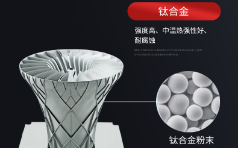
- aerospace: Lightweight titanium turbo and turbine assembly.
- Medical: Surgical tools with biocompatible stainless steel.
- car: Precision gears and electric vehicle battery case.
- Electronics: Micro-channel engraving on silicon wafers.
- Art/architecture: Customized metal facades and sculptural elements.
Why Greatlime is your ideal partner for CNC laser projects
At Greatlight, we combine expertise Five-axis CNC laser machining Provide full service support to solve complex manufacturing challenges:
- Advanced technology: Our Omni fiber laser combines 5-axis mobility with a kilowatt-class laser for frictionless profiles in 3D geometry.
- End-to-end solution: From CAD prototype to post-treatment under a roof (burr, anodization, heat treatment).
- Material mastery: Functions from aluminum alloys to Inconel and other super alloys.
- Speed and cost efficiency: Agile production is used in certain projects at a turnover rate of 72 hours. No quantity.
- quality assurance: Passed CMM inspection and PPAP document certification ISO 9001.
in conclusion
CNC laser machining is a transformative force for manufacturers to prioritize efficiency and microscopic accuracy. By combining the versatility of technology with comprehensive post-production care, Greatlight offers customized parts to push engineering boundaries. For prototyping, high-volume or mission-critical components, our expertise turns innovative design into a perfect reality. Ready to simplify your production? Contact Greatlight to discuss your project - the challenges are not too complicated.
FAQ (FAQ)
Question 1: How is CNC laser machining different from traditional CNC milling?
A: Laser processing is contactless and thermally based machined, which is very suitable for thin material details. Milling uses physical cutting tools that excel in deep, large amounts of material removal.
Q2: Can lasers reduce highly reflective metals?
A: Yes, with wavelength-optimized fiber laser and pulse settings. At Greatlight, we use proprietary beam modulation techniques to mitigate reflectivity problems.
Q3: What is the maximum thickness that can be achieved in laser cutting?
Answer: It changes with the material. Fiber laser cut to 20mm stainless steel or 15mm aluminum. For thicker parts, our hybrid 5-axis milling/laser solution provides an alternative.
Q4: How to minimize thermal distortion during laser process?
A: Strategies include dynamic focus control, assisting with gas optimization and pulse operation to limit heat diffusion. For critical parts, we use pressure prompt post-treatment.
Q5: Is there any material for laser machines?
A: PVC emits toxic smoke when it is excited; we avoid it. Chlorine-based plastics, certain rubbers and some flammable composites also pose risks. Please consult our team for alternatives.
Q6: Which file formats do you accept for CNC laser operations?
A: We support .dxf, .dwg, .step and .iges files. Engineering teams can be used to optimize designs.
Question 7: Does Greatlight provide finishing services for laser cutting parts?
A: Yes, our one-stop service includes polishing, powder coating, passivation and EDM for burr-free edges.
Q8: Greatlight complies with quality control certification?
Answer: ISO 9001: 2015 passed the internal CMM and spectral material verification certification. Provide industry-specific (e.g., AS9100 for Aerospace) compliance.
Optimized accuracy, scale innovation - manufactured by Greatlight Powers. [Contact us] Have a free design consultation today.

点击右上角
分享给朋友吧







 长按图片保存/分享
0