 钜亮五金-精密五轴数控加工服务

24H咨询热线:
180-2756-7310












定制服务热线
180-2756-7310

专业服务、快速报价
提供建模、免费改模
质量问题、免费重做
顺丰包邮、可开专票
Why CNC steps are essential
发表时间: 2025-07-14 15:39:49
作者: 东莞市钜亮五金科技有限公司
浏览:
Unlocking Manufacturing Excellence: Why Every CNC Step Is Not Negotiable
In today's hyper-competitive landscape, accuracy, efficiency and reliability are not only the goals, but must also be done. Computer numerical control (CNC) processing is the cornerstone of modern production, transforming digital design into a tangible, highly critical part. But the true power of CNC is not only in the machine itself. It lies in careful planning and execution step This defines the process. Skip or shortcuts to any step is not an option; it is a direct tradeoff on quality, cost and performance. As a leader in advanced five-axis CNC machining, Greatlight understands that every stage is an important link in the manufacturing success chain. Let's explore why these steps are essential and how they reach their peak in the superior parts.
Beyond Automation: Anatomy of CNC Accuracy
CNC machining seems simple "Upload the file and get the part" Operation. In fact, this is an interrelated complex symphony, each with demanding expertise and precision:
Design and Engineering Review: The journey began long before the metal cutting. Expert analysis of CAD models is crucial. Engineers carefully check geometry, tolerances, material selection and manufacturing. Question: Can functions be physically implemented? Are tolerances unnecessarily tight and costs increase? Is it possible to optimize the design for selected materials and processing strategies? Why it is essential: Flawed or unoptimized designs can guarantee downstream issues - scrap parts, cost overruns and delayed delivery. Strict comments can prevent these pitfalls.
Strategic process plan: This is the main blueprint. The mechanic determines the best order of operations, select cutting tools (materials, coatings, geometry), calculates precise feed, speed and depth of cuts, and plans labor strategies. For complex geometry typical in aviation or medical care, this involves complex strategies to avoid collisions and ensure stability. Why it is essential: Poor planning leads to inefficiency in machining, tool breakage, surface finishing issues, inaccurate dimensions, and potential damage to the workpiece or machine. Proper planning maximizes efficiency and ensures quality.
CAM Programming and Simulation: It is a complex art to convert planned processes into machine descriptions (G-codes). CAM software generates a tool path guided by process planning. Crucially, advanced simulation software then runs the virtual machining process. Why it is essential: Simulation detects collisions, verify tool paths, determines air cuts (wastes movement) and predicts cycle time. Skipping this step can risk catastrophic machine crashes, discarded parts and expensive downtime.
Strictly set up and fix: Before production begins, physical settings are the most important. This involves using custom fixtures to accurately install raw material stocks onto the machine table and carefully calibrate tool lengths and diameters in the machine's tool library, establishing the zero coordinate system of the part (working offset), and running the initial warm-up/proof routine. Why it is essential: Any errors in the settings - slightly misaligned fixtures, a wrongly measured tool offset - will propagate directly into a portion of the inaccuracy. Precisely and start perfectly.
Processing execution (with real-time monitoring): This is where the raw materials are programmed to conform to the cutting tool. Modern five-axis machining can move across multiple axes simultaneously, enabling incredibly complex geometric shapes in a single setup. Crucially, the operator monitors the process through sound, vibration analysis (usually automated), measures tool wear, and finishes the inspection. Why it is essential: While automation, human supervision and sensor technology ensures any emerging problems (tool wear, unexpected vibration) to prevent defects.
Detailed process and final inspection: Quality is verified in multiple stages. During machining pauses, key dimensions can be checked. Once completed, the part was thoroughly inspected using a coordinate measuring machine (CMM), an optical comparator, a surface refiner and a calibrated gauge, which was calibrated against the original design specification. Why it is essential: The inspection is the ultimate gatekeeper. It verifies that every dimension tolerance, surface surface requirements and geometric specifications have been met before the part leaves the facility. It provides an objective proof of consistency.
- Professional post-processing and finishing (icing on the cake): Processing is usually just the beginning. Parts may require burring, polishing, anodizing, heat treatment, plating, painting or assembly. Why it is essential: These processes enhance functionality (corrosion resistance, hardness, wear characteristics), improve aesthetics, and ensure that the part is ready for its end-use application. Ignoring or poorly performed completions can make the perfect machining part useless.
Why the five-axis enlarge the importance of each step
Greglight's specialization Five-axis CNC machining These steps will not be eliminated; it strengthens their necessity while unlocking unrivaled advantages:
- Geometric complexity: Handling complex contours, undercuts and composite angles in one setup requires higher accuracy in programming, toolpath simulation, and setup stability.
- Reduce the setting time: While setup is still critical, eliminating multiple refixes greatly reduces cumulative errors and labor time, thereby improving overall accuracy and throughput.
- Top surface finish: Continuous optimal tool orientation minimizes visible tool marking and improves surface quality, requiring strict tool wear monitoring.
- Faster time to market: The combination of the step-by-step process of five-axis machining and optimization greatly accelerates the production cycle.
GRESTLIGHT: Your companion to master the CNC journey
At Greatlight, we embody the following understanding: Excellent CNC machining has nothing to do with a machine. It's about mastering the entire process chain with precise engineering and a firm commitment. We bring:
- Advanced five-axis expertise: Our state-of-the-art equipment and experienced engineers are confident in solving the most complex geometry (aerospace, medical, automotive, R&D).
- End-to-end solution: From initial design consultation and DFM feedback to precise five-axis machining, meticulous inspection and a comprehensive set of finishing services (Deburring, Anodizing, plating, Pleating, plating, Heat Practing, Taking Wearthing, Painting, Painterbly), we are your single source.
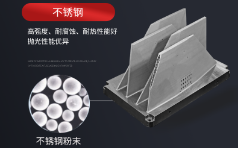
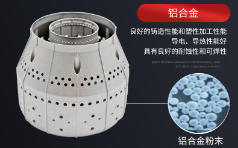
- Material versatility: We have skillfully processed a variety of metals (aluminum, steel, stainless steel, titanium, brass, copper, outsiders) and engineering plastics.
- Speed and value: Our optimized processes and advanced technology enable fast turnaround time without sacrificing quality, giving you the best value without hiding costs.
in conclusion
The power of CNC machining is not in isolated automation, but defines the process in interdependent, strictly executed steps. From initial design review to final inspection and finishing, each stage is an essential element that ensures accuracy, efficiency, quality and reliability. Ignoring any step will ruin the entire result, resulting in expensive errors and compromises. For projects that require the highest level of complexity and accuracy, working with manufacturers like Greatlight, equipped with advanced five-axis capabilities and dedicated to excellence in design, machining, inspection and completion, this is the most reliable way to succeed. We transform complex designs into tangible, high-performance reality, one carefully controlled step at a time.
FAQ (FAQ)
Question 1: What is the biggest risk of skipping the CNC process steps?
one: The most important risk is the undetected error that leads to the unqualified, intolerable part. This can lead to expensive scrap, rework, production delays, potential safety hazards in the final product, and reputation damage.
Question 2: Can advanced CNC machines not make up for poor programming or design?
one: no. While modern machines are very powerful, they perform their instructions perfectly. "Garbage, go out of garbage" Applicable directly. Poorly designed parts, inefficient tool paths or unverified G-code will inevitably lead to damage to the part or machine regardless of the complexity of the machine. Planning and programming are the foundation.
Question 3: Why choose five-axis machining instead of traditional three-axis?
one: Five-axis machining offers different advantages: the ability to produce highly complex shapes in a single setup (reduced error and set time), improve access to difficult functions, better surface surfaces resulting from optimal tool positioning, and significantly faster machining times for complex components. This is crucial for advanced aerospace, medical implants, turbomachinery and complex molds.
Question 4: How does Greatmight ensure quality throughout the entire step?
one: Quality is embedded in every stage: engineering review manufacturability, advanced CAM simulation to prevent errors, strict setup procedures, multi-stage inspections (including in-process inspections and final CMM verification), and compliance with strict quality management principles. Our investment in advanced equipment and skilled personnel ensures consistent quality control.
Q5: Will Greatlight handle prototyping and mass production?
one: Absolutely. Our simplified process and advanced five-axis capabilities allow us to be equally skilled in producing precise prototypes for rapid iteration and development, as well as mass production running when consistency and reliability are critical.
Q6: Which materials can be used in Greatlight Machine?
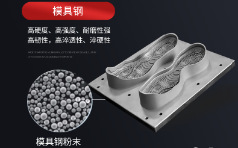
one: We have extensive expertise in processing a wide range of materials including but not limited to: various grades of aluminum and aluminum alloys, steel and stainless steel, titanium, brass, copper, tool steel and engineering plastics (e.g., Peek, Delrin, Uhmw). Contact you for your specific material requirements.
Question 7: How does the integration of post-processing services benefit me?
one: Greatshile simplifies your supply chain by providing a comprehensive one-stop solution including finishing (anodization, plating, heat treatment, painting, etc.) and assembly. This reduces lead time, eliminates logistics and coordination hassles, minimizes risk, and ensures seamless quality control throughout the conversion of raw materials for ready-to-be-finished, functional components.
Confidently customize precision parts. Experience great differences – Every step masters excellence. Contact us now for a quote.

点击右上角
分享给朋友吧







 长按图片保存/分享
0