 钜亮五金-精密五轴数控加工服务


24H咨询热线:
180-2756-7310













定制服务热线
180-2756-7310

专业服务、快速报价
提供建模、免费改模
质量问题、免费重做
顺丰包邮、可开专票
CNC machining manual essentials
发表时间: 2025-07-15 19:21:56
作者: 东莞市钜亮五金科技有限公司
浏览:
Master the process: Your final CNC machining manual essentials
In the world of high-precision manufacturing, knowledge is the most powerful tool in the toolbox. While cutting-edge equipment such as advanced five-axis CNC machines pushes the boundaries of possible, it is a profound foundation of expertise, carefully stated in an integrated CNC machining manual, which really unlocks its potential. Whether you are a design engineer, store floor mechanic or purchasing manager, understanding the essential elements of these manuals is essential for successful parts production. This article goes deep into the core pillars, and every authoritative machining manual must cover, and how this knowledge translates into real-life manufacturing excellence such as providers. Greglight CNC machining.
Why Processing Manuals are Not Just a Reference Guide
A well-structured CNC machining manual is much more than a collection of feeds and speed charts. It is the reasonable wisdom of generations of mechanics and engineers, distilling complex principles of physics, materials science, and mechanical engineering into feasible guidance. It bridges the gap between theoretical design and manufacturable reality, ensuring efficiency, repeatability and compliance with the most stressful tolerances. Ignoring this foundation often leads to expensive errors, scrap parts and production delays.
A comprehensive CNC machining manual that is non-negotiable
Materials Science Mastery:
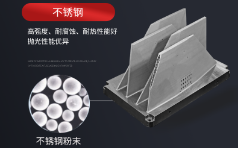
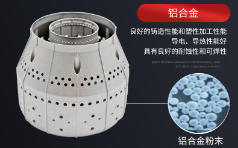
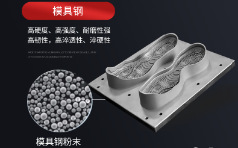
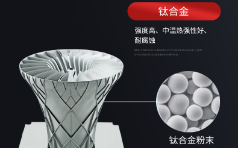
- Attribute database: Detailed data on mechanical properties (tensile strength, hardness, elasticity, thermal conductivity), addifiability levels, and inherent challenges associated with them all Common engineered metals, plastics and composites (aluminum, stainless steel, titanium, inconel, delrin, peek, etc.).
- Processing behavior: Each material reacts to cutting forces, heat generation, tool pressure and coolant application. It is crucial to understand the brittleness of stainless steel or titanium, aluminum or cast iron.
- Material selection guidance: Related material properties to the functional requirements of finished parts (wear resistance, corrosion resistance, high temperature performance, weight).
Tools and technologies and applications:
- Cutting tool geometry: An in-depth explanation of the geometry of tool angle (rake, relief, gap), nose radius effect, chip destroyer design, and how geometry affects cutting forces, surface finish, chip evacuation and tool life.
- Cutting tool material: Characteristics and best applications of HSS, carbides (grades), ceramics, CBN and diamonds. Understand the wear mechanism (wear, adhesion, diffusion).
- Tool system: Rigidity principle, chuck and hydraulic and shrink fit, balance command for high-speed machining, and achieve maximum grip strength and precision repeatability.
- Tool life management: Monitor wear, optimize tool change intervals and predict maintenance strategies to avoid catastrophic failures in the middle.
Precise cutting conditions (speed and feed):
- Basic calculation: Formulas for calculating per minute (SFM), rotation per minute (RPM), chip load (per tooth), and feed rate according to tool/material pairing.
- Optimization factors: The depth of cutting, steps, tool coverage, tool deflection, machine stiffness, coolant effectiveness, and the required surface finish greatly affect the ideal cutting conditions.
- Advanced strategies: Using lighter radial bonding and higher speed/feeding and high performance machining (HPM) strategies to address high-efficiency alloys, technology (HEM) for high-efficiency machining (HEM).
CNC programming and G code basics:
- Core principles: Understand Cartesian coordinate systems, absolute and incremental positioning, common G-codes (motion, plane selection) and M-codes (spindle control, coolant).
- The strategy reasons for tool path: When to use contours, bagging, drilling cycles, adaptive clearing, Trochoidal milling or helical machining based on feature geometry, tool strength and machine stability.
- Effective code practices: Techniques to minimize program length, optimize speed motion (minimize non-cutting actions), ensure safety and optimize five-axis contour efficiency.
Machine Power and Maintenance:
- Fundamentals: Understand the role and limitations of machine stiffness, spindle power/torque curves, feedback system (encoder), thermal stability and vibration damping.
- Fixed fundamentals: Safety and precision worker principles, minimizing deflection under cutting forces, accessibility and repeatability of tool paths. Use attractions, custom fixtures, vacuum fixtures, magnetic systems.
- Preventive maintenance schedule: Spindle health, linear guide lubrication, ball screw health, coolant system management and calibration checks to maintain accuracy.
Geometric Dimensions and Tolerances (GD&T):
- Standard explanation: A comprehensive guide to symbols (planarity, roundness, position, outline, jump), reference frames, material condition modifiers (MMC/LMC), and tolerance areas.
- Measuring technology: Learn how to verify tolerances using CMMs, surface refiners, optical comparators, metrology, and more. Impact on fixture design and processing strategies.
Quality control and process verification:
- First article check (FAI): Agreement and documentation requirements.
- Statistical Process Control (SPC): Basic principles for monitoring process stability and identifying trends.
- Material certification and traceability: Ensure compliance with specified material standards (e.g., ASTM, AMS, DIN).
- Security protocol:
- Mandatory procedures: Machine protection, locking/marking (Loto), correct handling of tools and materials, coolant treatment and chip management.
- Operational best practices: Security setup verification, process monitoring and emergency procedures.
Why work with manufacturers who live on manuals
exist Greglight CNC machiningOur deep technical expertise is not theoretical; this is the daily application of the principles stated in these manuals. Our investments exceed advanced five-axis CNC machining equipment:
- Reflect professional knowledge: Our engineers and mechanics intuitively apply complex data in these manuals. We learned that processing titanium alloys requires very different parameters than ABS rapid prototypes, which leverages materials science expertise to obtain the best results.
- The five-axis advantage has been achieved: Five-axis functions exponentially increase complexity, which requires Deeper Master machine dynamics, tool path calculations (avoid collisions, optimize tool access), and material behavior. Our expertise ensures that this functionality translates into a tangible complex part solution with minimal setup and superior surface integrity.
- Beyond Metal Removal: Real mastery involves what happens after the main cut. Our One-stop post-processing Services (precision grinding, EDM, comprehensive surface finishing - anodizing, plating, paint, advanced coating, heat treatment) are seamlessly integrated. We understand how processing parameters affect post-processing requirements and ensure that the entire manufacturing chain meets your specifications.
- Material agility and quick customization: Whether it is an exotic alloy for aerospace or a medical grade plastic, we have mastered substance-specific processing essentials that allow us to cite and process Almost any material Effectively The best price. We don't just cut metal; we understand it and ensure the best results.
- Standard accuracy: Our commitment to the precise principles defined in each respected manual ensures that the tense tolerance requirements (IT grades, complex GD&T annotations) are consistently met and rigorously verified by our powerful quality control systems.
Conclusion: Your blueprint for success in manufacturing
The CNC machining manual is an essential guide for navigating the complex landscape of modern precision engineering. It encapsulates the basics needed to convert raw materials into high-performance components. For projects requiring the highest level of complexity, accuracy and material versatility, work with manufacturers Great Very important. We not only have the equipment; our team embodies the deep expertise documented in these basic resources. This translates into reliable production solutions, minimizing market time, cost optimization and some of the requirements that are most challenging for you are expert confidence.
Are there real advantages to preparing the experience manual expertise? Request your personalized quote now with Greatlight Five-Axis CNC machining to get custom precision parts – the accuracy is in line with value.
Frequently Asked Questions about CNC Processing Manuals and Services (FAQs)
Question 1: Do all online resources and CAM software still require a physical CNC machining manual?
Yes! CAM software contains basic rules and a library of tools, online resources provide a lot of information, but a comprehensive physics manual (such as classics) "Mechanical Manual") provides structured, reliable foundations, interconnected knowledge and standardized data that are essential for in-depth understanding and troubleshooting. This is a valuable reference that can be accessed without the internet or software dependencies and remains a cornerstone of store knowledge.
Question 2: What makes five-axis CNC machining unique compared to traditional 3-axis, and why is manual knowledge more important?
The five-axis machine allows moving parts simultaneously along five axes (X, Y, Z + rotating two axes), enabling complex contour machining, deep cavity access without fixtures, and high-quality surface finishes in a single setup. This complexity greatly increases the interaction of factors such as avoiding tool path collisions, cutting tool pressure angles, chip evacuation paths, and machine kinematic constraints. A level of understanding of machine dynamics, tool applications, and material behavior cannot be safely and efficiently programmed, operated and optimized for these machines. Incorrect application can cause crashes, poor results or damage to the tool.
Question 3: How often does the CNC machining manual be updated, should I always target the latest version?
The main authoritative manuals (e.g., mechanical manuals) are significantly revised approximately every decade. While the core principles are durable, updates include new materials, emerging tooling technologies (such as advanced carbide grades or specific coatings), evolving processing strategies (such as hem/HPM), revisions to the GD&T standards (such as ASME Y14.5), and new safety regulations. For professionals who work with advanced materials or demanding applications, having the latest version ensures access to current best practices and data.
Q4: What's there "Material versatility" What is the real meaning in a CNC machining service like Greatlight?
This means effective processing A broad spectrum Materials, each requires a completely different approach. GreatLight leverages its deep material science understanding to adapt machines (settings, toolsing), cutting strategies (speeds, feeds, toolpaths), and post-processing for materials range from easily machined aluminums and plastics to notoriously difficult metals like hardened steels, tool steels, titanium alloys, heat-resistant superalloys (Inconel, Hastelloy), magnesium, copper alloys, and composites. True versatility requires profound knowledge recorded in the machining manual.
Q5: How to deal with "One-stop" CNC service providers like Greatlight save me time and money?
Managing multiple suppliers for machining, grinding, finishing and heat treatment introduces significant logistics overhead, communication complexity, extended lead times, potential quality mismatch between stages, and additional processing costs. Greatlight integrates high tolerance machining and all critical post-processing under one roof, employing consistent quality standards and engineering oversight. This seamless integration, guided by comprehensive knowledge throughout the process chain, eliminates handover risks, accelerates production, minimizes transportation and reduces overall project management burden, translates into cost-saving and predictable timelines.

点击右上角
分享给朋友吧







 长按图片保存/分享
0

