 钜亮五金-精密五轴数控加工服务

24H咨询热线:
180-2756-7310












定制服务热线
180-2756-7310

专业服务、快速报价
提供建模、免费改模
质量问题、免费重做
顺丰包邮、可开专票
CNC Screw Processing: The Final Guide
发表时间: 2025-07-17 03:09:46
作者: 东莞市钜亮五金科技有限公司
浏览:
CNC Screw Processing: The Final Guide
In the field of precision manufacturing, CNC screw machining is a cornerstone technology for the production of large capacity, complex parts with excellent accuracy. Whether you are purchasing components for aerospace, medical equipment, or automotive systems, it is crucial to understand this process. This guide delves into CNC screw machining – establishing its mechanism, its advantages and why it is critical to the industry that requires perfection.
What is CNC screw processing?
CNC (Computer Numerical Control) Screw machining can automatically generate turning parts using rotating spindles and cutting tools. Unlike manual screw machines, the CNC variant uses computer controls to perform precise and repeatable operations. Modern iterations often have multi-axis functionality (such as 5-axis or 6-axis) that can be milled, drilled and threaded simultaneously in a single setup. the term "Screw machine" Originated from its historical use in production screws, it now contains a large number of cylindrical or rod-like components such as pins, valves, connectors and surgical implants.
How CNC screw processing works: process and technology
- Design and Programming:
Engineers use CAD software to model parts and then use CAM software to generate tool paths. G-code instructions determine the movement, speed and feed of the tool. - Material loading:
A stick spoon (metal, plastic or composite) feeds it into the machine through a clamp. Common materials include aluminum, stainless steel, brass, titanium and engineering plastics. - Processing operations:
- The steel bars rotate at high speed when cutting tools (e.g., drill bits, end mills, knees), shaping the material.
- The multi-axis feature allows the tool to approach the workpiece from multiple angles, creating complex geometries without re-fixing.
- Automation and efficiency:
Swiss-type screw machines and multi-spindle CNC systems can be continuously produced (bend a part on the next stage) to minimize downtime. - Quality control:
In-process sensor and post-production CMM (coordinate measuring machine) inspection ensures tolerances are within ±0.0005 inches (0.0127 mm).
Key Advantages of CNC Screw Processing
- accurate: Achieving microscopic accuracy is crucial for tightly tolerant components.
- Scalability: Ideal for high-volume runs with consistent quality (10,000+ units).
- Material versatility: Handle everything from soft plastic to super alloys like Inconel.
- Reduce waste: Near mesh production minimizes the use of raw materials.
- speed: Multi-axis integration reduces lead time through merge operations.
Materials suitable for CNC screw processing
| Material | Key attributes | Common Applications |
|---|---|---|
| Stainless steel | Corrosion resistant, durable | Medical instruments, valves |
| aluminum | Lightweight, processable | Aviation fasteners, housing |
| brass | Conductivity, aesthetics | Connectors, accessories |
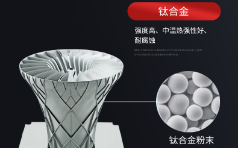
| titanium | High strength weight ratio | Implants, aerospace components |
| peep | Thermal stability, biocompatibility | Medical, semiconductor parts |
Industry applications
- Medical: Bone screws, surgical tools, implantable equipment.
- car: Fuel injector, sensor, transmission pin.
- aerospace: Hydraulic accessories, turbine bolts, avionics equipment.
- Electronics: Connector pin, radiator mount, EMI shield.
Why choose Greatlime for CNC screw processing?
Great Take advantage of the latest Five-axis CNC machining Raise screw machining beyond conventional restrictions. Our advanced approaches integrate:
- Multi-axis mastery: At the same time, complex contours, internal features and threads are used simultaneously without manual intervention.
- Material agnosticism: Expertise in foreign metals (e.g., inconel, titanium) and engineering grade plastics.
- One-stop post-processing: Provides comprehensive finishing – including a roof that includes anodization, passivation, polishing and laser engraving.
- Fast Market: Rapid prototyping and mass production, delivery time to 70% Faster Compared with the industry average.
- quality assurance: The ISO 9001 certification process with complete traceability and laboratory level inspection.
We solve complex manufacturing challenges by combining cutting-edge technologies with deep metallurgical expertise. For precise screw machining parts that require zero error margin, Greglight provides ruthlessly. Customize your precision parts now at the best prices!
in conclusion
CNC screw machining is still unparalleled for a large number of components that require microscopic accuracy. Its evolution (driven by multi-axis CNC integration, both can push the boundaries of complexity, speed and reliability. Work with experts like manufacturers like Great Ensure the full potential of this technology: complex five-axis functionality, material versatility and end-to-end finishing solutions. In an era when micro-issues and deadlines are unnegotiable, mastering CNC screw machining is not only an advantage, but also a necessity.
FAQ
Q1: What is the difference between CNC rotation and CNC screw processing?
A: CNC rotation usually refers to simpler lathe operation on parts, while screw machining integrates milling, drilling and threads in a single automated setup - ideal for complex high-volume production.
Q2: What tolerances can be achieved in CNC screw processing?
A: Advanced CNC screw machines (such as the five-axis system of Greatlight) maintain tolerance ±0.0005" (0.0127 mm) Or tighter, depending on the material and geometry.
Question 3: Is CNC screw processing cost-effective for prototypes?
A: Modern CNC programming allows economical small batch operation. Greatlight combines quick setup with multitasking computers, making prototypes feasible without the need for tool investments.
Q4: Can you use a screwdriver to mechanical machines?
Answer: Absolute. Swiss CNC screw machine performs excellently on micro-mechanical parts. Diameter 0.5mm (For example, medical guidelines).
Q5: How to ensure material integrity during high-speed processing?
A: Techniques such as optimized tool paths, coolant-driven temperature control and pressure offset heat treatment prevent deformation.
Q6: Possible surface surface surface surface surface surface surface surface surface surface surface surface surface surface surface surface surface surface surface surface surface surface surface surface surface surface surface surface surface surface surface surface surface surface surface surface surface surface surface surface surface surface surface surface Q6: possible surface surface surface surface surface surface surface surface surface surface surface surface surface surface surface surface Q6: possible surface surface surface surface surface surface surface surface surface surface surface surface surface Q6: possible surface surface surface surface surface surface surface surface surface surface surface surface Q6: possible surface surface surface surface surface surface surface surface surface surface Q6: possible surface surface surface surface surface
A: Options include mirror polishing (RA <0.1μm), anodizing, powder coating, plating and media blasting, all provided by Greatlight.
Question 7: Why choose a five-axis CNC instead of an older screw machine?
A: Five-axis CNC eliminates secondary operations by machining complex angles in one cycle, thereby improving accuracy by 50%+ and reducing lead time.

点击右上角
分享给朋友吧







 长按图片保存/分享
0

