 钜亮五金-精密五轴数控加工服务


24H咨询热线:
180-2756-7310












定制服务热线
180-2756-7310

专业服务、快速报价
提供建模、免费改模
质量问题、免费重做
顺丰包邮、可开专票
CNC Factory Price Guide
发表时间: 2025-09-01 04:44:33
作者: 东莞市钜亮五金科技有限公司
浏览:
The secret to unlocking the cost of CNC milling: Your comprehensive price guide (and why five axes matter)
So you provide excellent design for metal parts. This is the complex, precise and indispensable thing for your project success. You know CNC milling is the answer, but when you start researching, the big question looms: "How much does it cost?" The truth is, CNC milling pricing is not a cookie-cutter equation. This is a complex interaction of many factors. Understanding this pattern is essential to budgeting effectively and making informed decisions.
At Greatlight, as a professional five-axis CNC machining manufacturer equipped with cutting-edge technology, we browse through these complexities every day. We focus on bringing complex metal concepts into effective, accurate life. This guide is designed to uncover the mystery of the cost of CNC milling services, allowing you to better plan and understand the value proposition, especially when advanced features come into play.
Decoding factors: What drives the cost of CNC milling?
Forgot a simple quote. The final cost of the CNC milling section depends on the careful evaluation of the following elements:
Materials Important: Raw materials costs are rarely estimated by the store; this becomes your expense. The price range is very wide:
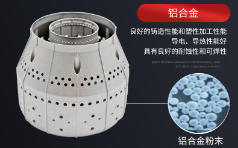
- Ordinary metal: Aluminum (e.g. 6061, 7075) is usually the most economical choice for processing.
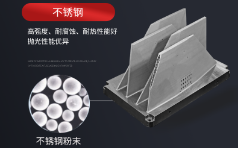
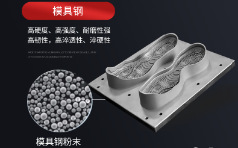
- Steel and stainless steel: Prices for tool steel or harder stainless grades such as 316 or 17-4PH have increased significantly due to tool wear and slower processing speeds.
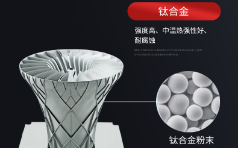
- Exotic alloys: Titanium, Inconel®, Hastelloy® commands high prices (skyling due to its toughness and hardness, material costs and processing difficulty).
- Plastics and composites: Although some are cheaper than metals, specific engineering plastics can be expensive and vary in difficulty.
Manufacturable Part Complexity and Design (DFM): This is the most important thing.
- Simple geometric shapes: Basic blocks or sections require fewer tool changes, less complex programming, and simpler setup.
- Complex functions: Deep pockets with specialized long-term tools are required, complex contours, thin walls, undercuts, internal lines or details greatly increase machining time and complexity (often five-axis functionality is required).
- Tensional tolerances: Holds dimensions within ±0.0005" Careful process control is required, slow processing speeds, professional equipment (such as our five-axis machine), and potential post-surgical examinations. More stringent always means more cost-effective.
- Surface finish requirements: Standard milling finishes are usually sufficient. Specifying mirror-like RA <0.8 µm requires additional finishing or auxiliary processes such as polishing, which adds cost.
Production: Quantity seriously affects unit price.
- Prototype and low volume (1-10 PCs): Set time, programming and machine settings dominant costs. The cost per unit is very high.
- Medium volume (10s -100s PC): Costs start to amortize better. Although still no "Mass production," Efficiency improvement starts to display.
- Large capacity (100s+ PC): Optimizations such as dedicated fixtures, specific tools, and optimized workflows greatly reduce unit costs. Setting up costs become a much smaller part.
Machine time and required functions: Not all machines are equal.
- 3 axes and 5 axes: 3-axis machines are common and cost-effective for simpler parts. However, complex 3D profiles are required, multiple settings, or access to complex parts in many aspects Need five-axis machining. In machine time possible Initially, it is higher than complex geometry on five-axis machines, usually Greatly reduce or eliminate Multiple settings and secondary operations are required (human and potential error savings) and geometry can be achieved through 3 axes. At Greatlight, the five axis is our core strength.
- Size and work envelope: Larger parts require larger (usually more costly) machines to accommodate them.
Labor: Programming and Settings: Skilled labor is indispensable.
- CAD/CAM programming: Complex geometry, five-axis tool paths and tight tolerances require more engineering and programming expertise and time.
- Machine Settings: Loading materials, installing fixtures, installing multiple tools, calibration - This critical preparation can take time, especially for complex setups required for five-axis machining or complex parts. Standardization helps us minimize this.
tool: The cutting tool is worn. Processing hard materials or complex parts can accelerate wear and increase tool costs. Five-axis machining may require special tools and also enable tool paths that reduce wear.
- Secondary operation and finish: Often overlooked, but crucial for the final product:
- Surface treatment: Anode (aluminum), electroplating (nickel, chromium), heat treatment, paint, powder coating.
- Other processes: Welding, assembly, engraving, inspection report.
- Deburring & Leaning: For the available, the safe part is crucial. Complexity affects time and cost.
Course CNC Milling Price Guide (Learn the Scope)
Disclaimer: These are all Very rough estimate For processing costs The only one (Material not included) Typical aluminum parts in small batches. Complex parts, stronger materials or five-axis requirements will push towards the high end or significantly exceed it. Always request a detailed quote!
- Simple parts (e.g., brackets, basic board): $50- $200
- Moderately complex parts (e.g., a processed shell with some pockets): $200- $800 parts
- Highly complex parts (e.g., complex aerospace components, medical equipment - usually requires 5 axes): $800- $5000+ per part
Key effects on these estimates:
- Material addition: Stainless steel may increase the cost by 30-80% compared to aluminum; titanium/inconel can be doubled or tripled.
- Tolerance tightening: Move from ±0.005" To ±0.0005" Processing time/cost can be easily done.
- Low capacity impact: one "Simple" Some may cost $150; 100 of them may drop to $35 per person.
- Five-axis value: For complex parts that require 4 settings on a 3-axis machine, five-axis setup, five-axis cost possible Due to higher labor/error reduction, although the hourly rate is higher, it is generally reduced. It also unlocks impossible geometric shapes.
Why Greatlight is your strategic partner for precision CNC milling
Navigation CNC milling costs not only require mechanical workshops. It requires a trusted engineering partner. This is why Greatlight stands out:
- Five-axis mastery: We invest in advanced five-axis CNC technology because it solves the problem. We excel in complex geometry, reduced settings, enhanced accuracy, and difficult-to-access features. This translates to:
- Higher complexity, delivering: Parts that others may reject because of complexity are our profession.
- Reduce total cost (usually): Less setup means less labor, fewer errors, faster turnaround speeds – potential cost Savings Used for complex work.
- Top surface finish: Complex curves and continuous toolpaths produce excellent results.
- Production capacity: In addition to advanced machines, our production technologies and processes are optimized for precision and efficiency. We understand how DFM, programming, setup and machining can effectively control costs.
- Material expertise: We confidently process a wide variety of metals (including challenging appearances) and plastics, understanding the nuances of each material and optimizing the process accordingly.
- A true one-stop solution: From the initial machining state to the final customer ready part, we handle it. Our comprehensive post-processing and finishing services (anodizing, heat treatment, polishing, etc.) ensure seamless quality control, faster delivery, and a single accountability.
- Quick customization: Need to be fast? Our agile manufacturing processes are designed for reliable and rapid production without compromising quality. "Most materials can be customized and processed" It's not just a proposition; it's our workflow.
- Value-driven competitive pricing: Utilizing efficiency, advanced technologies (such as eliminating the five axes of secondary settings), and deep expertise, we strive to provide Best Value - The best blend of precision, speed and cost - especially for demanding projects.
- Problem Solver: We work with you to overcome manufacturing challenges. Complex metal parts are our field and we like the engineering complexity involved.
Conclusion: Knowledge is power - Invest accurately
Understanding the variables behind CNC milling gives you the ability to make informed decisions. Although price is crucial, the real value lies in the combination of precision, quality, reliability and the ability to execute design perfectly. For demanding projects requiring complex geometry, tight tolerances, various materials or exquisite finishes, advanced manufacturing capabilities (especially five-axis machining) are often not only a luxury, but also a necessity for project success, but also a necessity for long-term cost efficiency.
At Greatlight, we leverage our advanced five-axis machining expertise, comprehensive one-stop service and a commitment to problem solving to bring extraordinary value to your custom precision metal parts. Don't gamble on guessing. Provide us with your design documents and requirements, we will provide transparent, optimized quotes that show how we achieve Your precise target at the best price. Get ready to experience Greatlight Differences - Ask your custom quote today!
FAQ: CNC Milling Service Pricing Explained
Q1: Why are tight tolerances so expensive?
A1: Achieving super-precision requirements requires enormous control. It requires specialized machinery (such as high-end five-axis machines), slow cutting speeds, meticulous tool selection, continuous monitoring, thermal management adjustments and rigorous inspections. This greatly increases machine time, engineering input and potential waste rate, all increase costs.
Q2: Is five-axis processing always more expensive than three-axis?
A2: Not necessarily and surprisingly, it is usually cheap for complex parts. The machine hourly rate possible Higher, five-axis greatly reduces or eliminates the need for multiple setup and fixture changes on 3-axis machines on equivalent complex parts. This significantly reduces labor costs and potential error risks, improves accuracy between functions, and can lead to lower overall costs and faster turnover. For simple parts, the three-axis is usually still the most economical.
Question 3: How to reduce the cost of CNC milling parts?
A3: Key strategies include:
- Optimized Manufacturability (DFM): Avoid extremely thin walls, deep narrow pockets, unnecessary tight tolerances and complex features where possible. Regarding DFM, I consulted us very early!
- Material selection: Use the most suitable material in function, but consider processability (e.g., 6061 aluminum vs. exotic alloys).
- quantity: If feasible, order larger volumes; as setup costs spread, unit costs drop significantly.
- Standard finish: Select Standard Mill unless required.
- Clarification requirements: Distinguish critical tolerances/surfaces from non-critical tolerances.
Question 4: Is the size of the part directly related to the cost?
A4: Not always linear, but that's a major factor. Larger parts require more raw materials, potentially larger/more expensive machines, longer machining time, more tools and careful handling. However, a small fraction with extreme complexity can easily cost more than a larger, simpler component.
Q5: What is included in a typical CNC milling quote?
A5: Detailed quotations should be broken down:
- Material Cost
- Processing time charge (based on machine time estimates)
- Programming/setting engineering costs
- Tool Cost
- Cost of any specified secondary operation (anodizing, etc.)
- Inspection fee (if the standard quality inspection is exceeded)
- Packaging and shipping
(Greglight provides transparent, detailed quotes so you can see where your investment is going.)
Question 6: Why choose Greatlight instead of other CNC machining services?
A6: Greatlight specializes in solving complex manufacturing challenges using advanced five-axis technology, with precision and value in situations where others may struggle. Our truly one-stop service (processing to final completion), expertise in a wide range of materials (including difficult alloys), rapid processing and focus on engineering collaboration provide a clear advantage for demanding precise parts.

点击右上角
分享给朋友吧







 长按图片保存/分享
0

