 钜亮五金-精密五轴数控加工服务

24H咨询热线:
180-2756-7310












定制服务热线
180-2756-7310

专业服务、快速报价
提供建模、免费改模
质量问题、免费重做
顺丰包邮、可开专票
CNC milling foundation 101
发表时间: 2025-09-01 07:39:45
作者: 东莞市钜亮五金科技有限公司
浏览:
Unlocking accuracy: In-depth study of the basic knowledge of CNC milling
In modern manufacturing landscapes, CNC milling is a cornerstone technology that transforms blocks of materials into complex high-precision components. From aerospace and medical devices to automotive and consumer electronics, this process is crucial to countless industries. At the heart of CNC milling is a subtraction manufacturing method in which a computer-controlled rotary cutting tool systematically removes material from the workpiece to achieve the desired shape. Let's break down the key points.
How CNC milling works: more than just cutting
Think of CNC milling as the ultimate marriage of digital design and mechanical precision.
- Digital Blueprint: It all starts with the 3D computer-aided design (CAD) model of the part. This digital file defines each dimension, curve, and function.
- Guide to generate: The CAD model is converted into instructions that the machine understands using computer-aided manufacturing (CAM) software. The software generates G-code, an exact language to indicate tool paths, spindle speeds, feed rate, coolant usage, and tool changes.
- Machine Settings: The raw material (workpiece) is securely clamped on the workbench of the milling machine. The appropriate cutting tool is loaded onto the machine's tool magazine or spindle.
- Automatic precision processing: Press the button and the CNC computer executes the G-code program. The spindle rotates the cutting tool at high speed, while the machine's shaft (usually X, Y, and Z) moves the workpiece and/or tool relative to the programming path, gradually removing the material.
- The last part: The result is a finished part that matches the original CAD model with excellent accuracy and repeatability.
Core components of CNC milling machines
Understanding the machine itself is the key:
- Controller: The brain of surgery. It interprets the G code and sends electronic signals to drive the machine components.
- Machine frame and bed: A rigid foundation is provided for absorbing cutting forces and maximizing vibration, which is crucial for accuracy.
- Worksheet: A platform for fixing workpieces. It moves along a specific axis (usually X and Y).
- Spindle: The rotary assembly can accommodate and drive the cutting tool. Spindle speed (RPM) is critical to material and tool performance.
- Cutting tools: Various end mills, facial mills, drill bits and faucets made of hardened steel, carbides or other high-end materials. Select tool geometry based on material and processing characteristics.
- Axis system: The direction in which tools and workpieces can move relative to each other:
- 3-axis (basic): Move along X (left and left), Y (front and back) and Z (up and down). Perfect for prismatic parts, but requires repositioning of complex geometric shapes.
- 4 axis: Add rotation around the X-axis (A-axis) so that one setting can be machined on multiple sides of the part.
- 5-axis (advanced): Add rotation on the Y-axis (B-axis) or Z-axis (C-axis) to enable the tool to approach the workpiece from any angle in a single setup.
Basic CNC milling operation
Different tools and actions create different functions:
- Facial Milling: Use the bottom and/or sides of the cutting tool to create a flat surface on the workpiece.
- Peripheral Milling (Slot/Analysis): Use the sides of the end mill to cut the outer contour of the slots, pockets or parts.
- drilling: Use a twist drill to create a hole. CNC mills can accurately locate and drill holes of various depths and sizes.
- Boring: Expand the existing holes to very precise diameters and finishes.
- tapping: Use the faucet tool to cut the internal wire.
- contour: Complex motions produce complex 3D surfaces and curves, significantly enhanced by 5-axis functionality.
Material versatility: from aluminum to inconel
CNC milling processes numerous materials, each requiring specific technology:
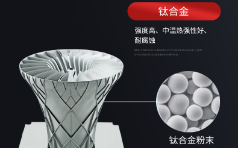
- Metal: Aluminum (favored for its workability), steel (various grades including stainless steel), brass, copper, titanium (high strength, corrosion resistant), exotic alloys (Inconel, Hastelloy - requires high tools and expertise).
- plastic: ABS, Nylon, Delrin (POM), Polycarbonate, PTFE (Teflon), Peek (High Performance).
- Composite materials: Carbon fiber reinforced polymer (CFRP), fiberglass (requires specialized tools and dust management).
- wood: For prototypes, patterns and professional components.
Why choose CNC milling? Core advantages
- Excellent accuracy and accuracy: Repeat the tight tolerances (usually within microns).
- Excellent repeatability: The same parts are produced during long-term production.
- Complex geometric shapes: By manual machining, especially with the use of 5 axes, complex or impossible shapes will be produced.
- High efficiency and automation: Once programmed, the machine can be unattended.
- Rapid production: Fast material removal compared to many other processes, suitable for low to medium production and prototyping.
- Material flexibility: Handle a lot of material with the correct settings.
Game Change: Five-axis CNC milling
Despite the powerful 3-axis milling, 5-axis machining will increase the possibility. With the ability to manipulate a workpiece or tool along five axes simultaneously, it offers transformative benefits:
- Complex geometry in a setup: The machine has intricate contours, undercuts and features on the five sides of the part without repositioning and re-clipping. This eliminates potential setup errors and greatly reduces lead time.
- Enhanced accuracy: Less settings mean less cumulative tolerance error. Continuous tool contacts usually provide better finishing.
- Best tool access: The tool can be oriented to maintain the optimal cutting angle and the shortest length (improving stiffness), allowing for deep or difficult-to-reach features without thin tools.
- Faster processing speed: Ability to process complex shapes at higher speeds/feed without vibrations and can be processed in fewer steps.
- Reduce fixed: With complex partial movement compensation, fixation can usually be simply performed.
Why your advanced CNC milling expert is Greatlime
As a professional five-axis CNC processing manufacturer, Great Use cutting-edge equipment and sophisticated production technology to solve challenging metal parts manufacturing problems. We understand that precision is not just dimensions. It's about the right solution. Our capabilities are far beyond the basic milling range:
- Master the five axes: We use the full functionality of 5-axis machining to cope with complex geometry with unprecedented efficiency and accuracy, and delivering other parts can be difficult or impossible.
- Material expertise: From common alloys to challenging outsiders such as titanium and inconel, our experience ensures the best milling strategy for each material.
- A true one-stop service: We are not just machines. Greglight offers a comprehensive after-treatment and finishing including heat treatment, anodization, gold plating, polishing, painting and assembly – simplifying your supply chain.
- Quick customization: Need something unique? Our advanced features allow for fast customization and precise machining on a wide range of materials. We thrive on tailored solutions.
- Speed meets value: We can deliver quality quickly without compromising accuracy, providing the best value for your custom parts needs.
- Solve manufacturing problems: Our expertise is more than just running machines; it’s about providing engineering insights and optimization solutions for your real-world manufacturing challenges.
in conclusion
CNC milling is an indispensable multifunctional manufacturing process that is constantly developed through techniques such as five-axis machining, thus pushing the boundaries possible. Understanding the basics – from machine components and operations to materials and inherent advantages – enables design engineers and procurement teams to make informed decisions.
Working with experts is critical for projects that require complex geometry, tight tolerances, superior surface finishes or effective production of high-quality metal parts, especially those that benefit from advanced multi-axis machining. Great Combining state-of-the-art five-axis functionality, deep material knowledge and integrated finishing services to transform your design into reality reliably and cost-effectively. Don't just factory parts; unlock potential with advanced precision.
CNC milling FAQ
What is the difference between CNC milling and CNC rotation?
- CNC Milling Mainly using rotary cutting tools to move in multiple axis fixed or moving Workpieces Removal of materials is ideal for prismatic or complex 3D shapes. CNC Turn around Rotate Workpieces For fixed cutting tools (on lathes), it is mainly used in cylindrical or conical shapes.
How accurate is CNC milling?
- CNC milling is highly accurate. Standard tolerances can always reach ±0.001 inches (±0.025 mm) and have high-end machines and careful process controls that can be reduced to ±0.0002 inches (±0.005 mm) or less.
Which materials cannot be milled to CNC?
- Extremely soft and fudge-free materials (like some unauthorized rubber) can be difficult or impossible to mill cleanly when deformed rather than cut. Highly abrasive materials (such as pure ceramics) require specialized, expensive tools and processes. Materials that easily melt under friction, such as lead, also present challenges. However, the vast majority of engineering materials are easy to mill.
What is "Fixing device," Why are they important in milling?
- Fixing devices are custom-made fixtures or fixtures that securely secure the workpiece to the machine during processing. Proper fixation is essential for safety, achieving dimensional accuracy (preventing vibration or movement), efficiency (achieving fast loading/unloading), and ensuring repeatability of production operations.
What are the main advantages of 5-axis CNC milling over 3-axis?
- The main advantage is the ability to process complex geometric shapes In a setting. This eliminates errors and time to reposition parts multiple times, thereby significantly improving the accuracy of complex functions, better access to difficult angles, shorter/harder tools (improving surface treatments), and often results in faster overall machining time for complex parts.
- Why should I consider Greatmund for custom CNC milling projects?
- GRESTLIGHT specialized research Advanced five-axis CNC machiningdeal with the most complex metal parts with high precision and efficiency. In addition to processing, we provide Complete one-stop post-processing and sorting servicehandle everything internally. Our expertise enables us to work with A wide range of materialsprovides fast turnaround time, provides the best quality, and Solve challenging manufacturing problems Effectively, provide the best value for the required customized precision machining projects.

点击右上角
分享给朋友吧







 长按图片保存/分享
0