 钜亮五金-精密五轴数控加工服务


24H咨询热线:
180-2756-7310












定制服务热线
180-2756-7310

专业服务、快速报价
提供建模、免费改模
质量问题、免费重做
顺丰包邮、可开专票
Micro CNC Mill: Basic Guide
发表时间: 2025-09-01 10:59:50
作者: 东莞市钜亮五金科技有限公司
浏览:
Unlocking Accuracy: Your Basic Guide to Micro CNC Mill
In the world of growing manufacturing, prototyping and hobbyist creation, precision is crucial. While large industrial CNC machines occupy the factory floor, a quieter revolution occurred on desktops and benches: the rise of micro CNC mills. These compact powers bring unprecedented accuracy and versatility to smaller-scale projects, democratizing the democratization capabilities once reserved for high-budget operations. This guide dives into the world of microCNC milling, explores its essence, applications, selection criteria, and when to leverage professional services to get the best results.
What exactly is a micro CNC mill?
Think of a micro CNC (Computer Numerical Control) mill as a digital machining center of height dimensions. Its basic operation is the same as its larger counterparts (precise cutting, drilling and engraving materials), but is less than the footprint and scale. Micro mills do well in creating complex parts that require tolerances that need to be measured in microns (one thousandth of a thousandth of a thousandth).
Key Components: Typical micro CNC mills are made of:
- Framework and foundation: Provides stiffness and suppresses vibration accuracy (usually cast iron, aluminum or reinforced composites).
- Motor (step or servo): Drive movement along the X (left and right), Y (front and back) and Z (upper and down) axes.
- Spindle: Rotating assembly (End Mill, drill bit, engraving tool) that houses the cutting tool. High-speed spindles (usually 10,000 rpm) are common.
- Control system: Includes software (CAD/CAM) for designing and generating tool paths, as well as a MicroController/PC that interprets G-codes to command motors.
- labor force: During machining, vises, fixtures or special fixtures can securely protect the workpiece.
Why choose a micro CNC mill? app
The accuracy and versatility of micro-milling unlock different possibilities:
- Rapid prototyping: Iterate quickly and test complex product development without expensive industrial setup.
- Small parts made: Manufacture small components for electronic devices (custom connectors, radiators), medical devices (surgical tool parts), watchmaking, optics and instrumentation.
- Model making and hobbyist making: Create detailed architectural models, sophisticated jewelry, custom RC car/aircraft parts and personalized prints.
- PCB Prototyping and Manufacturing: Accurate electronic project circuit board.
- Tools and mold manufacturing: Made small molds, molds, punching and fixtures for low volume production or professional tasks.
- R&D: Machine-specific components for laboratory and university experiments.
Choose the right micro CNC mill: main things to note
Choosing the perfect micro mill depends on your specific needs:
- Work envelope: The maximum size (x, y, z travel size) of the parts you can process. Measure your typical part size.
- Material Compatibility: What materials will you mainly use? Aluminum and plastics are common; processing harder metals such as steel requires a stronger (usually more expensive) machine. Check spindle power and rigidity specifications.
- Accuracy and tolerance: What level of accuracy do you need? Well-known manufacturers specify positioning accuracy and repeatability. Aim the machine with ball screws (rather than lead screws) for improved accuracy.
- Spindle power and speed: Higher powers deal with tougher materials, but produce more heat. For details and harder materials, higher speeds (RPMs) are crucial, but appropriate tools are required.
- Controllers and software: Ensure compatibility with industry-standard CAD/CAM software or user-friendly proprietary systems. Evaluate ease of use and G-code functionality.
- Rigidity and building quality: The importance of achieving high precision and surface finish. Heavier, the built frame can damage vibration.
- Budget: Mini Mills range from affordable desktop kits ($1K-$5K) to semi-professional machines ($5K-$20K+) and high-end desktop industrial units ($20K+). Realistically balance characteristics with costs.
Operating Micro CNC Mills: Best Practices
- Ensure the labor force: Crucial. Any movement during machining can damage parts and tools.
- Tool selection and management: Use appropriate tool diameters and coatings for the material. Make sure the tool is sharp and sits correctly in the chuck.
- Main feed and speed: Optimize cutting parameters (spindle speed and feed speed) for specific materials and tools to prevent rupture, poor effect or excessive wear. See the manufacturer chart as a starting point.
- Coolant/Luction: It is essential when processing metal to evacuate the chip, reducing heat and improving tool life (fog system or flood coolant).
- Cam Programming: Take the time to learn good camera strategies to generate efficient, safe tool routes and minimize machining time.
- Safety first: Always wear safety glasses! Fix loose clothes and hair. Pay attention to rotating tools and flight chips. Consider noise and chip curb housing.
- maintain: Clean the chip regularly, lubricate moving parts according to the manual, and check for wear.
Upgrade: Advanced features and considerations
- The fourth and fifth axes: Some advanced micro mills integrate rotation tables (axis 4) and even 5-axis heads at the same time, allowing highly complex geometries to be machined without repositioning the parts. This greatly expands its ability to envelopes.
- High-speed machining (HSM): Efficient material removal with less cutting force is achieved by using specialized tool paths and high shaft speeds to achieve a finer finish on delicate parts.
- automation: Integration of automatic changers (ATC) or pallet systems can increase productivity of batch processing work.
- Metering integration: A detection system can be added for in-machine part measurements, tool settings and calibration.
Why work with experts? Blink the gap with professional services
Micro CNC Mills empowers individuals and small teams, complex geometry, harsh tolerances, exotic materials or medium-to-high volume production often requires specialized industrial-scale equipment and expertise, and that's what leaders like Greglight CNC machining shine.
Greglime: Your strategic partner is accurate
At Greatlight, we understand the complex dance between design ambitions and manufacturing. In addition to desktop mini refresh function, we also provide:
- Professional five-axis CNC machining: Our state-of-the-art 5-axis CNC center enables us to machining complex contours, deep cavity and composite angles in a single setup – gold standard for complex metal parts and unrivalled accuracy.
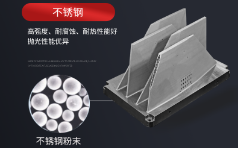
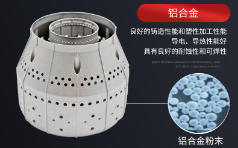
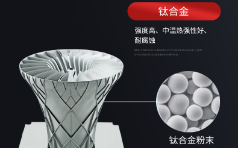
- Advanced Material Expertise: We handle a variety of metals (aluminum alloy, stainless steel, titanium, brass, copper) and engineering plastics to meet strict specifications.
- End-to-end solution: From initial Manufacturing Design (DFM) consultation to precise machining and comprehensive post-treatment (burrs, finishes - anodizing, plating, painting, etc.), we handle them seamlessly under one roof.
- Scalability and quality: Use our resources for rapid prototyping or Reliable production runs, all supported by a strict quality control process to meet your most stressful tolerances and critical specifications.
- Speed and efficiency: Benefit from streamlined workflows and advanced technology to enable faster turnaround times on your custom precise parts.
Whether you need a single complex prototype in titanium or a batch of complex aluminum shells, GRESTLIGHT five-axis CNC machining provides a powerful, reliable solution that often achieves superior results at highly competitive prices. [Customize your precision parts now with GreatLight](Your website URL is here)!
in conclusion
The micro CNC mill is a transformative tool that places amazing precision on desktops and workbenches. From achieving rapid innovation and complex DIY projects to being an important tool for prototyping and low-volume production, its impact is profound. Understanding key components, applications, selection criteria and operational best practices is essential to effectively leverage their power. For tasks beyond the upcoming advanced micro mills, especially high-complexity metal parts that require industrial-grade five-axis functions, quantity production or professional finishes - Work with experienced professionals, such as Greatlight CNC machining, it is the best way to achieve defect-free results, ensure performance and maximize value. Bring the precise revolution into your most ambitious designs, whether on your bench or through strategic partnerships.
Frequently Asked Questions about Micro CNC Milling
Q: Can a micro CNC mill cut metal?
- one: Yes, but it depends to a lot on Specific machine. Powerful micro mills can effectively machine softer metals such as aluminum, brass and copper. Hard metals such as steel require very stiff, powerful machines designed specifically for them. Always check the manufacturer's material compatibility specifications.
Q: What are the main differences between micro CNC mills and 3D printers?
- one: They operate differently. CNC mill is Subtraction Process; It uses a rotating tool to cut the material off the solid block. 3D printer is additive Process; it builds parts layer by layer by layer by layer by depositing materials (plastics, resins, metal powders). Generally, milling is better suited to strength, durability, smooth surfaces and precise metal parts, while the hardship of printing is scratching the effect on complex geometries that are impossible with plastic/resin.
Q: Is it difficult to learn CNC milling?
- one: There is a learning curve, especially mastering CAD/CAM software and understanding the principles of processing (summary, speed, tool path, workers). It is recommended to start with simpler projects and materials. Many resources are provided (tutorials, online communities, courses). Software availability varies greatly.
Q: How much does it cost "OK" Micro CNC mill cost?
- one: Costs vary greatly. The entry-level amateur kit starts at around $1,000-$2,000. Serious amateurs/prototyping with more powerful desktops usually range from $3,000 to $10,000. Precision industrial-grade benchtop micro mills cost from $15,000 to over $50,000. Factors, software and accessories.
Q: When should I outsource a professional CNC service like Greatlight to my own micro mill?
- one: Consider the following situations:
- Part complexity: A 4/5 axis function that exceeds the machine limit is required.
- Material requirements: Need to work hard metal (stainless steel, titanium) or challenging alloys.
- Precise requirements: Tolerances are tighter than machines or environments.
- Volume Requirements: Effectively multiple identical parts are required.
- Surface finish: A specific high-end finish (precise grinding, specialized plating, etc.) is required.
- Lack of competence/expert knowledge: Projects exceed your time, equipment capabilities or processing knowledge. Outsourcing ensures that professional results are not required to invest in equipment/expert knowledge that you don’t normally need.
- one: Consider the following situations:
- Q: What file formats are used in the CNC factory?
- one: CNC Mills uses a G code that instructs the machine to move. Typically, you can start with a CAD design file (e.g., .iges, .stl, .dxf, .dwg), convert it to a toolpath using the CAM software, and then the CAM software generates computer-specific G code.

点击右上角
分享给朋友吧







 长按图片保存/分享
0

