 钜亮五金-精密五轴数控加工服务


24H咨询热线:
180-2756-7310












定制服务热线
180-2756-7310

专业服务、快速报价
提供建模、免费改模
质量问题、免费重做
顺丰包邮、可开专票
Horizontal CNC Grinding Guide
发表时间: 2025-09-01 21:46:25
作者: 东莞市钜亮五金科技有限公司
浏览:
Unlocking Accuracy: A Comprehensive Guide to Horizontal CNC Milling
In the dynamic world of precise manufacturing, choosing the right machining process is crucial to achieving the best results. Among the most powerful and versatile options are horizontal CNC milling, a basic pillar used to produce robust, complex and high-precision components in countless industries. This guide delves into technology, its advantages, applications and why it remains the cornerstone of modern manufacturing.
Understanding the Basics: What is horizontal CNC milling?
Horizontal CNC milling takes this as the core and uses computer numerical control to guide the rotary cutting tool for removing material from the workpiece. Defining characteristics of the machine Horizontal spindle direction. Unlike the vertical counterpart, the spindle is mounted horizontally and parallel to the workbench. The workpiece is usually fixed to a fixture or directly on a pallet, which itself is mounted on a horizontal workbench. This horizontal configuration has inherent advantages, especially for components that require multi-faceted machining or have significant weight and size.
This is how core mechanics work:
- Spindle direction: The cutting tool rotates horizontally. The chips fall naturally due to gravity, improving chip evacuation and reducing recycling, which can damage tools and workpieces.
- Workpiece positioning: The workpiece is mounted on a horizontal table that can be along the X (left/right) and Y (forward/backward) axes.
- Cutting movement: The spindle moves vertically (z-axis) to allow the workpiece and horizontally (usually combined with table movement) to perform the required features of milling.
- Multi-component system (advanced): Many modern horizontal machining centers (HMCs) have automatic pallet changers. When a pallet is processed, the next pallet can be loaded/unloaded externally, greatly reducing idle time and increasing throughput.
- Multi-axis function: Advanced HMCs usually integrate other axes. A common enhancement is the rotation of the B-axis table, allowing the workpiece to rotate accurately, allowing for complex, multi-faceted machining in a single setup - an important step in the true four- or five-axis multifunctional rate within the horizontal paradigm.
Enthusiastic advantages: Why choose horizontal milling?
Horizontal configurations are not only different. It offers tangible benefits for specific manufacturing challenges:
- Enhanced stability and rigidity: The horizontal spindle orientation produces a lower center of gravity. Combined with the typical structure of the HMC, this setup provides excellent vibration stability. This directly translates into Surface surface surface surface surface excellencestricter tolerances (think aerospace and medical grade), and heavier, more aggressive capabilities – shortening cycle times for hard materials.
- Super chip evacuation: Gravity becomes an asset. The chip will naturally fall from the cut-in area into the machine's conveyor system. This prevents chip re-explosion (which can quickly reduce the tool), reduces heat accumulation in the workpiece, enhances tool life and improves process reliability - especially important for long-term or unattended automatic production.
- Ideal for deep pockets and cavities: Effectively milling deep pockets requires long tools. Vertically, long tools can be deflected under cutting forces, resulting in taper and inaccuracy. Horiontal milling supports the tool closer to the tip within the deep cavity, minimizing deflection and ensuring direct sidewalls and consistent depth.
- Ideal for heavy, large or multiple parts: The horizontal table inherently provides a stable platform for ensuring large and heavy workpieces. The tray's system performs well in handling multiple smaller parts simultaneously, or allows for rapid conversion between complex fixtures.
- Improve productivity through automation: HMC's tray-changing function is a game-changing mass production or lighting-making game. Setting and unloading continues to be uninterrupted during machining, maximizing spindle utilization and overall equipment effectiveness (OEE).
Navigation restrictions:
Although powerful, HMC is not always a universal solution:
- Initial Investment and Footprint: Typically, HMCs have a larger footprint and higher initial purchase cost compared to Vertical Machining Centers (VMCs), especially for comparable work envelopes.
- Setting complexity: Fixing is sometimes more complex than vertical settings, especially for smaller or simpler parts that do not require multi-faceted access. For basic one-sided machining, VMC may be more efficient.
- visibility: Viewing machining operations directly can be more challenging than vertical mills, although advanced detection and surveillance systems can greatly mitigate this.
Materials and industries provided:
Horizontal CNC milling usually deals with large amounts of materials, including:
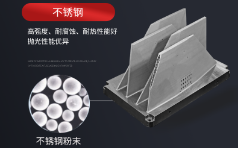
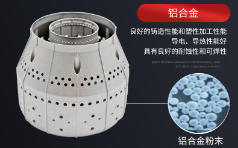
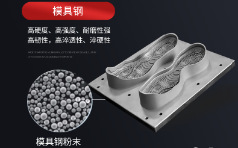
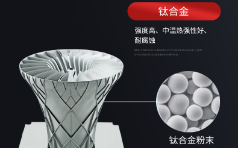
- Metal: Aluminum alloys (aerospace, automobiles), steel (including hardened tool steel), stainless steel (medical, food processing), titanium (aerospace, medical), copper, brass, bronze.
- Plastics and composites: Engineering plastics such as PEEK, DELRIN, ULTEM and high strength composites.
This versatility makes HMC essential in key areas:
- aerospace: Complex structural components, landing gear parts, turbines that require strength, accuracy and reliability.
- car: Engine block, cylinder head, transmission bushing - requires high volume production with consistent quality and complex internal functions.
- vitality: Large parts used in turbines, pumps, generators and oil/gas exploration equipment often involve hard materials and complex geometry.
- Heavy duty machinery: Large frames, housings, hydraulic components require stability for heavy duty cutting.
- Medical: Biocompatible materials (such as titanium) and micrometer-level accuracy are crucial for prototypes and implants.
- Tools and molds: Accurate molds, molds and fixtures require multilateral processing and long tool life.
Standard Accuracy: Greatlight's commitment to level CNC excellence
Achieving peak performance with horizontal CNC milling requires not only machines. It requires expertise, advanced technology and a relentless pursuit of quality. Great Be your special partner in precision metal manufacturing.
We use The most advanced five-axis CNC machining center - Combine the power and stability of horizontal milling with advanced multi-axis functionality. This synergy allows us to cope with unparalleled geometric complexity while ensuring inherent advantages of horizontal machining: excellent finishes, low-light accuracy and reliable chip management.
Our core expertise lies in Professionally solve complex metal parts manufacturing challenges. From initial design consultation to final delivery, we offer:
- Advanced Engineering Support: DFM analysis is used to optimize part design for productivity, cost and performance.
- Strict quality assurance: Use CMM and advanced inspection tools to verify the precise metrics of each dimension to prevent strict tolerances. ISO-compliant practices ensure traceability.
- A true one-stop compilation: In addition to precise milling, we offer comprehensive post-treatment – from complex bead blasting and expert polishing to professional anodizing, plating, heat treatment, painting and assembly. Simplify your supply chain.
- Rapid prototyping and mass production: Agile process to quickly reverse the scalable solutions that run prototypes and production.
- Material versatility and expertise: We are skilled in providing a wide range of metals to alloys that challenge challenges such as titanium and inconel, understanding their unique processing characteristics.
- Competitive price and quick customization: Focus on providing high-value solutions at the best price without compromising quality. We effectively translate custom requirements into precise processed reality.
Greglight five-axis CNC machining is the first choice for the determinism of complex, high-precision parts that require multi-faceted functions. Customize your precision parts now at the best prices! (Replace # with actual CTA/link).
in conclusion
Horizontal CNC milling demonstrates a proof of engineering innovation. Its unique combination of stability, excellent chip management, multi-axis potential (especially in advanced HMC configurations), and efficiency of handling composites, large or heavy parts makes it irreplaceable in modern high-precision manufacturing. HMC is consistently delivered when it is required that applications require powerful solutions, repeatable accuracy and high throughput.
For engineers and procurement experts seeking manufacturing partners for the most challenging projects, choosing involves working with proven expertise, cutting-edge technologies such as advanced five-axis HMC and dedicated to a full service – exactly what Greatsive provides. Horizontal milling capabilities and accuracy that meet your next critical component needs.
Frequently Asked Questions about Horizontal CNC Milling (FAQ)
Q1: How is horizontal CNC milling (HMC) different from vertical CNC milling (VMC)?
A1: The main difference is the direction of the spindle. The HMC has a horizontal spindle that allows the chip to fall off naturally and provides excellent stability for heavy-duty cutting and large/heavy parts. VMCs have vertical spindles, which usually provide simpler settings for unilateral machining and may be easier to visibility. HMCS performs well in clearing chips and can be used for closed cavity, deep pockets and high production pallet work.
Q2: Does horizontal mill work better on aluminum or steel?
A2: HMCs are perfect for both, but their advantages are especially brightly shining with steel, stainless steel and titanium. Rigid structure allows for high metal removal rates without sacrificing accuracy or surface finishes. While it is also very suitable for aluminum, some vertical plants with high-speed aluminum specificity may achieve faster spindle speeds.
Q3: What are the tolerance capabilities that horizontal CNC milling can achieve?
A3: Modern precise HMC, especially a five-axis variant operated by skilled technicians like Greatlight, consistently maintain tolerances ±0.0005 inches (0.0127 mm)And it usually depends on the part size, material and specific functionality. Process control, calibration and advanced metrology are crucial to achieving this goal.
Q4: Why does tray turnover have such a big advantage for HMC?
A4: Pallet Changer Enable true Light-emitting manufacturing and maximize productivity. When on one pallet on the machine mill assembly, the operator can simultaneously remove the finished part and load the new workpiece or fixture onto another pallet outside the machining area. This greatly reduces non-cutting time between jobs.
Q5: Can horizontal milling centers handle complex 3D shapes?
A5: Absolutely. While basic HMC handles 3-axis machining (X, Y, Z), the integration of the rotating B-axis (tilt/rotating table) converts the HMC into a powerful quad-axis or even five-axis simultaneous machining center. This allows very complex contour geometry to be processed in a single setup - ideal for aerospace impellers, intricate molds or complex medical implant prototypes.
Q6: When should I choose a horizontal machining center in the vertical direction?
A6: Priority to HMC when your parts:
- Need to be processed on multiple faces/sides (ideally in a setup with multiple axes).
- Stable level tables are big, heavy or benefit.
- Deep pockets or cavity involving chip removal or tool deflection.
- It is made of difficult materials that require heavy shearing and rigidity.
- Generated in high volumes where the tray changer improves efficiency.
- The highest possible finish and dimensional consistency is required. For simpler single-sided machining or projects with significant budget constraints, VMC may suffice.
Question 7: What are the common post-processing options for CNC milling parts?
A7: Parts usually need to be completed beyond milling. General services include:
- Deburring: Remove sharp edges.
- Surface finish: The beads burst, polish, roll.
- Heat treatment: Annealing, hardening, tempering (used to enhance material properties).
- coating: Anodized (type II, type III), electroplating (nickel, chromium), powder coating, painting (for corrosion resistance, aesthetics).
- Assembly and kit. Providers like Greatlight can integrate seamlessly.

点击右上角
分享给朋友吧







 长按图片保存/分享
0