 钜亮五金-精密五轴数控加工服务


24H咨询热线:
180-2756-7310












定制服务热线
180-2756-7310

专业服务、快速报价
提供建模、免费改模
质量问题、免费重做
顺丰包邮、可开专票
Vertical CNC Milling Guide
发表时间: 2025-09-02 01:18:19
作者: 东莞市钜亮五金科技有限公司
浏览:
Unlocking the potential of vertical CNC milling: a comprehensive guide
In the world of precision manufacturing, few technologies are as versatile and essential as vertical CNC milling. As the industry drives tighter tolerances, faster production and greater design complexity, Vertical Milling Center (VMC) It has become the basis for creating highly accurate parts. This guide delves into the mechanisms, benefits and practical applications of vertical CNC milling, which are attracted by engineers who optimize their designs and seek reliable metal manufacturing.
What is vertical CNC milling?
Vertical CNC milling uses a computer-controlled rotary cutting tool to remove material from the workpiece under the vertically positioned spindle. The spindle axis will be aligned perpendicular to the axis of the machine, allowing tools such as end mills and drills to move precisely along the X, Y, and Z axes. CNC programming translates digital designs, such as CAD models, into instructions indicating toolpaths, speed and depth, with complex geometry, smooth finishes and microscopic level of accuracy.
Key components of vertical CNC mill
Understanding the build of the machine helps optimize settings:
- Spindle: Motor drive assembly for rotary cutting tool. Variation of speed for different materials (e.g. 6,000-24,000 rpm).
- Worksheet: Move transversely (X and Y axes) to locate the workpiece. T-Slots or fixtures are usually included.
- Column/frame: Provides rigidity to minimize vibration during heavy-duty cutting.
- Knee/Z-axis slider: Adjust the working height to control depth.
- Control unit: Interfaces for input and monitoring operations (such as G-code interpreter).
Common vertical milling operations
- Facial Milling: Use a wide cutter to smooth the large surface.
- Slot: Cut narrow passages (slots, grooves) with end mills.
- contour: Shape 3D curves through programming tool paths.
- Drilling/Eavesdropping: Use automatic cycles for precise holes.
- Bag: Remove material from the cavity from the enclosed area.
Suitable materials
VMC stands out:
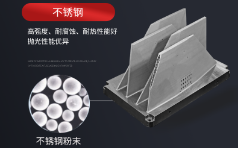
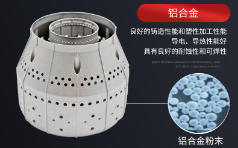
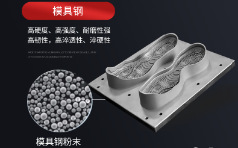
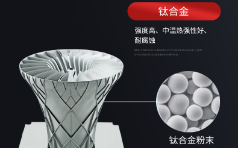
- Metal: Aluminum, stainless steel, brass, titanium, tool steel.
- plastic: Peek, Nylon, PTFE (low heat generation minimizes warpage).
- Composite materials: Carbon fiber, fiberglass (with specialized tools).
Best practices for designing VMC machining
Effective design reduces complexity and cost:
- Avoid deep cums: Deep pockets require tools for expansion, risking deflection. The limiting depth is ≤4× tool diameter.
- Radius inside angle: Sharp edge pressure tool and wear faster; add radius larger than the size of the cutter.
- Management thickness: Thin walls (<1mm) may deform - maintain a uniform thickness as much as possible.
- Standardized pore size: Use common drill bit cutting tools to vary downtime.
- Optimize inventory materials: Match workpiece size to near mesh shape to reduce machining time.
Advantages of vertical CNC milling
- accurate: Tolerance of ±0.0005" (±0.013mm) has repeatability.
- Multifunctionality: Process 2.5D parts, complex 3D profiles and batch prototypes.
- speed: Multi-axis VMC (e.g., 3+2 axes) cut cycle time without replay.
- Cost Efficiency: Minimum manual intervention reduces labor costs for large-scale operations.
- Surface quality: Optimized toolpaths create smooth finishes (e.g. RA <0.8μm) without auxiliary polishing.
Vertical vs. Horizontal Milling: Which Wins?
While horizontal mills do well in large inventory (such as gear manufacturing), vertical mills dominate precise tasks:
- set up: Vertical mills simplify fixed and operator visibility.
- space: Compact footprint is suitable for smaller stores.
- complex: Ideal for complex multi-directional geometric shapes.
- support: Tool changers and coolant systems enhance automation on VMCs.
Industry applications
From medical equipment to aerospace:
- Aerospace: Turbine blade, landing gear rack.
- Automobile: transmission housing, custom bracket.
- Medicine: surgical instruments, implant templates.
- Electronics: radiator, housing.
Why collaborate with your VMC needs?
At Greatlight, we integrate precision engineering with one-stop convenience:
- Expertise: Decades of experience machining complex geometric shapes in titanium, Inconel® and hard alloys.
- Advanced 5-axis integration: Our VMC includes a rotation axis for undercut and angle features - no repositioning is required.
- Fast Market: Rapid prototyping and high volume production with ISO certified quality.
- Complete service: Under one roof, anode, powder coating, and assembly.
- Competitive customization: Experienced engineers optimize designs for efficiency without compromising specifications.
Ask for a quote today and let our vertical CNC feature turn your precise partial ideas into reality and within budget.
in conclusion
Vertical CNC milling remains an integral part of the evolution of manufacturing, making innovations with unparalleled precision. By understanding its principles, major considerations and design strategies, businesses unlock cost efficiency and rapid scalability. For critical projects requiring agility and precision, vertically oriented machining centers (supported by experts like Greatlight) support the foundation of industrial excellence.
FAQ (FAQ)
Q: What tolerances can a vertical CNC mill actually achieve?
Answer: Modern vertical factories usually maintain tolerance ±0.0005" (±0.013mm of metal), although the specific details depend on workpiece size, material and machine calibration.
Q: How deep can you mill in a one-pass?
A: Depth varies by tool/material. For aluminum, ½" The end mill often cuts by 0.5" Deep; stainless steel may need ≤0.1". Ensure stability through multiple steps.
Q: Can VMCS machine exquisite materials such as thin-walled plastic?
A: Yes, use reduced spindle speeds, fine tools and adaptive tool paths to avoid deformation. Coolant management prevents heat buildup.
Q: Is 3 axes sufficient for prototyping, or should I choose 5 axes?
A: 3-axis fits prismatic parts (e.g., brackets). For prototypes with curves, lines or undercuts, 5-axis minimizes setup and improves accuracy.
Q: What file format is required for CNC milling?
A: Provisioning steps, IGE or native CAD files. We will generate optimized G-code from your 3D model.
Q: How long does a typical milling project take?
Answer: Small batches may be shipped in 3-5 working days; complex components take more than 10 days. We offer quick options.
Q: Does the Greatlight handle go beyond basic milling?
A: Yes - Our services include surface treatment (anodization, bead blasting), heat treatment, engraving and quality inspection (CMM report).
By clarifying these essentials, we enable our customers to take advantage of the full functionality of Vertical Mill. Reach out and discuss your project - no inquiry is niche!

点击右上角
分享给朋友吧







 长按图片保存/分享
0