 钜亮五金-精密五轴数控加工服务


24H咨询热线:
180-2756-7310












定制服务热线
180-2756-7310

专业服务、快速报价
提供建模、免费改模
质量问题、免费重做
顺丰包邮、可开专票
CNC Vertical Mill Guide
发表时间: 2025-09-02 02:38:34
作者: 东莞市钜亮五金科技有限公司
浏览:
Unlocking Accuracy: Your Comprehensive Guide to CNC Vertical Milling
In the dynamic world of modern manufacturing, there is no end to seeking high-precision, efficient and versatile machining solutions. CNC Vertical Machining Center (VMC) is the cornerstone technology that drives this revolution. For businesses and engineers seeking to convert raw materials into complex, highly tolerant components, understanding vertical milling is not only beneficial, but essential. Let's dig into why this technology becomes a key to precise production and why it may be key to unlocking the potential of the project.
What exactly is a CNC vertical mill?
Imagine a high-level robot sculptor, but for metals, plastics or composites. The CNC vertical mill has a vertically oriented spindle - the business end of the cutting tool - it can move up and down accurately (z-axis). Below it is a workbench that moves horizontally along the X (left and right) and Y (front and back) axes. The movement is carefully planned by Computer Numerical Control (CNC), where programmed codes determine each rotation, feed rate and path drop. Unlike horizontal counterparts, the vertical direction provides high visibility during operation and is easier to fix in many common components, making it widely available for use.
Computer room: Core components are in action
- Rigid frame and foundation: Provides the bedrock stability required for high-precision cutting without vibration.
- Vertical spindle: Driven by a powerful motor, it rotates cutting tools at precisely controlled speeds (such as end mills, drill bits or face mills).
- Tool Changer (ATC-Automatic Tool Changer): The robot's arms are a game-changer, swapping tools quickly from preloaded magazines without pausing the machine. This greatly improves the cycle time of complex parts that require multiple tools.
- Tools Magazine: Holding a carousel with numerous different cutting tools, prepare the ATC to choose the required cutting tools.
- CNC controller: The brain of the machine. Modern controllers explain G-code and complex CAM software instructions that translate design into perfect spindle and table motion. They provide an operator interface, diagnostics and process monitoring.
- Worksheets and Axis Slides: Precision ground slides driven by ball screws and servo motors ensure smooth, rebound-free movement along the X, Y and Z axes within tight tolerances.
- Coolant system: It is crucial for managing cutting, lubrication tools, and flushing chips to maintain tool life, finish and dimensional accuracy.
Where does the vertical mill shine? (Applications and Industry)
The versatility of VMC makes it essential in countless fields:
- aerospace: Complex aircraft structural components, engine mounts, landing gear parts.
- car: Engine block, gearbox box, cylinder head, complex bracket.
- Medical: Surgical instruments, orthopedic implants, diagnostic equipment housings.
- vitality: Turbine assembly, heat exchanger plate, valve body.
- Mold and death: Core and cavity mold, complex electrodes.
- electronic: Radiator, housing, precision fixture.
- General manufacturing: Prototypes, functional end-use parts, replace outdated components.
- defense: Crucially important for the high strength and precision components of the system.
Why Vertical Mills Dominate the Supreme (Key Advantage)
- Enhanced accuracy and repeatability: CNC control eliminates human errors, produces parts with special dimension accuracy (can achieve ±0.0005 inches or higher), and produces perfect consistency during long-term production processes.
- Upper surface surface: Precise control of tool routing and speed/feed can make the part surface very smooth, often minimizing and even eliminating the need for secondary finishes.
- Unrivaled versatility: VMC has a variety of available cutting tools and multi-axis features (especially 3-axis and 3+2-axis indexes) to use complex 2D profiles, complex 3D surfaces, drilling, tapping, pockets and slots on a single platform.
- Operational efficiency: Automation features such as tool changers (ATCs) and programmable coolant nozzles greatly reduce idle time between operation and manual intervention.
- Simplified setup and visibility: Vertical orientation provides good sight access to the work area, simplifying tool changes, fixed settings, and process monitoring.
- Cost-effective: Although the initial investment is considerable, speed, accuracy, reduced scrap rate, flexibility and automation translate into lower costs per part, especially for larger batches. They are usually more affordable than equivalent level machines.
Improve potential with advanced VMC integration: Greglight Edge
At Greatlight, we leverage the inherent power of top CNC verticals, not isolated, but as part of our premium Five-axis CNC machining ecosystem. This intelligent integrated unlocking function is far beyond standard processing:
- 5-axis function: We use a sophisticated rotating table or tilt/tilt-turning head to convert the VMC into a dynamic power chamber. This allows for 5-axis machining at the same time - allowing us to reach microscopic and machine complex geometry effortlessly from any angle In a setting. This greatly reduces setup time, eliminates alignment errors, and allows machining of impossible height profile parts for standard 3-axis factories.
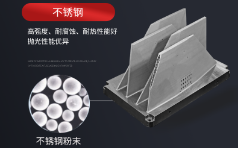
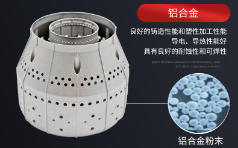
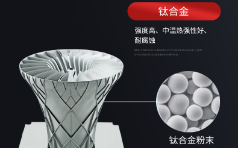
- Material mastery: Our expertise spans advanced metals (stainless steel, titanium alloy, inconel, aluminum, brass, copper) and engineering plastics. We understand the specific cutting mechanisms and parameters required for even the most challenging materials.
- One-stop manufacturing solution: Processing is just the beginning. Gremight seamlessly integrates precision milling with full integration Post-processing and completion of services. We provide internal expertise:
- Precise burrs
- Heat treatment
- Surface finishing (anodized, plating, powder coating)
- Precision grinding and grinding
- Non-destructive testing (NDT)
- Speed meets quality: We focus on rapid prototyping and mass production. Our optimized workflows, advanced tools and continuous process improvements ensure you get high-quality parts delivered reliably and faster than many traditional stores.
- Collaborative Engineering: Our team not only provides processing. We bring deep engineering insights to the desktop to assist customers in designing manufacturability (DFM), selecting the best materials and processes, and ensuring that the design meets its functional requirements while being cost-effective in production.
Choose your CNC Milling Partner: Key Considerations
Choosing the right processing service provider is crucial. Beyond the basic mechanism:
- Technical expertise: Do they have a deep understanding of materials science, processing dynamics and advanced tools?
- Function: Can they handle your specific project requirements (part size, complexity, tolerance, material)?
- Quality system: Is there a strong quality management system (ISO 9001 certification is a powerful indicator)? What inspection equipment (CMM, optical comparator, surface profiler) are used?
- 5-axis and advanced technology: For complex parts, is it possible to use real 5-axis functionality and software expertise? Advanced solutions often require advanced equipment.
- Value-added services: Can they handle finishing, assembly or testing, simplifying your supply chain?
- Communication and transparency: Are providers’ response, collaboration and clear schedules and costs clear? Do they provide DFM consultation?
- Industry-specific experience: Experience in your field often translates into understanding specific standards, material requirements and potential pitfalls.
Conclusion: Precision designed for your success
CNC vertical milling machines are still an essential force for manufacturing, mixing accuracy, speed and significant versatility. Whether it is solving complex prototypes or large volumes of production, its functions are the basis for creating high-quality, functional components.
At Greatlight, we integrate it into our advanced 5-axis workflow and a comprehensive manufacturing ecosystem, beyond the standard features of Vertical Mill. This collaborative approach allows us to effectively handle unusually complex geometries, master the required materials, and pass precise parts with normally impossible functions through conventional methods. Combining our one-stop finishing service and dedication to quality, innovation and customer partnerships, Greatlight is your trusted solution to your CNC machining challenges that require the highest level of expertise and execution. Ready to turn your design into reality? Explore how our precision and capabilities improve your next project.
Frequently Asked Questions about CNC Vertical Milling (FAQ)
Q1: What are the main differences between CNC vertical and horizontal milling machines?
A1: The basic difference is the spindle orientation. The vertical mill has a vertically aligned spindle, while the horizontal mill's spindle is aligned horizontally. Vertical mills often offer better visibility and are often preferred for simpler fixing and machining parts such as boards and cavity. The horizontal mill excels in heavy-duty cutting operations and creates deep slots or pockets on multiple sides of a single setup on the advantage of part evacuation. Complex stores often use both.
Q2: Can the CNC vertical mill handle real five-axis processing by itself?
A2: The standard 3-axis vertical mill operates only in X, Y and Z. To achieve continuous 5-axis machining (simultaneous movement on all 5 axes), the vertical mill requires special accessories such as tilted rotating tables (Trunnion) or tilted and rotating heads. Greatlight integrates these advanced features into our VMC setup to provide a true 5-axis solution.
Q3: What typical tolerances can be achieved with accurate CNC vertical milling?
A3: Use high-quality machines, tools and rigid settings to maintain tolerances regularly ±0.0005 inches (±0.0127 mm) The geometric features are even tighter depending on size and geometry. Viable tolerances are always project-specific and are affected by part size, complexity, geometric stability, material characteristics and inspection methods. We design the process to meet or exceed critical tolerances.
Q4: What materials can be effectively processed using a vertical mill?
A4: Modern vertical mills, especially powerful machines, combine advanced cutting tool materials (carbide, ceramic, diamond-set coating) to a wide range. This includes:
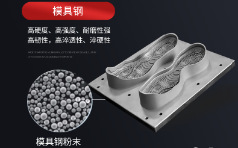
- Metal: Aluminum alloys (popular), stainless steel (304, 316, 17-4PH, etc.), tool steel, carbon steel, titanium alloys, nickel-based Superalloys (Inconel), brass, copper, copper.
- plastic: Delrin, PEEK, PTFE, Nylon, ABS, Polycarbonate, Ultem.
- Composite materials: Fiberglass laminate, carbon fiber reinforced plastic (CFRP-used professional tools).
The choice depends to a large extent on the workability of the particular material and the required finish.
Q5: Do I need CNC Mill for my prototype or small batch project? Isn't it too expensive?
A5: CNC milling is often More Cost-effective than manual processing, especially for complex prototypes or small batches. Programming time is quickly offset by the speed and accuracy of the processing process. CNC eliminates manual operator errors, ensures consistency in each section and reduces waste. It is also important that it can manually create complex geometric shapes. Modern fast turnaround on CNC programming makes it accessible and economical.
Question 6: How does Greatlight ensure the quality of milled parts?
A6: Quality is embedded in every stage: strict material procurement, controlled processing process using calibration equipment, and strict inspection. We incorporated the inspections in the process and adopted advanced final inspection tools, including a coordinate measuring machine (CMM) for precise dimension and geometric verification, optical comparator for profiles, finish surface validators, and other specialized equipment required. Our commitment to the quality management system emphasizes this diligence.
Question 7: Do you provide design support before processing?
A7: Absolute. Early design collaboration is the key to success. Our engineering team provides designs for Manufacturing (DFM) consultation. We analyze your design to identify potential machining challenges, recommend cost-effective tolerance adjustments without sacrificing functionality, recommend the best materials based on the application, and propose design adjustments to simplify production and improve quality, ensuring a smooth transition from concept to finished product. Consult with us early to get the best results.
Question 8: What advantages does your 5-axis integration offer over standard VMC machining?
A8: Integrate the real 5-axis function by enabling:
- Complex geometric shapes: machining features of multiple angles in one setup (e.g., deep pockets, undercuts, turbine blades).
- Less settings: Reduced processing/renovation saves time, reduces costs and is critical to eliminate cumulative setup errors (translated to higher overall accuracy).
- Improved tool access and stability: Allows shorter tools to be best used for hard materials or depth features, thereby reducing vibration and improving surface finishes.
- Complex contours: Perfect machining of complex organic and fluid shapes directly from CAD data.
This expands the scope of what your project can achieve.

点击右上角
分享给朋友吧







 长按图片保存/分享
0