 钜亮五金-精密五轴数控加工服务


24H咨询热线:
180-2756-7310












定制服务热线
180-2756-7310

专业服务、快速报价
提供建模、免费改模
质量问题、免费重做
顺丰包邮、可开专票
Basic knowledge of desktop CNC milling
发表时间: 2025-09-02 06:45:02
作者: 东莞市钜亮五金科技有限公司
浏览:
Unveiling Desktop CNC Milling: Your Precision Manufacturing Portal (and when more is needed)
The world of manufacturing is no longer limited to large factories. Desktop CNC (Computer Numerical Control Machine) is located in workshops, garages, design studios, and even classrooms, and milling machines are empowering creators and engineers to bring their vision to life with unprecedented precision on a smaller scale. If you are curious about how these compact powers work or wonder if they meet your project needs, you are in the right place. Let's dig into the basics of desktop CNC milling and explore its exciting possibilities.
Core idea: Digital control accuracy
In essence, CNC milling is a subtraction manufacturing process. This means it starts with a solid block of material (metal, plastic, wood, foam, etc.) Remove Use rotary cutting tools to accurately shape the parts of the product. this "CNC" The aspect means that each movement of the tool and the positioning of the artifact are determined by the computer code (usually the G code). This code is generated from a digital 3D model (CAD model) using specialized software (CAM software).
Desktop CNC plants reduce this powerful technology to scale and price points outside of traditional industrial environments. Although smaller than their industrial counterparts and smaller in functionality, they provide excellent accuracy and versatility to their size.
Basic components of desktop CNC mill
Understanding basic anatomy helps to grasp how it works:
- Frame/Bed: Provides a strong foundation for bearing cutting forces. Stability here is crucial to accuracy.
- Spindle: Motors that drive and rotate the cutting tool (end machine). Speed (RPM) is the key variable.
- Motion axis: Desktops usually have 3 axes:
- X-axis: Left/right movement (usually a table).
- Y-axis: Move forward/backward (usually a table).
- Z-axis: Move up/down (usually spindle/head).
- (Note: Some advanced desktop settings may provide a rotary axis, but 3 axes are standard).
- Controller: this "brain" This interprets the G code and sends the signal to the motor driver.
- Stepper motor/servo motor: According to controller commands, accurately position the machine shaft.
- tool: Finish the mill (various shapes and sizes) and sets/Chucks secure them to the spindle.
- labor force: Fixtures, vises, fixtures or adhesives securely secure the raw material (workpiece) to the bed or table.
- Control software: The interface on the connected computer sends the G-code to the controller, starts/stops the job and monitors the progress.
- CAD&CAM Software: Key prerequisites! Use Offline Design Parts (CAD) and generate tool paths and G-codes (CAM).
Desktop CNC workflow: from ideas to objects
- Design (CAD): Create an exact 2D vector or 3D model of parts to be made using CAD software (e.g., Fusion 360, SolidWorks, Freecad).
- Cam Programming: Import the CAD model into the CAM software. Here you define:
- Inventory settings: The size of the raw material block.
- Tool selection: Select the right end mill for roughing and finishing.
- Tool path: Define the routes and strategies that the cutter will take (e.g., facing, pocket, profile, drilling).
- Speed and Feedback: Set the spindle RPM and feed rate (speed of the cutter moving through the material). It is crucial for tool life and quality reduction!
- Generate G code: The CAM software converts all settings into machine-readable G-code.
- Machine Settings:
- Install the workpiece securely with proper labor.
- Install the correct cutting tool in the spindle clamp.
- Establish Working Coordinate System (WCS): Tell the machine exactly where the zero point (x0, y0, z0) in stock is (using an edge finder, detector, or physical touch).
- Milling operation:
- Transfer G code to the machine controller (via USB, network or SD card).
- Perform final safety checks (eye/ear protection to remove loose objects).
- Get started working. The machine independently follows the G code instructions and cuts the material into one layer.
- Monitor the process and periodically clear the chip (SWARF).
- Post-processing: After milling is complete, clean the parts, remove any support structures, if any support structures are used, and then perform any necessary decoration (sanding, polishing, painting, etc.).
Materials and abilities: What can you do?
Desktop CNC Mills do a great job with softer materials, but some lightweight metal can be handled with proper settings and smaller tools:
- plastic: Acrylic, ABS, Nylon, Delrin, Polycarbonate, HDPE. (for prototypes, housings, fixtures).
- Woods and composites: Hardwood, softwood, plywood, MDF. (It is very popular in making logos, furniture parts, decorative objects).
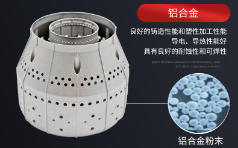
- Soft metals and alloys: Aluminum (most common project Metal for desktops), brass, copper (needs careful feed/speed). Deeply cut or hardened steel usually goes beyond safe desktop functionality.
- Bubble and template: Ideal for prototyping and mold making.
Typical Applications:
- Rapid prototyping: Fast iterative form, fit and functional test physical design.
- Hobbyist Projects and Model Manufacturing: Create custom parts for RC vehicles, microcosm, musical instruments, jewelry components.
- Small scale production: Special components of a dedicated equipment or product are limited.
- Educational tools: Teach design, engineering and manufacturing principles.
- Create fixtures and fixtures: Make custom tools for assembly, machining aids, or holding parts.
Know the Limits: When Desktop CNCs Need Bigger Brothers
Desktop CNC factories are incredible tools, but they have inherent constraints:
- Limited rigidity and strength: Deep cutting in deeper metals, high material removal rates and tight tolerances maintained under heavy loads.
- Working envelope size: Limited to relatively small parts.
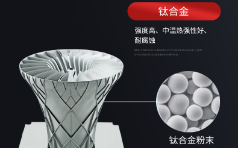
- Material constraints: Hardened steel, titanium, and high temperature alloys are impractical.
- Complex geometric shapes: Standard 3-axis mills cannot be re-fixed, increasing time and potential errors to produce complex organic shapes or undercuts.
- Manual setup and expertise: A lot of learning curves and hands-on involvement is required to set up and operate.
- Surface surface and accuracy: Good results can be achieved, but consistency of high demand industrial components is challenging.
Bridging the gap: Greglight's industrial five-axis CNC advantages
This is where the CNC machining step is. For the required items:
- Complex geometric shapes: Complex shapes, deep cavity, real 3D profiles or undercuts that require access to multi-axis tools.
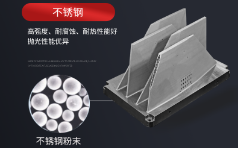
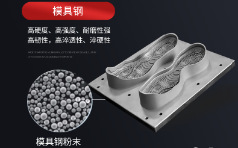
- Industrial grade metals and alloys: Stainless steel series (304, 316), titanium (Ti6al4v), tool steel, exotic alloys are reliably processed.
- Stricter tolerances: Keep ±0.0005" (0.0127mm) or better consistently.
- Larger parts: Size exceeds a typical desktop work envelope.
- Production: Effective and reliable processing in large batches.
- Upper surface surface: Nearly molar or specialized post-processing requirements.
- Complete manufacturing solution: Including heat treatment, electroplating, anodizing, custom packaging.
...Our industry Five-axis CNC machining Features provide unparalleled accuracy, efficiency and quality.
Why big?
- Advanced five-axis machining: Controlling all five axes simultaneously allows complex parts to be machined in a single setup, reducing errors and cycle times.
- State-of-the-art equipment and expertise: Combine cutting-edge technology with senior mechanics and engineers.
- Extensive material proficiency: Proficient in handling almost all processable metals.
- One-stop completion: Comprehensive post-processing service to meet exact specifications.
- Quick custom solution: Ability to quickly transform prototypes into production operations.
- Competitively accurate pricing: Provide high-quality complex parts at an economical speed.
While the desktop CNC factory is an excellent innovative tool, Greatlight provides high-performance machining muscle for mission-critical components. Whether it’s complex aerospace bays, precise medical implants, or powerful automotive prototypes, we’ve transformed challenging designs into reality.
in conclusion
Desktop CNC Milling has democratized precision machining, opening doors for manufacturers, designers and small businesses. By mastering the basics – understanding components, workflows, material functions and inherent limitations – you can effectively leverage this technology for prototypes, small-scale production and creative expression. It is an important entrance to the world of computer-controlled manufacturing.
However, it becomes crucial to improve industrial-grade capabilities when projects require the highest accuracy, the toughest materials, complex geometry, or the quantity of production scale. Greatlight specializes in overcoming these challenges with our advanced five-axis CNC machining services. Utilizing state-of-the-art technology and deep expertise, we provide powerful solutions to require customized metal parts manufacture and receive comprehensive post-processing. Let us help you turn your ambitious design into a reality of precise design.
FAQ: Your desktop CNC milling question has been answered
Q1: What are the main differences between 3-axis and 5-axis CNC mills?
A: The 3-axis mill moves the cutter in the X, Y and Z directions relative to the workpiece fixed in place. 5-axis mill also allows the workpiece to rotate (usually on the A and C axes) At the same time The cutter moves. This makes it possible to process extremely complex shapes from almost any angle without re-fixing, which is critical for complex geometric shapes and greatly reduces setup time.
Q2: What is the price of a good desktop CNC mill?
A: Entry-level machines with softer materials start at around $1,000. Solid amateur/prototype machines are able to use harder wood, and even aluminum machines usually range from $3,000 to $10,000. Industrial-level desktops can be pushed to the range of over $20,000. Tools, software (cams are expensive!) and factory cost factors.
Q3: Is CNC milling difficult to learn?
A: There is a learning curve. Proficiency needs to be understood:
- Basics of CAD design.
- CAM software logic (tool route, speed/feed).
- Machine setup, calibration and operation.
- Tool selection.
- Material properties.
There are a large number of online resources and communities, but specialized time is expected to learn safely and effectively.
Q4: What is it "Speed and feed," Why do they criticize?
one: "speed" Refers to the spindle RPM (speed of the cutter rotation). "feed" Refers to the speed at which the cutting machine moves in the material. Making these settings wrong is the main reason for tool breakage, poor surface effect, and even machine damage. Optimal speed/feeding depends on tool material/diameter, workpiece material, cutting depth and machine stiffness.
Q5: Can a desktop CNC mill cut metal?
one: Yes, but there are great limitations. Mainly soft metals such as aluminum, brass and copper. It requires slower speeds, shallow cutting, specialized cutting tools, excellent tools and high machine stiffness. Steel machining on a typical desktop is usually impractical or unsafe. Industrial machines are built for this purpose.
Question 6: How do I know if my project requires desktop or professional services like Greatlime?
A: Consider when considering your project needs:
- Hard Metal: Stainless steel, titanium, tool steel, etc.
- High precision: Tolerance is less than ±0.001" / 0.025mm.
- Complex geometric shapes: Undercut, deep cavity, composite curves with 5-axis function are required.
- Larger size: Size approximately more than 12" x 12" x 5" (Variable changes).
- Production: More than just a few identical parts.
- Key applications: Parts that require strength, accuracy or certified materials.
Q7: What file formats do CNC machines use?
A: The CAD model is created in native formats (e.g. .sldprt, .ipt, .step, .iges). CAM software uses these to generate tool paths and outputs G code (usually .nc, .cnc, .gcode, .tap). G code is a common language that CNC computer controllers understand. STL files are usually no Suitable for cam; use solid CAD models.
Question 8: What safety precautions are crucial to operating a CNC mill?
one: Never do not have the following operations: Safety glasses (or metal facial shield), hearing protection, avoid loose clothing/jewelry, and make workspace clean/run coolant/fries clear. Understand the emergency stop. Impeccably secure the labor force. Do not leave the machine unattended when running. Know the risks of flying chips and rotating tools.

点击右上角
分享给朋友吧







 长按图片保存/分享
0

