 钜亮五金-精密五轴数控加工服务

24H咨询热线:
180-2756-7310












定制服务热线
180-2756-7310

专业服务、快速报价
提供建模、免费改模
质量问题、免费重做
顺丰包邮、可开专票
Start the CNC Milling Course
发表时间: 2025-09-03 08:01:16
作者: 东莞市钜亮五金科技有限公司
浏览:
Get started with CNC milling: Your precise manufacturing approach
So, your interest in the CNC milling world? Maybe you've seen incredibly precise parts that appear in these machines, or have heard of the transformational power of computer-controlled manufacturing. Whether you are an aspiring engineer, an amateur eager to upgrade, or a business looking to understand your production options, entering CNC milling is an exciting journey. As the cornerstone of modern manufacturing, CNC milling turns raw materials (metals, plastics, composites) into complex high content components. Mastering its basic principles unlocks immense creativity and productivity.
Unveiling the mystery of CNC milling machines: more than just tools
CNC (Computer Numerical Control) Milling is a subtraction manufacturing process. It uses a computer-guided rotary cutting tool to remove material from solid blocks (workpieces) and carves into the desired shape with special dimensional accuracy and finish. Unlike manual milling, CNC computers interpret digital blueprints (usually CAD/CAM-generated G-code) to manually execute complex tool paths that cannot be performed using speed and repeatability.
For beginners, understanding the core elements is crucial:
- CNC controller: brain. It reads the G-code instructions and converts them into the exact electrical signal of the machine motor.
- Motion axis: The machine's movement is free. Standard 3-axis mills (X, Y, Z) handle most geometries. Five-axis CNC machining (Just just in Great) Add rotations around the X and/or Y axis (commonly referred to as A and B) so that incredibly complex shapes in a single setup can be simultaneously machining, a huge advantage of complex aerospace, medical or automotive parts.
- Spindle and cutting tools: The spindle is fixed at high rpms and rotates the cutting tool. Tool selection (end mill, drill, face mill) is crucial for material type, cutting type and required finish.
- labor force: Fixing devices or vises securely secure the workpiece during processing to prevent inaccurate movement.
- CAD/CAM software: Computer-aided design (CAD) creates 3D models. Computer-aided manufacturing (CAM) software converts this model into step-by-step toolpath instructions (G-code) that computers understand.
CNC milling process for beginners: step by step
- Design and Blueprint (CAD): Part of your journey begins digitally. With CAD software, you can carefully design 3D models to define each dimension and function. This model is your virtual blueprint.
- Programming Machine (CAM): Import the CAD model into the CAM software. Here you:
- Define raw material inventory.
- Select the appropriate cutting tool.
- Plan the tool path strategically: How will the tool cut parts? Consider roughness (batch removal) and finish (final dimension/smoothness).
- Set key parameters: spindle speed (RPM), feed rate (speed of tool movement), cutting depth and coolant application. Choosing these correctly, especially for demanding materials, requires expert knowledge - the core competence of Greglight.
- Generate G code: The CAM software converts all your settings into an exact numerical language that the CNC controller executes.
- Machine Setup and Labor: Install the raw materials firmly on the machine tool or fixture. Load the necessary cutting tools onto the tool changer or spindle (if manually changed). Execution key "Tool Offset" Tell the machine exactly where the tip of each tool relative to the origin of the workpiece.
- Simulation and verification (optional but critical): Most advanced systems run virtual simulations to prevent expensive crashes or errors on real machines. Visualizing tool paths helps to capture potential problems before metal satisfies the tool.
- Execution and processing: Start the program. The CNC machine follows the G-code to automate the entire cutting process. Operators monitor vibration, coolant flow and tool integrity.
- Check and post-processing: After processing, use the exact measurement tool (caliper, micron, CMM) to delete and inspect the parts to ensure they meet specifications. Gremply emphasizes strict process and ultimate quality control. This step usually includes the necessary Post-processing service For example, burrs (removing sharp edges), surface finishes (e.g., sanding, polishing, anodic, anodizing, plating, powder coating) or special treatments required by the customer.
Why it’s important to master the basics of CNC and how to be great:
Understanding this basic knowledge is more than just academic; it informs effective design of manufacturability (DFM) and builds better collaboration with your manufacturing partners. When working with a CNC, especially when complex prototypes or production runs, it is crucial to work with real experts. This is Great Position yourself as a definite solution.
We are professionals Five-axis CNC processing manufacturer It has a unique specialization in promoting the boundaries of precise metal parts. Our Advanced Five-axis CNC machining center Representing the pinnacle of technology, it offers unparalleled capabilities to generate geometry on a simple machine and greatly reduce setup time.
Greglight aims to address the most demanding metal manufacturing challenges:
- Simplified complex geometry: The five-axis function means machining complex profiles, deep cavity, undercut and composite angles in a single operation, eliminating multiple settings and potential alignment errors.
- Uncompromising accuracy: We combine cutting-edge Swiss, German and Japanese 5-axis equipment with strict process control and bring the expertise and experience of senior mechanics.
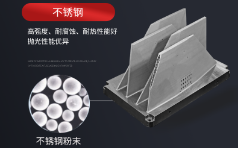
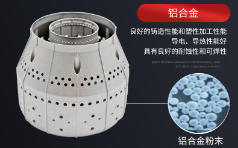
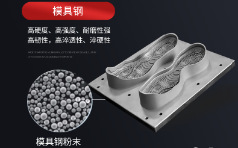
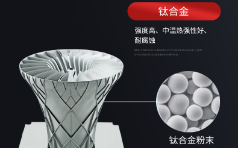
- Material mastery: From common aluminum alloys and stainless steels to exotics such as titanium, inconel and hardened tool steels, our capabilities cover the range of engineering materials. We understand the complexity of optimal cutting each.
- End-to-end manufacturing solutions: In addition to complex machining, Greatlight provides effective efficiency One-stop post-processing and completion service. Make your parts fully processed, exploited, finished, heat treated, plated or painted – all under one roof, ensuring seamless quality control and faster.
- Quick customization: The agility of our five-axis machining combined with simplified operations enables us to handle Custom precision machining Order at an extraordinary speed. Need a fast track prototype or short-term production? We deliver.
- Large-scale cost-effectiveness: While five-axis machining represents advanced technology, our efficient processes, material expertise and value-added services enable us to provide Best Price Used for complex high-value parts. Eliminating secondary operations can directly save you time and money.
Conclusion: From learning to using expertise
Starting the CNC milling class opens the door to the world of precision manufacturing. Mastering the working principle of CNC, the importance of CAD/CAM, and the basic principles of tools and setup allows you to design better parts and work effectively with manufacturers. However, leveraging the full potential, especially for complex mission-critical metal components, often requires the advanced capabilities and expertise of dedicated partners.
Greglight represents that partner. By focusing only on demanding areas Five-axis CNC machiningWe solve complex metal manufacturing problems that others cannot do. We combine state-of-the-art equipment, deep knowledge of materials science and precise engineering to deliver results that meet the highest standards. Whether it's rapid prototyping, small batches or challenging production parts, our One-stop post-processing and completion service Make sure your components are really usable.
Stop compromise on accuracy or speed. Experience huge differences. [Customize Your Precision Parts Now!]
FAQ: CNC Milling and Greatlight Services
Q: What are the main advantages of 5-axis CNC milling over 3-axis?
one: The 5-axis machine can simultaneously manipulate the cutting tools around the workpiece from any direction. This allows:
- Machining highly complex shapes (reducing errors and time) in a single setup.
- Use shorter tools (increase stiffness and achieve better finish).
- Access the deep or angle function on a 3-axis machine.
- Faster complex contour machining.
Q: Which materials can be used in Greatlight Machine?
one: We focus on a wide range of Metalincluding but not limited to: aluminum (various alloys), stainless steel (e.g., 303, 304, 316), alloy steel, tool steel, titanium (e.g., grade 2, grade 5, grade 5), brass, copper, copper, inconel, etc. Advanced plastics or composites can also be discussed according to project requirements. Our expertise lies in effectively dealing with the most challenging materials.
Q: What file formats do you need to reference and process?
one: We usually need a 3D CAD model to reference and program. Common formats include Steps (.STP), IGES (.igs), Parasites (.x_T), and SolidWorks (.sldPrt). 2D diagrams in PDF or DWG/DXF format are also critical for specifying critical dimensions, tolerances, surface surfaces and material annotations.
Q: How does Greatlight ensure the quality of machining parts?
one: Quality is crucial. We implemented a strict multi-stage QC process:
- Use precision instruments to perform process inspections during processing.
- A comprehensive final inspection is performed using a CMM (coordinate measuring machine) technology for complex geometry.
- Strictly adhere to dimensional tolerances and surface surface specifications.
- Documentation and certification (material certificate, inspection report) provided as needed.
Q: What post-processing and completion services do you provide?
one: We offer a wide range of One-stop organization Offer ready-made parts:
- Burrs: Mechanically, thermally or chemically remove sharp edges.
- Surface finishing: beads blast, polish, roll.
- Coating and plating: anodized (type II, type III/hard jacket), plating (nickel, chromium, zinc), passivation.
- Heat treatment: annealing, hardening, cooling, and relieve stress.
- Painting and powder coating. We customize to meet your specific aesthetic, functional and environmental requirements.
- Q: How to get a quote for a custom exact section?
one: Simply Contact us through our website With your project details! supply:
- Your 3D CAD files and 2D drawings.
- Material specifications.
- Quantity is required.
- Critical tolerances and finishes.
- Any specific post-processing requirement.
Our engineering team will review your requirements in a timely manner and provide detailed competitive quotations. We are committed to delivery The best price For top-level precision machining.

点击右上角
分享给朋友吧







 长按图片保存/分享
0

