 钜亮五金-精密五轴数控加工服务


24H咨询热线:
180-2756-7310












定制服务热线
180-2756-7310

专业服务、快速报价
提供建模、免费改模
质量问题、免费重做
顺丰包邮、可开专票
China CNC Milling Machine Guide
发表时间: 2025-09-03 09:09:10
作者: 东莞市钜亮五金科技有限公司
浏览:
Navigating the world of CNC milling machines: a comprehensive guide
In the dynamic landscape of modern manufacturing, CNC milling is a cornerstone technology. In aerospace, automotive, medical, energy, and countless other industries, CNC milling transforms digital design into complex, high-precision physical components with significant speed and repeatability, CNC milling is essential. Despite the wide range of options available in the global market, China has become a powerful product in CNC milling machine manufacturing, providing a compelling convergence of advanced technology, a strong construction and competitive value. This guide delves into the world of CNC milling machines, focuses on Chinese landscapes and makes informed decisions for you.
CNC milling machine: core concept
Essentially, the CNC (Computer Numerical Control) milling machine uses computer-programmed commands to guide the rotary cutting tool, which gradually removes material from solid blocks (workpieces). This subtraction manufacturing process can create complex geometric shapes, slots, holes, profiles and surfaces with excellent accuracy. Key components include controllers ( "brain"), drive system (motor), spindle (fixed and rotary cutting tools), shaft slides (X, Y, Z for motion) and rigid machine frame.
The rise of China in CNC milling manufacturing
China's manufacturing industry has undergone a significant shift, especially in precision machinery. Once known for cost-effective solutions, Chinese CNC milling machine manufacturers have made substantial investments in R&D, advanced manufacturing technology and quality control. This evolution means buyers can now access:
- Advanced Technology and Innovation: Chinese manufacturers are increasingly producing 3-axis, 4-axis and refined 5-axis CNC Mills compete with established global brands in terms of capability and accuracy, and combine high-speed spindles, linear guides and powerful control systems (such as Syntec, Siemens, Siemens and Fanuc).
- Strong structure: Focus on machine stiffness - using high-quality cast iron foundations, enhanced frames and precision components - ensures stability at high speed, heavy-duty cutting, minimizing vibration and maximizing accuracy.
- Competitive value: Compared to the equivalents from Europe, Japan or North America, Chinese mills usually have significant cost advantages, offering excellent price ratios without compromising core capabilities. This makes advanced CNC technology easier to access.
- Diversified portfolio: The market meets all needs: from entry-level desktop mills for prototypes and education, to rugged vartical machining centers (VMCs) in production environments, to highly complex 5-axis machines for aviation-grade parts.
When selecting a CNC milling machine: Main precautions
Choosing the right machine involves careful evaluation beyond the origin:
- Machine Type and Configuration:
- 3 Axis: Standard, provides movement in X, Y, Z. Suitable for parts without complex underlay features.
- 4 axis: Add rotation around the X-axis (usually the workpiece), resulting in more complex contours and indexes.
- 5 axis: The pinnacle of complexity, allowing the cutting tool and/or workpiece to move simultaneously along five axes. This allows incredibly complex forms to be machined in a single setup, greatly reducing cycle time and improving the accuracy of advanced geometry. (This is the core expertise of Greatlight).
- Accuracy and accuracy: It is crucial for critical components. Look for specifications such as positioning accuracy (e.g., ±0.005 mm or higher) and repeatability. Rigidity and thermal stability management are key factors that affect this.
- Rigidity and architecture: Directly affects surface finish, tool life and ability to handle difficult materials. Evaluate basic casting, slideshow (linear guide with box approach) and spindle structure.
- Spindle power and speed: Higher horsepower (kW) removes stronger alloy materials faster, while high spindle speed (RPM) is critical for fine details and optimal cutting of softer materials or using smaller tools.
- Control system: User-friendly interface, processing power and compatibility with general-purpose CAD/CAM software (e.g., Siemens, Fanuc, Heidenhain or Syntec (Syntec) capable Chinese systems).
- Travel and Work Envelopes: Ensure that the machine's X, Y, Z travel can accommodate the expected workpiece size.
- Automation options: Consider future needs such as pallet shifters or robot parts loading/unloading for unattended operations.
- Material Compatibility: Specify the main materials you use (aluminum, steel, titanium, composite, plastic) as this affects spindle torque requirements and machine stiffness requirements.
- Support and Services: Investigate the reputation of the manufacturer or supplier in after-sales support, technical assistance, parts availability and training, especially in an international context.
Progress in showcase: Greglight's Specialty
Five-axis CNC milling represents a quantum leap beyond standard machining. It brings transformational benefits by manipulating cutting tools from an engineering perspective in one continuous operation:
- Complex geometry in a setup: Without expensive fixtures and requantitative 3-axis it is impossible to use mill complex profiles, deep cavity and primer. Greatly reduces setting time and human errors.
- Top surface finish: Optimal tool positioning allows for smoother cutting paths and better surface quality, often reducing or eliminating secondary finishes.
- Reduce cycle time: Complex parts are completed faster without manual intervention.
- Enhanced accuracy: Eliminating multiple settings minimizes cumulative positioning errors.
- Longer tool lifespan: Maintaining the most effective cutting angle reduces tool deflection and wear.
Precise cooperation: Greglight CNC machining
For businesses that require ultimate manufacturing, it is crucial to work with expert precision mechanics. Greglight stands at the forefront of advanced five-axis CNC machining solutions. Using state-of-the-art equipment and sophisticated production technology, Greatships specializes in conquering complex manufacturing challenges.
Why Greatlight is your ideal partner:
- The most advanced five-axis functions: Access to the Advanced Five-Axis Machining Center to handle the most complex geometries with unrivalled accuracy.
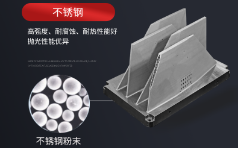
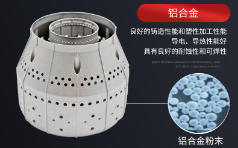
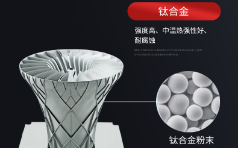
- Extensive material expertise: Proficient in processing a variety of metals (including alloys that require titanium, inconel, stainless steel and aluminum) and selected engineered plastics.
- Integrated Solution: Provide comprehensive "One-stop shop" Includes basic post-treatment and finishing services (precision grinding, EDM, surface treatments (e.g. anodizing, plating, painting)) - simplifying your supply chain.
- Agile custom manufacturing: Quick prototyping with fast turnaround time and expertise in low to medium yields.
- Competitive value: Provides excellent quality and premium features at a highly competitive price.
- Quality Commitment: Comply with strict quality control procedures to ensure components meet precise specifications and industry standards.
Stop to create a limiting fight. Whether you need a rapidly evolving prototype, complex components that require versatility of five-axis machining, or precise production runs with a comprehensive finish, Greatlight has the expertise, technology and efficiency to enhance the project.
Customize your precision parts now at the best prices and quality! Experience huge differences for your most challenging metal parts requirements.
Conclusion: Navigate your CNC milling journey
China's CNC milling machine industry has matured in a large number, providing a powerful option to meet a variety of needs and budgets. From capable 3-axis working home fields to refined 5-axis miracle, Chinese manufacturers offer compelling options that are characterized by technology, improved build quality and enormous value. In particular, five-axis machining can unlock unprecedented design and manufacturing freedom. When precision, complexity and efficiency are not negotiable, working with Greatlight’s professional service providers is equipped with advanced five-axis capabilities and full-service manufacturing solutions, a strategic advantage. By carefully considering your specific application requirements and leveraging available expertise, you can leverage the full capabilities of CNC milling technology to drive innovation and success in your manufacturing efforts.
FAQ (FAQ)
What are the main advantages of buying CNC milling machines from China?
- Cost competitiveness: The price is usually lower than machines of similar specifications for western or Japanese manufacturers.
- Technological advancements: Large investments have led to continuous improvements in accuracy, speed and reliability.
- A wide range: A wide selection of machine types, sizes, configurations and price ranges.
- Value Proposition: Typically, good performance to price ratios are especially suitable for workshops and growing manufacturers.
yes "Affordable" Is China CNC Mill as durable or accurate as a more expensive brand?
- The market provides the spectrum. While cheaper entry-level machines may compromise rigidity, components or long-term durability, many mid-to-high-range Chinese brands now use premium components and strict quality controls with a focus on quality. It is crucial to study specific brands, carefully review the build quality (casting, linear guide/playing, spindle), require detailed accuracy specifications (e.g., ISO 10791 tests), and read independent reviews. They may not always match the ultimate lineage or lifespan of top European/Japanese machines, but the gap narrows significantly.
Which industries benefit the most from five-axis CNC machining?
- aerospace: Turbine blades, engine components, structural parts with complex curves.
- Medical: Implants (knee, hip replacement), surgical instruments, prosthetics.
- car: Engine block/head, transmission assembly, sophisticated housing, luxury trim.
- vitality: Turbine components (gas, hydraulics, wind), complex manifolds, impellers.
- defense: Weapon components, radar housing.
- Mold and death: Complex injection molds, stamping molds, usually require deep cavity or textured surfaces.
- high tech: Optical housing, semiconductor device parts.
Why should I consider outsourcing to grow up instead of buying my own CNC mill?
- Capital Investment: Avoid a lot of upfront purchase costs and ongoing overhead (maintenance, tools, facility costs, operator training/salary, software license).
- Access to advanced technology: Take advantage of the state-of-the-art 5-axis machine without capital expenditure.
- Expertise and experience: Leveraging skilled engineers and mechanics to experience complex geometric shapes, diverse materials and optimized manufacturability.
- Scalability and flexibility: Fast up or down without capacity limits or idle equipment.
- Focus on core business: Unleash resources and the ability to internally design, sales and core business functions.
- Integrated finish: Seamless access to post-processing services from the same workflow from Greatlight.
What materials can be processed using CNC milling?
Almost all processable materials, including:
- Metal: Aluminum (alloy 6061, 7075, etc.), steel (gent, tool steel, stainless steel-303, 304, 316, 17-4PH, etc.), titanium (e.g., grade 5, TI-6AL-4V), brass, brass, copper, bronze, bronze, bronze, content.
- plastic: ABS, acrylic acid (PMMA), nylon, PEEK, DELRIN (POM), PTFE (Teflon), polycarbonate, UHMW-PE.
- Composite materials: Processing reinforced plastics requires special tools and strategies. Discuss details with your processing partner.
- What file formats do Gregtly require to reference and process?
- Greglight can usually use standard CAD file formats, such as:
- Steps (.STP, .Step) - Highly preferred, ideal for complex geometric shapes.
- iges (.igs, .iges) - a shared legacy format.
- SOLIDWORKS (.sldprt, .sldasm)
- Parasite (.x_t, .x_b)
- catia (.catpart, .catproduct) - less common, but usually manageable.
- Occasionally DXF/DWG (for 2D contours) and STL (for reference only).
- Be sure to confirm the required format before submitting. Detailed 3D models with tolerances are essential for accurate quotations and machining. Drawings (PDF/PDF3D) are also beneficial.
- Greglight can usually use standard CAD file formats, such as:

点击右上角
分享给朋友吧







 长按图片保存/分享
0