 钜亮五金-精密五轴数控加工服务


24H咨询热线:
180-2756-7310












定制服务热线
180-2756-7310

专业服务、快速报价
提供建模、免费改模
质量问题、免费重做
顺丰包邮、可开专票
Custom CNC milling cost factors
发表时间: 2025-09-03 10:58:58
作者: 东莞市钜亮五金科技有限公司
浏览:
Unlocking the secret of custom CNC milling costs
Browsing the world of custom CNC milling can feel overwhelming, especially when trying to determine how to price. As the main force of precision manufacturing, Great Respond to complex metal parts challenges every day with advanced five-axis CNC technology. We believe transparency is key. Understanding the factors that affect project costs gives you the ability to make informed decisions and optimize your budget. With our commitment to delivering the best prices as well as the best prices for top quality and one-stop post-treatment, let us uncover the key elements that shape your custom CNC milling quotes.
Decode the key factors that affect your CNC milling investment:
Part Complexity and Geometry: The Burden of Blueprints
- Why it matters: Complex designs with deep cavity, thin walls, undercuts, complex curves or tight internal functions require more complex machining strategies. Our advanced 5-axis functionality performs well here, but the complexity increases programming time, machine time, and the need for professional tools or multiple settings.
- Greglight Insight: We utilize powerful CAM software to efficiently program unique complex geometry with 5-axis machining, minimizing unnecessary operations while ensuring perfect execution. Simplifying non-critical features can provide significant savings if possible.
Material selection: the basis of cost
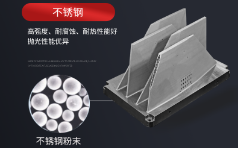
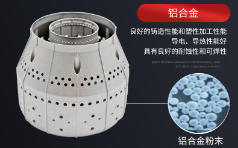
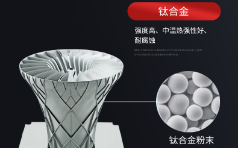
- Why it matters: Raw materials costs themselves vary widely - aluminum is usually economical, stainless steel commands quality, while exotic alloys like titanium or inconel are significantly expensive. It's also crucial Processability. Harder, stronger materials pass through tools faster, slowing down processing/feeding, requiring more throughput and increasing tool costs.
- Greglight Insight: Our expertise includes all standard metals. We can recommend material selection recommendations to best balance performance requirements with processability and cost. We strategically source materials and actively manage tool life to control costs.
Accuracy and tolerance: The pursuit of perfection
- Why it matters: Standard tolerances are cost-effective. However, very tight tolerances are required (e.g., ±0.0005" Instead of ±0.005") requires careful attention. It usually requires slower machining speeds, dedicated high-precision tools, other inspection steps (such as CMM), possible more settings, finer finishes and increased risk of canceling parts not meeting specifications.
- Greglight Insight: Our 5-axis CNC equipment is essentially high precision. We strictly calibrate and maintain it. Clearly identify Critical Tolerances on drawings - Relax non-functional dimensions and may unlock significant savings without compromising quality.
Production: The power of scale
- Why it matters: Large-scale operation can significantly reduce costs Each section. This can amortize fixed costs (programming, initial setup, fixed) on many units. Prototyping or small batches bear the brunt of fewer parts. The automation potential also increases with the increase of volume.
- Greglight Insight: We provide cost-effective solutions for rapid prototyping and mass production. Discussing forecasts enables us to effectively plan pricing in larger quantities, thus maximizing your value.
Surface finishing and post-treatment: finishing
- Why it matters: The milling process usually leaves unique "Machine Marking" Finish. Requirements for smoother (e.g., polishing, bead explosion) or functional coatings (e.g., anodizing, plating, painting, heat treatment, passivation) (e.g., polishing, bead explosion).
- Greglight Insight: Our one-stop solution includes post-processing services from a wide range of experts. We seamlessly manage the entire workflow, ensuring that from machining to finishing, logistics is often simplified and overall lead time and processing costs are reduced.
Programming and setting time: Invisible foundation
- Why it matters: Converting CAD models into valid machine instructions (G code) through CAM software requires a skilled engineer. Setting up the machine - ensuring materials, loading tools, building precise origins (using probes) - can consume valuable time. Complex parts or first posts require more investment.
- Greglight Insight: Efficient CAM software and experienced programmers are indispensable to our processes. We optimized the tool path for minimal wasting and time, and simplified setup, especially for complex 5-axis work, to ensure that this critical stage is as cost-effective as possible.
Machine time: The clock is ticking
- Why it matters: The total time for spindles to actively cut material directly affects the cost, which is affected by size, complexity, material, tolerance and tool selection. Longer cycle times consume machine hours and tool resources. 5-axis machining usually reduces Comprehensive Cycle time for complex parts is minimized.
- Greglight Insight: We prioritize toolpath optimization and leverage high-performance tools to minimize cycle time while maintaining quality. Our 5-axis machine performs well in completing parts in a single setup compared to multi-step 3-axis machining, often offsetting its higher hourly rate by significantly reducing the total machine time.
Tools and Fixtures: Professional Equipment Requirements
- Why it matters: Specific geometry or material may require the use of custom fixtures to securely retain abnormal parts. Complex functions may require specialized end mills (e.g., long, micro-diameter, diamond coating). These tools incur additional costs and wear out faster using difficult materials.
- Greglight Insight: Our extensive library of tools meets most needs. For truly unique requirements, we effectively invest in the right custom tools or fixes and take their cost into account appropriately in the project. We utilize advanced tool life monitoring to minimize accidental breakage.
Delivery time: Charge coefficient
- Why it matters: Standard delivery times allow for optimal planning. Extended ("hurry") Orders usually require adjustments to production plan adjustments, potential overtime labor, priority material procurement and possible limiting process optimization opportunities, all increase premiums.
- Greglight Insight: Although known for its fast turnaround (with advanced equipment and effective workflow), we highly recommend realistic planning. Clearly communicate your deadlines to the most accurate and economical quotes. real "hurry" Work will come with a fee premium.
- Quality Assurance and Inspection: Ensure Excellence
- Why it matters: Strict quality control is not an option for precision parts. This includes process inspections using calibration instruments (calipers, microns and usually CMMs), first-act inspections (FAIs) and final inspections. Complex geometry and tight tolerances require more complex (and time-consuming) inspection techniques.
- Greglight Insight: In our process, quality is embedded in our process. Our investment in advanced metrology, such as CMM, ensures that parts meet your exact specifications. We will realistically build inspection costs into quotes, focusing on your tolerance, providing confidence without surprises.
Conclusion: Cooperation to add value accuracy
Understanding these cost factors is essential to customize effective budgets and project plans for CNC machining. While complex geometry, high precision, exotic materials and pressing deadlines naturally increase costs, smart design choices such as simplifying where feasible and specifying only critical tolerances can bring extraordinary value to modern manufacturing efficiency. That's where Great shine. As a professional five-axis CNC machining leader, we combine state-of-the-art equipment, deep technical expertise across vast materials, integrated post-processing and commitment to optimization to provide you with the highest quality precision parts Best Price.
We invite you to leverage our expertise for your next project. Explore our fast, customizable solutions for cutting-edge metal parts manufacturing to bring cost-efficient life with our advanced five-axis CNC capabilities.
Frequently Asked Questions about Custom CNC Milling Costs (FAQs)
Question 1: What is the biggest factor affecting the cost of part of my CNC milling?
A: Although all factors are interconnected, Part complexity and Material selection It is usually the most important driving force. Requires complex machining strategies and tough, expensive materials essentially require more time, and the complex design of professional tools and resources is greatly increased costs than adding batch sizes or adding standard finishes.
Question 2: Why is 5-axis CNC milling sometimes more cost-effective than 3-axis for complex parts?
A: Although 5-axis machines usually have higher Hourly rate,Their ability to process complex parts in A Single Settings It is revolutionary. With 3 axes, complex parts often require multiple settings (reinstalling parts), increased setup time, programming complexity, potential errors, and cumulative tolerances. 5-axis reduction All Machine time, waste rate and labor time, usually make it cheaper overall and faster for complex geometries.
Question 3: How much cheaper do you get when ordering large quantities?
Answer: Cost per part A sharp decline As the number increases. This is mainly due to Amortization: Fixed costs (programming, initial setup, fixed) are distributed over many units. While the time cost of materials and processing per set remains, the total percentage of fixed cost attribution has dropped significantly. We offer layered pricing – discuss your sales to save.
Q4: Can I get the stadium numbers by sending a CAD file?
A: Provided Detailed CAD files (steps, IGES, X_T) and key specifications (material, quantity, critical tolerance, required surface) is Minimum need Accurate Quote. Although very simple parts may be roughly estimated, complexity requires analysis. It can help us advise on cost-saving opportunities from the start.
Question 5: How does tolerance affect price?
Answer: Hold Tight tolerances require excellent accuracyIt is achieved through slower machining, special tools, meticulous measurements (often CMM checks), and possibly more machining passes. Each of these increases time (setting, machining, checking) and increases the risk of parts falling out of specifications and requiring rework or scrap, directly increasing manufacturing costs.
Question 6: Will Greatlight offer discounts for prototypes or small batches?
A: We focus on providing The value of each volume. and Each unit Due to fixed cost allocation, the cost will naturally be higher for small batches, and we simplify prototyping with effective processes to make it as economical as possible. Our citation process is intended to be fair to both prototypes and complete production runs. Discuss your project needs publicly - we will find the most cost-effective way.

点击右上角
分享给朋友吧







 长按图片保存/分享
0

