 钜亮五金-精密五轴数控加工服务

24H咨询热线:
180-2756-7310












定制服务热线
180-2756-7310

专业服务、快速报价
提供建模、免费改模
质量问题、免费重做
顺丰包邮、可开专票
Basic knowledge of 5-axis CNC milling
发表时间: 2025-09-04 03:44:38
作者: 东莞市钜亮五金科技有限公司
浏览:
Unlocking Complexity: In-depth study of 5-axis CNC milling
CNC machining has revolutionized the manufacturing industry for decades, but traditional 3-axis approaches are often limited as parts become more complex and precise. Entering a game changer: 5-axis CNC milling. This advanced technology is not only an incremental improvement; it represents a paradigm shift in how complex high-precision components can be generated. Understanding its rationale reveals why it is essential in modern manufacturing.
Beyond X, Y and Z: What defines 5-axis machining?
CNC milling with a rotary cutting tool removes material from the workpiece from the workpiece and removes material from the workpiece under the guidance of computer programming. this "axis" See the direction in which cutting tools or workpieces move relative to each other.
- Basic knowledge of 3 axis: Your standard CNC mill operates on three linear axes: X (left and right), Y (front and back) and Z (up and down). The workpiece is usually retained on the table, and the spindle moves linearly in these directions. This performs well in terms of machining functionality, mainly accessible from the top, but struggles with the complex geometry of faces that require reduction or multiple angles.
- 5-axis advantages: 5-axis CNC machine simultaneously operates cutting tools (or workpieces) five Different axes. This includes three linear axes (X, Y, Z) and two rotation axes (A and B or A and C). These rotations allow:
- Rotating workbench: Tilt and rotate parts under the tool.
- Rotating spindle head: Illustrate the cutting tool's head itself.
- (Note: Some machines combine these two methods). This simultaneous movement means that the cutting tool can actually approach the workpiece Any direction In a single setup, the geometric possibilities expand dramatically.
Key Types of 5-axis Computers
Understanding machine kinematics illuminates functions:
- Desktop (Trunnion): The rotating shafts (A and C) are integrated into the workbench. The table is tilted (A axis rotates) and rotates (C axis rotates), positioning the workpiece under the fixed spindle head. Ideal for smaller, heavier workpieces.
- Head: The rotary shaft is integrated into the spindle head. The head itself is tilted (B axis) and rotated (C axis) on the fixed table. For very large workpieces, moving the table is not feasible.
- Dining table (mixer): Combine a rotation axis (usually a C-axis rotation) and a rotation axis (usually a B-axis tilted) on the table. It provides great flexibility while balancing the strength of the table and head rotation.
Why choose 5-axis machining? Convincing benefits
In addition to complexity, 5-axis is a tangible, quantifiable advantage that is crucial to modern manufacturing:
- Single setup processing: This is the Holy Grail. Complex parts that previously required multiple settings (as well as changes, clamping and re-parts for multiple fixtures) can usually be fully machined in one clamp. This eliminates cumulative setup errors, greatly improves position accuracy between different facial features and reduces processing time.
- Excellent finish and accuracy: The ability to maintain an optimal cutting direction more stably allows the tool to cut with its periphery under optimal contact conditions (avoiding inefficient cutting). This results in finer finishes, tighter tolerances between complex profiles, and reduced hand completion.
- Complex geometric shapes make possible: Carved surfaces, organic shapes, deep cavity, precision undercuts, tilting features - geometric shapes are impossible, or expensive geometric shapes on 3 axes. Think of aerospace turbine blades, impellers, medical implants, complex molds.
- Delivery time: Eliminate multiple settings to directly translate into faster overall production. Programming complexity is offset by greatly reduced processing, fixed and machine idle time.
- Optimized tool access and tool lifespan: Fishing artifacts or tool heads provide access to functions. Crucially, the 5-axis can maintain a constant chip load and optimal cutting pressure by tilting the tool from the centerline. This reduces vibration, minimizes tool deflection, and significantly extends tool life.
- Shorter tools and improved rigidity: By tilting the parts onto the tool, it is often possible to replace the longer tool (requires 3-axis deep cavity) with shorter, harder tools, which further improve accuracy and finish.
Where does the 5-axis glow? Cross-industry application
5-axis CNC milling is not a niche technique. Its accuracy and flexibility drive innovation in demanding areas:
- aerospace: Turbine blades/blades, complex engine components, structural fuselage parts (brackets, accessories), lightweight structure with complex profiles.
- car: Prototypes, complex molds/molds, suspension components, cylinder heads (ports), high performance engine parts.
- Medical and Dental: Surgical instruments, orthopedic implants (knees, hips), dental abutments and crowns, custom prosthetics requiring biocompatible materials.
- vitality: Impeller, turbine assembly (hydraulic, steam, gas), complex valve body, heat exchanger.
- defense: Optical, guidance systems, weapons systems require specialized components with tight tolerances.
- Consumer Electronics: Molds for complex housings, high-end audio components, camera parts.
- Marine Corps: Propeller (thruster), complex fluid dynamic components.
Materials and functions: Work with experts
Successfully performing complex 5-axis projects requires more than machines. It needs to be mastered. exist Greglight GragentingWe use advanced 5-axis CNC equipment and deep production expertise to solve your most challenging metal parts manufacturing problems.
- Material versatility: We have skillfully processed many metals, including but not limited to:
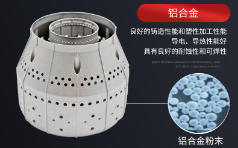
- Aluminum alloy: (2000, 6000, 7000 series) - Lightweight strength.
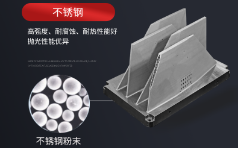
- Stainless steel: (303, 304, 316, 17-4 pH, etc.) - Corrosion resistance and hardness.
- Titanium alloy: (Level 2, Level 5 TI-6AL-4V, etc.) - High strength to weight ratio, biocompatible.
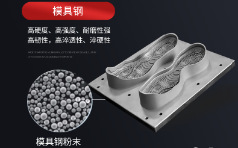
- Tool Steel: (H13, P20, A2, D2) - The hardness and wear resistance of the mold.
- Nickel alloy: (Inconel, Hastelloy) - Extreme temperature/corrosiveness.
- Brass, copper, bronze: Excellent processability and conductivity.
- and many engineering plastics and composite materials.
- Complexity is our expertise: We thrive with complex geometric shapes, tight tolerances (usually ±0.0005)"/±0.0127mm or tighter as needed), and challenging material requirements.
- End-to-end solution: Beyond milling, Great Provide comprehensive One-stop post-processing and completion service - From heat treatment and surface treatment (anodization, plating, painting, passivation) to precise grinding and assembly verification - Make sure your parts arrive fully functional and ready to use.
- Speed and value: Understand business needs, we prioritize efficiency. Our simplified process and expertise enable Quick customization and processing No sacrificing quality. reliable Precision parts Require Quick turnaround and Competing PriceAdvanced 5-axis is usually the most economical solution overall.
in conclusion
5-axis CNC milling is not only a more expensive machine; it is a fundamentally different method of manufacturing. It addresses the limitations of traditional machining by enabling complex geometry in a single setup, enhancing precision and surface quality, extending tool life and reducing production time. For manufacturers that require the highest level of complexity, efficiency and accuracy between various materials, investing or working with 5-axis technicians is no longer a luxury, but a strategic necessity.
Ready to turn your challenging design into precise reality? Experience Greglight Gragenting The difference. With our state-of-the-art 5-axis CNC features, deep material expertise, comprehensive post-processing and commitment to quality and speed, we are your ideal partner. Customize your precision parts now at the best prices and the fastest market time! [Contact GreatLight Today to Get Started]
Frequently Asked Questions about 5-axis CNC Milling (FAQ)
1. Q: Is 5-axis CNC machining much higher than 3-axis?
one: While machine investment and programming expertise initially used for 5-axis may be higher, Total cost per part For complex components, usually reduce. This is achieved by eliminating multiple settings, complex fixtures, reducing processing time, minimizing errors, extending tool life and reducing overall machining time. For simpler parts, 3-axis is still cost-effective.
2. Q: Can a 5-axis machine do everything a 3-axis machine can do?
one: Technically, yes. The 5-axis machine can always run in 3-axis mode. However, using the full functionality of a 5-axis machine to make easy to use parts made by a simpler, faster 3-axis machine is often not efficient (or economically wise). The 5-axis is excellent where the 3-axis is short.
3. Q: How difficult is 5-axis programming?
one: It's obviously much more complex. 5-axis programming requires professional CAM software and highly skilled programmers who have a deep understanding of tool routing strategies, tool orientation, collision avoidance (tools and holders of fixtures and parts), kinematics of a specific machine, and optimal cutting conditions in multiple directions. This is a professional skill that is crucial to success.
4. Q: How accurate is the 5-axis machining accuracy? Can it satisfy my tolerance?
one: Highly advanced 5-axis machine, e.g. Great Ability to achieve extremely tight tolerances (micron/tenth of an inch). Intrinsic stiffness, the reduction of error induced by a single clamping setup, and precise control of the rotation axis allow for the accuracy of complex features compared to the multi-set 3-axis machining. Machine calibration and operator expertise are crucial.
5. Q: What are the main challenges facing 5-axis machining?
one: Key challenges include higher initial costs, the need for professional programming skills and CAM software, complex machine setup/calibration, potential collision risks that may require careful simulation and the need for robust fixation in all aspects to be securely accessed during dynamic motion. Expertise alleviates these challenges.
6. Q: Does using 5 axes always guarantee a better finish?
one: Provided at the same time Potential 5-axis provides functionality, but execution is important.
7. Q: Which file format do I need to provide for 5-axis CNC quotations or jobs?
one: although Great A native 3D CAD file (e.g., step, IGES, parasite) can be used in various formats and is very preferred for complex 5-axis work. This provides the cleanest geometric data to create accurate tool paths. It is also crucial to specify a 2D graph of key dimensions and tolerances.
8. Q: How does material selection affect the feasibility of 5-axis processing?
one: Material characteristics (hardness, machining, working range trends, thermal conductivity) significantly affect process parameters such as cut speed, feeding, tool selection and achievable tolerances/finishes at 5 axes speeds. Advanced materials (such as titanium or inconel require specific expertise and strategies), Great have.
9. Q: Can Greatlight help with designing 5-axis parts (DFM)?
Answer: Absolute. Early cooperation is strongly encouraged. Our engineering team can review your design before finalization to recommend optimizations for 5-axis efficiency, accessibility, tool clearance, tolerance for practicality and cost-effectiveness. This proactive approach saves time and reduces production costs.

点击右上角
分享给朋友吧







 长按图片保存/分享
0