 钜亮五金-精密五轴数控加工服务


24H咨询热线:
180-2756-7310












定制服务热线
180-2756-7310

专业服务、快速报价
提供建模、免费改模
质量问题、免费重做
顺丰包邮、可开专票
Precision CNC for laboratory equipment
发表时间: 2025-09-09 07:37:18
作者: 东莞市钜亮五金科技有限公司
浏览:
The key role of precision CNC machining in advanced laboratory equipment manufacturing
In a high-risk world of scientific research and medical diagnosis, the reliability of equipment is not only a preference, but is absolutely necessary. From microscopes that analyze cell structures to spectrometers that detect trace elements, laboratory instruments require extremely high accuracy, uncompromising material integrity and perfect performance. Complying with these stringent standards requires the manufacturing process to be able to have microscopic accuracy and repeatability. This is Accurate CNC machining, especially advanced five-axis CNC technology, can transform the landscape of laboratory equipment production.
Why is accuracy important in laboratory environments
Laboratory equipment operates under micron-important conditions. Misaligned components in PCR machines may invalidate genetic sequencing results. Imbalance of the microscope surface in the fluid channel can lead to turbulence, skew diagnostic data. Contamination of Subpar materials can destroy sensitive experiments. Traditional manufacturing methods are usually implemented Nano-horizontal tolerances, complex geometry and upper surface finish These critical applications are necessary.
Enter five-axis CNC machining: game changer
Five-axis CNC machining eliminates the limitations of conventional three-axis machines by allowing simultaneous movement along five different axes (X, Y, Z, and rotation A and B axes). This capability is revolutionary in manufacturing laboratory components:
- Unparalleled complexity treatment: The complex housing of the optical system, the internal channels of the microfluidics, the nonorthogonal geometry in the sensor mount - all of which can be machined in a single setup to preserve critical alignment.
- Ultra-high tolerance (±0.005mm or less): Necessary for parts that interface with lasers, lenses or sensitive detectors to ensure optical alignment and mechanical stability.
- High-quality surface quality (RA <0.4μm can be achieved): Minimize friction at moving parts, prevent fluid from trapping the biochip, and ensure vacuum integrity in the chamber.
- Reduce setup and lead time: Complex parts are completed faster without manual repositioning, accelerated prototypes and production.
Key Laboratory Equipment Components Enabled by Precision CNC
- Optical and Imaging Systems: The lens mount, mirror housing, stage platform for microscopes and spectrometers requires thermal stability and vibration damping.
- Fluid and microfluidic equipment: Manifold, valve, pump and chip substrate (PCR, liquid chromatography) with micron-scale channels.
- Vacuum and analysis equipment: Ionization source for indoor components, flanges, mass spectrometers or electron microscopes, requiring sealing and UHV compatibility.
- Robots and automation: Custom fixtures, sensor brackets and actuator components for automatic sample processing systems.
- Diagnostic instruments: For the housing, slideshow and precision stages of blood analyzers, genetic sequencers and care equipment.
Why Greatlight performs well in precision laboratory equipment processing
As a leader Professional five-axis CNC machiningGreatlight has the expertise and technology to solve the most demanding challenges in laboratory equipment manufacturing:
- Advanced five-axis functions: We utilize the most advanced five-axis CNC centers to be able to be extremely precise and manage the most geometrically complex parts required for cutting-edge laboratories.
- Material mastery: We have professionally processed a large number of materials that are crucial to the laboratory:
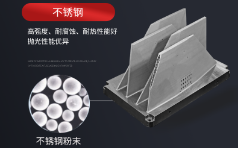
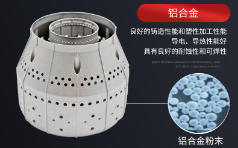
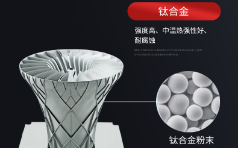
- Metal: Stainless steel (303, 304, 316L), aluminum (6061-T6, 7075), titanium (grade 2, 5), brass, copper, special alloys (Inconel, Kovar, Kovar).
- plastic: PEEK, ULTEM (PEI), PTFE (TEFLON), polycarbonate, acetyl salt (Delrin), PMMA (acrylic acid).
- One-stop manufacturing solution: In addition to five-axis machining, we also provide comprehensive Post-processing and completion of services Laboratory parts are crucial:
- Precise grinding/polishing
- Anodized (type II, type III-crusting)
- Passivation (for stainless steel)
- electricity
- Laser marking
- Electroplating (nickel, gold)
- Assembly and quality control integration
- Agile custom manufacturing: Specialized research Low to medium volume productionwe provide fast prototypes and efficient custom runs. Our process ensures that parts meet the exact specifications without the overhead of mass production tools.
- Speed and value: We provide high-precision custom parts with our advanced features and simplified workflow Fast and competitive.
Example: Solving a practical laboratory challenge
European biotech companies considering developing next-generation microfluidics "Film laboratory." This design involves intersecting a fluid channel depth below 200 microns in a PEEK substrate, requiring absolute leak-proof integrity and surface smoothness to prevent cell adhesion. Using five-axis CNC, Greatlight processed these complex biochips from a PEEK block in a fixture. Post-treatment includes ultrasonic cleaning and precise surface polishing to achieve a surface finish of RA <0.2 μm required. This eliminates the risk of layering and contamination experienced by the viscous laminate, thus significantly improving the reliability and performance of the equipment.
in conclusion
The integrity of scientific discoveries and patient diagnosis depends largely on the accuracy and reliability of laboratory equipment. Five-axis CNC machining is not only a manufacturing process. This is the promoter of scientific progress. By providing unprecedented accuracy, complex geometric functions and material flexibility, it allows designers to break through the boundaries of laboratory instrument design. Greatlight’s expertise in advanced five-axis technology, coupled with a complete set of finished services and a commitment to fast, cost-effective custom manufacturing, position us as a key partner in laboratories, diagnostic OEMs and research institutions. We transform complex designs into perfect, high-performance reality, ensuring your equipment meets unwelcome standards of modern science.
You can trust critical laboratory equipment components that you can trust. Contact Greatlight now for a quote for your next project.
FAQ: Precision CNC for laboratory equipment
Q1: What tolerances can be achieved for laboratory equipment parts?
A1: We often reduce tolerances to ±0.005mm (±0.0002") Or better for critical dimensions on our five-axis CNC machines, critical for optical alignment, sealed surfaces and microfluidic features. The specific achievable tolerances depend on the part size, geometry, and material.
Q2: What are the most common materials for high-precision laboratory parts and can you process them?
A2: Yes, we processed a wide range. Common metals include Stainless steel 316L (corrosion resistance), aluminum 6061 and 7075 (lightweight, rigid), titanium (strong, biocompatible) and brass/copper (heat/electrical). Key plastics include PEEK (high temperature, chemical resistance), ULTEM (similar), PTFE (chemical inert), and acetyl/PMMA. We select materials based on chemical exposure, temperature, sterilization requirements and mechanical requirements.
Q3: Why is five-axis CNC better than three-axis for complex laboratory components?
A3: Five-axis machining allows:
- Single Settings: Complex geometry (undercut, compound angle) is processed without repositioning, eliminating alignment errors.
- Improved tool access/uptime: Better shorter tool access results in reduced detail and vibration.
- Upper surface surface: Continuous optimal tool positioning will produce a smooth surface.
For complex optical fixation, a fluid chip with 3D channels or a sensor housing with non-orthogonal features, five axes are essential.
Question 4: Can you handle post-treatment required for sterile or ultra-high vacuum (UHV) laboratory environments?
A4: Absolute. We provide Electropolishing, precision passivation and specific bead explosion Creates ultra-smooth non-peak-resistant surfaces. Hard coat anodizing (type III) enhances wear resistance. For UHV, our machining and finishing ensures excellent surface integrity to prevent outgassing. We follow strict cleaning protocols (ultrasound cleaning, cleaning room packaging) to meet high purity needs.
Q5: How does Greatmight ensure the quality of critical lab applications?
A5: Quality is indispensable:
- Advanced Check: We use CMM (Coordinated Measurement Machine) Through probe scanning, optical comparator and surface interface, the size and surface finish with the CAD model relative to the CAD model can be verified.
- Process Check: Operator and quality assurance conduct strict inspections throughout the processing process.
- Material Certification: Provide a traceable material certificate.
- document: Provides comprehensive dimension reports, material certificates, surface surface reports and consistency certificates.
Question 6: Do you provide rapid prototyping for new laboratory instrument development?
A6: Yes, Rapid prototype is the core strength. Leveraging our five-axis capabilities and streamlined processes, we provide Rapidly develop prototypes In production grade materials. This allows for functional testing, design verification and design speed (DFM) for traditional methods of high-precision metal/plastic parts at fast speeds in manufacturing additives.
Q7: What file format is required to reference the custom lab part?
A7: We prefer 3D CAD files in step (.STP) or IGES (.igs) formatbecause they contain rich geometric data. Specifying drawings (PDFs) for key tolerances, surface surfaces and material labels is also valuable. Our engineering teams can collaborate in any file format to ensure clarity.

点击右上角
分享给朋友吧







 长按图片保存/分享
0