 钜亮五金-精密五轴数控加工服务


24H咨询热线:
180-2756-7310












定制服务热线
180-2756-7310

专业服务、快速报价
提供建模、免费改模
质量问题、免费重做
顺丰包邮、可开专票
Chemical CNC alloy processing services
发表时间: 2025-09-10 04:02:01
作者: 东莞市钜亮五金科技有限公司
浏览:
Unlocking complexity: The world of transformation in chemical CNC alloy processing
Accuracy, reliability and material integrity are crucial in the demanding landscape of modern manufacturing. Conventional processing is often reduced when shaping high-performance alloys for critical applications, from aerospace components to complex medical implants. This is where the principles of chemical engineering and advanced integration Five-axis CNC machining Create a revolutionary solution: Chemical CNC alloy processing. This complex approach is redefining the possibilities of difficult mechanical metals, and Greatlight is at the forefront, leveraging this technology to deliver unparalleled results.
Why challenge the CNC processing of alloys?
Alloys (engineered materials that combine multiple metal elements) have high properties such as enhanced strength to weight ratio, excellent corrosion resistance, high temperature resistance and biocompatibility. Think Titanium (Ti-6AL-4V), Inconel (718, 625), Stainless Steel (316L, 17-4PH), Cobalt Chrome (COCR), and specialized aluminum grades. However, these properties make them infamously difficult to process using standard methods. Challenges include:
- Work hardening: Alloys such as Monel or nitrogen can harden quickly during the cutting process, quickly wear the cutting tool and lead to poor surface effect.
- High cutting force and heat: Processing superalloys produces extreme heat and pressure, requiring powerful machines and specialized tools to prevent distortion and damage.
- Properties of abrasives: Many alloys contain hard particles that accelerate tool wear.
- Complex geometric shapes: Many end-use applications require complex, 3D profiles and complex functions, making it difficult to achieve cost-effectiveness with traditional machining or 3-axis CNCs.
Input Chemical CNC Alloy Processing: A Synergistic Method
Chemical CNC alloy processing is not a process, but a set of advanced technologies surrounding the five-axis CNC function, designed to overcome these obstacles by intelligently managing the metal removal process:
Accurate chemical etching/assisted processing: Sometimes controlled chemical solutions are used Combined Use CNC machining. This may involve:
- Preprocessing: Selective chemical etching is used to soften specific areas of the workpiece or modify the surface layer, making subsequent cutting easier to reduce tool pressure/heat.
- Treatment of fluids: Utilize highly specialized chemical engineering coolants and lubricants at high pressures. These fluids are well beyond standard coolants - they are formulated as:
- Manage calories extremely Effective on the cutting interface.
- Greatly reduce friction.
- Suppress work hardening by preventing excessive pressure from the material.
- Actively rinse the debris to prevent re-cutting and surface defects.
- Lubrication is provided in ways that traditional oil cannot.
- Advanced Thermal and Tool Route Management: CNC programming goes beyond simple geometry. It combines complex simulation with real-time monitoring:
- Optimize cutting speed and eat dynamically to minimize calorie accumulation.
- Use tool paths that maximize chip evacuation and minimize tool time on the material.
- Adjust the strategy according to the material feedback sensor to prevent tool breakage and ensure consistency.
Electric Power Couple: Chemical Processing Support and Five-Axis CNC
This complex material management strategy and Five-axis CNC machining technologya field that Greatlight is good at. This is why this combination is transformative:
- Multi-directional processing is carried out simultaneously: A five-axis machine can manipulate cutting tools or workpieces along five different axes simultaneously. This allows for the machining of complex curves, deep cavity, undercut and highly organic shapes in a single setup - greatly reducing errors associated with multiple fixation.
- Improved tool access and direction: By continuously enabling the optimal tool angle, five-axis machining avoids collisions and allows for shorter, more rigid tools. This greatly improves stability, reduces vibration (quiver), enhances surface finishes and extends tool life, especially when dealing with hard alloys.
- Enhanced accuracy and surface integrity: The stability provided by five-axis motion, coupled with controlled conditions supported by chemical processes, leads to special dimensional accuracy and excellent surface finishes that often reduce or eliminate the need for secondary finishes.
- Reduce delivery time and cost: Complex parts can usually be done in one setup on a five-axis machine. Eliminating multiple settings saves a lot of time, reduces fixed costs, and minimizes cumulative errors, although advanced technologies are involved, resulting in faster delivery and lower overall costs.
Designing materials for performance - Greatlight's expertise
Greatlight has advanced equipment, rigorous process knowledge and a material science understanding to specialize in alloys that deal with a variety of challenges, including but not limited to:
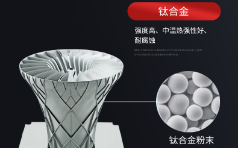
- Titanium alloy: Level 5 (TI-6AL-4V), CP TI (grades 1-4), beta alloy.
- Nickel-based superalloy: Inconel 718, 625, 713LC; Hastelloy C-276, X; Monel 400, K-500.
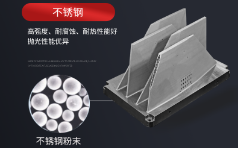
- Stainless steel: 303, 304, 316 (L), 17-4PH, 15-5PH, custom 450/455.
- Cobalt chromium alloy: cocrmo (ASTM F75, F1537) - is crucial for medical implants.
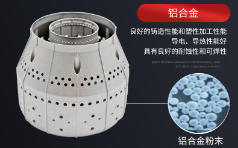
- Aluminum alloy: High strength grades such as 7075-T6, 2024-T851 and corrosion-resistant versions.
- Copper alloy: Bronze, beryllium copper.
- Exotic alloys: Duplex/Super Duplex Stainless Steel, Huang Huaimu, Koval, nitrate.
Beyond Processing: Greglight's Complete Solution
Understanding precision machining is usually just a step, Greatlight provides a comprehensive One-stop post-processing and completion servicemake sure the parts are really ready to work:
- Deburring & Edge Radiation: Creating smooth, secure edges is critical to performance and handling.
- Surface reinforcement: Options range from medium to mirror polish.
- Heat treatment: Annealing, solution treatment, aging (precipitation hardening), relieve stress.
- Plating and coating: Nickel plating, anodized (type II, III/hard coating), chrome plating, passivation (for stainless steel), PVD coating. Always tailored to specific alloy and part functions.
- Non-destructive testing (NDT): X-rays, dye penetrant inspection (DPI), ultrasonic testing (UT) - Ensure internal and surface quality.
- Cleaning and packaging: The parts are impeccably packed and securely to prevent damage during transit.
Why Greatlight is your top choice for chemical CNC alloy processing
Choosing Greatlight means working with senior manufacturing leaders:
- The most advanced five-axis mastery: We invest in tip five-axis CNC machining centers with powerful spindle, high torque and advanced control systems that are able to handle the most demanding alloys and complex geometries.
- Proprietary process optimization: Our extensive experience has led to the development of customized chemical machining support protocols and optimized tool paths for each alloy family, thus maximizing efficiency, quality and tool life.
- Deep Materials Science Expertise: Our engineers don't just run machines; they understand metallurgy. This knowledge is essential for choosing the right parameters, fluids and tools to achieve predictable high-quality results.
- Integrated one-stop service: From initial design consulting (DFM) and material selection to precise five-axis machining, advanced post-processing, strict quality control (CMM & NDT), and final completion – we handle them seamlessly under one roof.
- Uncompromising quality: A strict quality management process is embedded at each stage to ensure compliance with the most stressful tolerances and international standards (ISO, AS9100).
- Agile and cost-effective: Our efficient processes, complex features (such as complex 5-axis setups for lowering processing) and optimized material usage translate into faster turnaround times and competitive prices, even for highly specialized jobs. Get the best prices for your custom precision alloy parts!
in conclusion
Chemical CNC alloy processing supported by advanced five-axis technology represents the pinnacle of precision manufacturing of high-performance metals. It overcomes the inherent difficulties of these materials, thus creating complex, robust components that are critical to aerospace, medical, energy and other mission-critical industries. Greatlight is an essential partner with this powerful combination, coupled with deep material expertise and full service capabilities. We are not just machine parts; we design solutions that meet the strict requirements of the modern world, often exceed expectations. If your project involves challenging alloys that require excellent precision, complexity, and integrity, it is no longer needed.
Customize precision alloy parts with Greatlime now! [Link to Contact/Quote Page]
Frequently Asked Questions about Chemical CNC Alloy Processing (FAQ)
Q1: What exactly is it "Chemical" In chemical CNC alloy processing?
A1: "Chemical" The aspects mainly refer to the use of highly professional, engineered coolant/lubricant formulations and sometimes even selective preetching processes. These liquids are chemically designed to manage heat dissipation, reduce friction, evacuation and work hardening inhibition, and are more effective than standard processed coolants. This is a crucial facilitation technique that can effectively process strong alloys.
Question 2: Can five-axis machining really work for parts as small as medical implants?
A2: Absolute. Modern five-axis CNC machines, especially high-precision models used on Greatlight, have special capabilities to process composites with microscopic precision, tiny geometric shapes. At the same time, the five-axis movement is Basic Used to create complex contours and smooth surfaces required in biomedical implants (such as orthopedic joints, dental components) from materials such as titanium or cobalt chromium.
Q3: Why do I use five-axis processing in the alloy part instead of 3-axis? Is it more expensive?
A3: While five-axis machining usually has higher hourly machine rates, it often becomes More cost-effective overall For complex alloy parts. Benefits include:
- Less settings: Complicated parts completed in one go, saving time and reducing fixed costs.
- Improve accuracy: Multiple settings reduce cumulative errors.
- Better finishes: Optimal tool orientation minimizes tool marking and reduces the need to complete.
- Faster processing speed: Complex geometry can be processed more efficiently using special tool paths.
- Ability to create impossible geometric shapes: Functions such as deep undercuts usually require five axes.
For complex designs, the total project cost (processing + setup + auxiliary operation) is usually lower in five axes.
Question 4: Will the chemical process change the performance of my alloy?
A4: When correctly controlled by experts such as Greatlime, the main function of professional coolant is to manage the processing environment and protect the inherent properties of the material. Selective preetching (if used) is highly controlled and localized. Alloys based on recovery or enhancement properties and their final requirements, processes such as heat treatment or passivation. Chemical integrity of materials is always a priority.
Question 5: How do you ensure the quality of this precisely machined alloy part?
A5: Gremight adopts a multi-layer quality assurance system:
- Process control: Use advanced sensors for rigorous process monitoring.
- Accuracy measurement: State-of-the-art CMM (coordinate measuring machine) and optical comparator for dimension verification.
- Non-destructive testing (NDT): Techniques such as dye pen pen pen penis (DPI) and X-rays detect surface and underground defects.
- Material Certification: Traceability and certification of all raw materials.
- Skilled operators and engineers: Deep expertise in processing and metallurgy.
Q6: Which file format do you accept?
A6: We accept all standard CAD formats including but not limited to steps (.stp, .step), Iges (.igs), parasolid (.x_t, .x_b) and native solid work (.sldprt, .sldprt, .sldasm), pro-ee/creo, pro-e/creo, nx(ug)(ug), catia files. The clear 2D diagrams (PDF, DWG, DXF) that come with this model are always appreciated for the detailed specifications.
Question 7: How to start and receive a quote for custom alloy parts?
A7: Simple [Contact Us Link] Or upload part files and requirements through our secure online quotation portal. Our engineering team will quickly review your project, provide you with Manufacturing (DFM) designs if needed, and provide detailed, competitive quotes outlining machining strategies, material selection, timelines and costs.

点击右上角
分享给朋友吧







 长按图片保存/分享
0

