 钜亮五金-精密五轴数控加工服务


24H咨询热线:
180-2756-7310
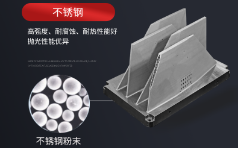
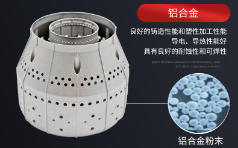
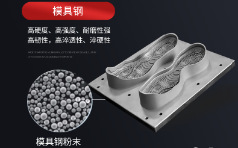
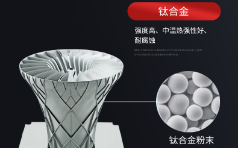












定制服务热线
180-2756-7310

专业服务、快速报价
提供建模、免费改模
质量问题、免费重做
顺丰包邮、可开专票
CNC processing costs: factors and tips
发表时间: 2025-09-10 20:36:54
作者: 东莞市钜亮五金科技有限公司
浏览:
Beyond Quotations: Unveiling the CNC machining cost of smarter manufacturing decisions
Digital precision manufacturing represented by CNC machining, all functions from aerospace components to life-saving medical devices. However, when it comes to making parts, a problem usually dominates: "how much does it cost?" Understanding the driver behind CNC machining pricing is more than just budgets; it’s about making strategic decisions that optimize costs and performance. This guide delves into the factors that affect your offer and provides specific tips to help you browse the landscape effectively.
Unlocking the critical cost driver in CNC machining
The final price tag on the CNC machining section is the sum of numerous interconnected elements. Here is the reason for really moving the needle:
Material selection: basic cost
- Material Cost: Aviation-grade titanium is much higher per pound than aluminum. The cost of exotic alloys (Inconel, Tungsten), hardened tool steel and certain engineering plastics has increased.
- Processability: Hard, fondant or abrasive materials (such as stainless steel or high temperature alloys) wear tools faster, require slower processing speeds, and require special tools. This can affect labor time and tool costs. Usually cheaper process materials (such as brass, aluminum alloys, some plastics).
- Waste factor: Complex parts or large stock sizes often mean that a large portion of the purchased material ends up in the form of a chip. These wastes are included in your costs.
Part complexity and design geometry: shapes of expenses
- Functional difficulty: Deep pockets with smaller internal radius require long distances, fragile tools and slower speeds. Undercut requires complex setups or specialized tool paths. Thin walls are prone to vibration/tremor, requiring careful programming and slow processing. The contoured surface greatly increases programming and machining time with simple prism shapes.
- Tolerances and finishes: Maintain extremely tight geometric tolerances (+/- 0.0005" vs. +/- 0.005") requires specialized equipment, meticulous setup, slower processes and complex inspections, all of which increase costs. Harsh surface roughness levels (e.g., RA 0.4 µm vs. RA 3.2 µm) may require multiple machining operations or other completion processes.
- 3D and 2.5D processing: Parts that require mainly 2.5D analysis (pockets, flat faces) are usually cheaper than complex 3D profile parts and require complex multi-axis motion at the same time.
Processing time and labor: the clock is ticking
- Running time: The actual time the machine cuts metal or plastic. This is affected by partial complexity, materials, tolerances, number of features, and CNC programming efficiency.
- Programming and Settings: Creating efficient, optimized CNC programs, especially for complex geometries (essential for five-axis work), requires a highly skilled workforce. Setup costs cover work preparation, fixtures/tool installation in the machine, and first inspection. This is usually a fixed cost per job, amortized on batch size.
- Labor expenses: Including the wages of the machine operator, supervision, quality control personnel, and other store labor costs incurred during production.
Quantity/Batch Size: Economy of Scale
- Set cost amortization: Fixed costs (programming, setup) are distributed throughout the batch. Production of 10 units with 1000 units will greatly affect the unit share of these fixed costs.
- Machine utilization optimization: Longer runs allow the store to optimize tool paths, tool changes and material handling, maximize machine efficiency and reduce hourly cost contributions.
Tool Fixtures: It's important to hold them together
- fixed: Complex parts or parts that require precise alignment may require custom designed fixtures and fixtures. Simple visor fixation is much cheaper than building beautifully customized fixtures.
- Worker accessories: Vacuum boards, custom rock or modular components add to the cost, but are sometimes required for complex geometric shapes or high precision.
Post-processing and completion: Final touch cost
- Secondary operations: These significantly affect the bottom line and are often underestimated:
- Deburring & Edge Breaking: Manually or automatically remove sharp edges.
- Heat treatment: Increase strength or hardness (annealing, hardening, tempering).
- Surface finish: Anodized (type II, type III, hard coating), electroplating (chrome, nickel, zinc), painting, powder coating, passivation (stainless steel), polishing (mechanical, electropolishing), bead explosion.
- Other operations: Welding, assembly, engraving, laser marking.
- Complexity and processing: Multiple completion steps, special preparation requirements or handling subtle parts can add to the cost.
- Secondary operations: These significantly affect the bottom line and are often underestimated:
- Manufacturing Preparation and Management: Hidden Engine
- Quotes and Engineering Comments: Spend time analyzing drawings, generating competitive quotes, and contacting customers.
- Quality control and inspection: Check equipment cost (CMM, surface tester), measuring staff time, documentation (PPAP, COFC).
- Order processing and logistics: Management, scheduling, packaging, shipping costs.
Expert tips for optimizing CNC processing costs
With an understanding of the driver, here is how to control it:
Manufacturability Master Design (DFM): Interact with your CNC machining partner Early:
- Simplify geometry: Eliminate unnecessary features. Optimize the internal corner radius of standard tool sizes. Minimize deep pockets. Avoid prone to deflection of walls or elongated features.
- Relax tolerances: Tolerances are specified only if absolutely necessary. Unless critical, the default is to broader tolerances. A tight tolerance should Earn their retention.
- Optimized surface finish: Do not specify a tighter finish than required. Understand the standard achievable finishes for materials and processes.
Choose the right materials wisely:
- Select performance and processability: Can you achieve the required mechanical properties in an alloy that is easier to pronounce? Consult your manufacturer.
- Consider material costs and processing costs: Slightly expensive, but easy to mechanical materials may lead to lower materials All Parts cost.
- Critical assessment of appearance: Only high-performance alloys are used because of their high purchase and processing costs.
Use as much as possible:
- Merge orders: Group non-emergency parts into larger batches to allocate setup costs.
- Implement phased production: For large quantities, inventory can be built strategically instead of constant small runs.
Optimize your ordering process:
- Consistent order: Providing consistent repeat orders allows manufacturers to improve processes and potentially provide better pricing over time.
- Full information: Detailed, accurate drawings and specifications are provided to minimize quote turnover time and avoid expensive clarification delays.
- Plan ahead: Avoid charges by actually planning your project and providing adequate delivery time.
- Choose the right manufacturing partner for your job:
- Capability matching: Make sure the store has the right equipment (especially important for complex parts - For example, 5-axis machine, used for complex geometric shapes) and your expertise in materials and tolerance requirements.
- Technical cooperation: Work with manufacturers that provide proactive DFM feedback and find cost-effective solutions with your partners.
- Transparent quote: Look for stores that offer detailed breakdowns and explain the cost drivers, not just the final numbers.
- Vertical integration: Friends like Greatproviding comprehensive One-stop post-processing and completion serviceeliminate the cost, time and risk of purchasing multiple suppliers.
Why Greatlight Five-axis CNC machining provides the best value
Advanced manufacturing technology becomes critical when precision, complexity and cost-effectiveness intersect. Greglight is at the forefront as a professional five-axis CNC machining manufacturer. Our Investment Advanced five-axis CNC machining equipment and proprietary production technology Directly solve the above complex cost drivers:
- Effectively solve complex problems: Five-axis function enables us to machining complex functions, deep cavity and composite angles in a single setup. This greatly reduces or eliminates the fixed costs and inherent inaccuracies caused by multiple conventional settings, greatly shortens machine time and labor costs for complex parts.
- Material versatility and expertise: We are skilled in dealing with challenging metals and use our technology to optimize tool paths and speeds for difficult-to-physiological alloys, minimizing tool wear and cycle time. Ask us about your material challenges.
- Integration post-processing: Our One-stop organization service Ensure seamless quality control and eliminate logistical friction and hidden costs for managing multiple suppliers. From precision grinding to complex anode layers, we handle it under one roof.
- Quick customization: We're good at "Custom precision machining," Thanks to the optimized process, quickly convert your unique design into accurately manufactured parts with minimal lead time.
- Value-driven pricing: Combining 5-axis efficiency, DFM expertise and vertical integration can provide competitive pricing well without compromising the quality and accuracy essential for the required application. We strive to be your most valuable partner.
Conclusion: Knowledge is the power of precise manufacturing
Understanding the complex tapestry of CNC machining gives you the ability to make smarter design, material selection and procurement decisions. Although complex parts are inherently higher costs, strategic choices and working with the right CNC machining experts can significantly optimize the results.
Ready to convert your precise machining requirements into cost-effective, high-quality reality? Don't let your project happen by chance. Interact with it Greata leader in five-axis CNC machining solutions. We combine cutting-edge technology, deep materials science knowledge, manufacturing expertise and integrated finishing services to effectively solve your most challenging metal parts manufacturing problems. Contact Greatlight today to get detailed competitive quotes about your custom precise parts and experience the differences that expertise makes.
Frequently Asked Questions on CNC Processing Costs
Why do I have so much money for simple parts?
Even simple-looking parts can have hidden cost driving forces. Just one or two features, expensive material choices (especially small amounts), difficult-to-photo features in the material, complex internal features that require slow machining or necessary professional surface finishes will significantly affect the close tolerance of the price, which will significantly affect the price. Always view detailed quote breakdowns.
Is 3-axis or 5-axis processing cheap?
For truly simple prismatic parts that require minimal setup, 3-axis machining is often the most cost-effective solution if The part can be precisely made in one or both settings. However, for parts with complex geometry, angles, or functions that require multiple settings on a 3-axis machine, 5-axis machining often becomes more cost-effective Although its hourly rate is higher. The 5-axis eliminates expensive fixture redesigns and multiple settings, maintains better accuracy throughout the process and often greatly reduces the overall machining time. Greatlight specializes in utilizing 5-axis efficiency to save complex work.
How does material selection affect processing costs?
Materials affect materials in two key ways: 1. Purchase cost: Exotic alloys cost much more per kg/lb than standard materials. 2. Processability: Harder, stronger or more sticky materials require slower cutting speeds, more professional (and expensive) tools, and lead to higher tool wear. Compared to aluminum, materials such as hardened steel or inconel can be processed twice or triple. This greatly increases labor and tool costs.
Why ordering more parts makes each part cheaper?
The main reason is the amortization of fixed costs. Each job has a setup cost (programming, fixtures, machine setup, first piece inspection). When you order more parts, this fixed cost is allocated between more units, directly reducing costs per part. In addition, long-term operation allows the store to optimize the processing process to improve efficiency.
How much should I expect to do post-processing?
The cost of post-processing depends on the operation. Simple bead blasting is relatively cheap. Complex sequences such as multi-stage plating, chemically demanding hard anodization or precise hand polishing can sometimes compete or exceed the cost of the processing itself. Always discuss the pre-discussing completion requirements and obtain a specific quote for each operation required.
- What can I do to make parts faster?
While speed is usually a premium (fee), you can optimize delivery times by providing complete and perfect information, avoiding last-minute design changes, participating in early DFM reviews, selecting standard materials, and always selecting standard materials and selecting a manufacturer, e.g. Greatfamous for its fast turnaround function Five-axis machining and integrated finishing service. Clear communication and realistic expectations are key.

点击右上角
分享给朋友吧







 长按图片保存/分享
0

