 钜亮五金-精密五轴数控加工服务


24H咨询热线:
180-2756-7310












定制服务热线
180-2756-7310

专业服务、快速报价
提供建模、免费改模
质量问题、免费重做
顺丰包邮、可开专票
CNC electronic equipment processing
发表时间: 2025-09-12 03:19:13
作者: 东莞市钜亮五金科技有限公司
浏览:
Unlocking Accuracy: How to Machining Five-Axis CNC Modern Electronic Equipment
The core of today’s most advanced electronics from smartphones and laptops to medical devices and aviation systems – relies on components manufactured with near-perfect precision. Surface defects, slight dimensional deviations or thermal efficiency may fail. This is where CNC (computer numerical control) processing is especially advanced Five-axis CNC machiningas the cornerstone of the production of reliable, high-performance electronic equipment. At Greatlight, we use cutting-edge five-axis technology to solve complex manufacturing challenges in the electronics industry, providing parts that meet the most stringent needs.
Why CNC processing cannot be negotiated in electronic manufacturing
Electronic devices require more than just functional parts; they must be very precise, lightweight, thermally efficient and electrically compatible. CNC machining offers unparalleled advantages:
- Micron-level accuracy: Necessary for components such as RF connectors, waveguide components, sensor housing and socket interfaces, where one-thousandth of millimeter tolerance is common. CNC ensures seamless fit and perfect signal transmission.
- Top surface finish: For EMI/RFI shielding efficiency, electrical contact surfaces and aesthetic components such as custom housings (such as custom housings) are crucial. Processing provides a smoother finish than many addition processes.
- Material versatility and integrity: Electronics require specific material characteristics – lightweight aluminum housing, highly conductive copper radiator, non-magnetic stainless steel components or durable titanium connectors. CNC maintains the inherent properties of these metals without internal stress or porosity sometimes introduced by casting.
- Complex geometric shapes in small packages: From complex heat sinks with optimized fin structures to customized stands and PCBs’ miniature housings, CNC machining can create complex internal and external functions, and other methods are impossible.
- Rapid production of prototypes: CNC can accelerate time to market by bringing the rapid iteration of functional prototypes (using the final material) directly to full production without re-establishing requirements.
Five-axis advantages: Taking precision electronic manufacturing to the next level
Although traditional three-axis CNC machines are powerful, Five-axis CNC machining For complex electronic components, it is transformed. At Greatlight, our state-of-the-art five-axis machine manipulates cutting tools or workpieces along five axes (X, Y, Z, and rotation axes A and B). This provides the decisive benefits:
- Complex contours and angles are simple: The effortless machine has intricate shapes such as the tapered radiator fins. Components that require non-orthogonal holes and features in a curved antenna housing or in a single setup.
- Shortened setup time and improved accuracy: Complex parts often require multiple settings on a 3-axis machine, increasing the risk of misalignment errors. Five-axis machining performs most of the functions in one precise setup.
- Best tool access and superior finishes: Articulated motion allows for ideal tool orientation, allowing deeper cavity, steeper walls and complex undercuts, which are crucial for dense electronic components. It also allows for the optimal cutting angle to be kept consistent, creating a surface surface of the upper surface even on difficult geometry.
- Thin walled minimize tool vibration: The ability of the orientation tool can optimize the vibration reduction, ensuring dimensional stability when machining a refined, thin-walled housing or thermal management components commonly found in electronic management.
Materials Powered Accurate Electronics: Greatlight’s expertise
We deal with a large number of materials that are crucial to the electronics field:
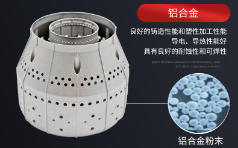
- Aluminum alloys (e.g., 6061, 7075): Due to excellent workability, strength to weight ratio and conductivity, a lightweight housing, radiator (conductivity: ~150 W/mk), frame and structural components are preferred. Anodizing provides excellent corrosion resistance and ionization.
- Copper and copper alloys (e.g., C110, C145 Tellurium Copper): In radiator, EMI shield and electrical contacts/buses, necessary for ultra-high thermal conductivity (up to about 400 W/MK). Cabinet copper provides enhanced machiningability for complex parts. Plating options (NI, AU, AG) enhance weldability and corrosion resistance.
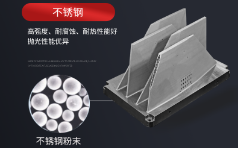
- Stainless steel (e.g. 303, 304, 316): Select corrosion resistance, strength and non-magnetic properties in sensitive instruments, medical equipment and robust fences.
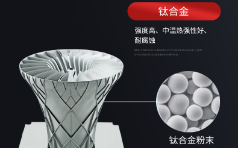
- Titanium (for example, Grade 2, Grade 5): Used in special strength to weight ratio, corrosion resistance and biocompatibility (for medical electronics).
- Plastics (engineering grades, such as PEEK, ULTEM, PTFE): For insulators, low friction components and high strength housings requiring dielectric properties.
Gregtime is not only a machine raw material; we provide seamless One-stop post-processing and completion service. This includes precision anodization, electroplating (NI, AU, AG), passivation, bead blasting, laser marking, critical cleaning of ultra-clean parts (medical/Aero), and custom packaging to ensure your components are ready for assembly.
CNC's successful design in electronics: Key considerations for engineers
Work effectively with your CNC partners to streamline production:
- tolerance: Clearly defined Critical tolerance. There are unnecessary inflationary costs of tension tolerance everywhere.
- Wall Thickness and Characteristics: Avoid extremely thin walls. Make sure you have enough space to access the tool near the deep bag or the inner corner. Discuss challenging features early.
- Internal radius: Rotating the tool is impossible. Specify the minimum acceptable angular radius or discuss the strategy with us.
- Material selection: Consider mechanical, thermal, electrical and cost factors in conjunction with Greatlight engineers. We can advise on manufacturing.
- Completion requirements: Specify features (EMI, solderability, biocompatibility) and cosmetic finish requirements.
Conclusion: Improve electronic manufacturing with Greatlight Precision
In the high-risk world of electronics, the quality, reliability and performance of individual components are fundamental. Five-axis CNC machining represents the pinnacle of precision manufacturing capabilities, thus achieving the complex, thermal efficiency and careful and precise parts required by modern equipment. Greglight is your dedicated partner in this field. With our advanced five-axis machining center, extensive material knowledge, a full suite of post-processing services, and a commitment to addressing complex manufacturing challenges, we enable innovators to push the boundaries of electronic products.
Don't compromise accurately. Experience huge differences. Contact Us Now Discuss your custom precise electronic component requirements and get a competitive offer. Let us build high-quality foundations for your next breakthrough electronics project.
FAQ: CNC machining of electronic devices with Greatlight
Q: Why choose CNC machining for my electronic housing or radiator on 3D printing?
A: CNC machining provides excellent material integrity, higher strength, better thermal conductivity (critical to the radiator), and smooth surface treatment directly on the machine. It is ideal for functional parts requiring tight tolerances, high dimensional accuracy and optimal thermal/electrical performance. 3D printing can be very useful for prototypes or complex internal geometries, but often requires a lot of post-processing to achieve comparable surface quality and material properties of the end-used electronic parts.
Q: Can your five-axis machine effectively handle complex radiator designs?
Answer: Absolute. This is a key advantage. Five-axis machining allows us to machining complex, curved fin structures, tapered designs and optimized geometry for maximum surface area and airflow without multiple settings, ensuring dimensional accuracy and surface quality are critical to thermal performance. Optimizing tool paths on our advanced machines ensures efficiency and speed.
Q: How to ensure that the electrical and thermal conductivity characteristics of materials such as copper are maintained?
A: We carefully select high-quality materials stocks from trusted suppliers. More importantly, CNC machining removes the material in a controlled manner without changing the internal grain structure or composition of the metal (unlike casting or sintering). Our process avoids the introduction of defects that damage conductivity. Post-surgery cleaning is also critical to remove contaminants that may hinder conductivity or welding properties.
Q: What sorting options do you recommend for aluminum electronic housing?
A: Powder coatings have excellent aesthetics and scratch resistance. Anodized agents (type II or type III - hard anodized) are ideal for durability, corrosion resistance, wear resistance and ionization, while also allowing for dyeing (type II). Bead blasting provides a uniform matte texture. We recommend based on functional requirements (EMI shielding, grounding requirements, cosmetic preferences and environmental exposure). Medical devices often require specific biocompatible finishes and critical cleaning.
Q: My components require extremely high tolerances (±0.01 mm). Can Greatlight achieve this in quantity?
A: Yes. Our advanced five-axis machines are able to hold very tight tolerances suitable for precision electronics. Consistently achieving this in volume involves consistent process control, tool path optimization, temperature control and strict quality inspection protocols (using CMM and advanced metrology equipment). We discuss key tolerances for pre-planning the best manufacturing strategy.
Q: Do you provide designs with Manufacturing (DFM) feedback?
A: Yes, absolutely. Our experienced engineering team provides free DFM analysis of your CAD files. We identified potential machining challenges early in this process (such as tool access, wall thickness issues, sharp internal corners, unnecessary tight tolerances) and suggested modifications to optimize your parts while keeping them functionally efficient and cost-effective production.
Q: What file formats do you need?
A: We prefer 3D CAD files in common formats such as Steps (.STP), IGES (.IGS) or SOLIDWORKS (.SLDPRT). 2D graphs in PDF or DWG format are also valuable for specifying critical dimensions, tolerances, surface surfaces, and material requirements. The more information we provide in advance, the more accurate our quotes will be.

点击右上角
分享给朋友吧







 长按图片保存/分享
0

