 钜亮五金-精密五轴数控加工服务

24H咨询热线:
180-2756-7310












定制服务热线
180-2756-7310

专业服务、快速报价
提供建模、免费改模
质量问题、免费重做
顺丰包邮、可开专票
High-precision CNC machining guide
发表时间: 2025-09-12 15:42:03
作者: 东莞市钜亮五金科技有限公司
浏览:
introduce
In the high-risk world of industrial manufacturing, a large number of CNC processing is the cornerstone of innovation. Although standard CNC machining is responsible for everyday components, the fields of large-scale parts, from aerospace engine mounts to wind turbine hubs, are unrivalled with precision, professional equipment and rigorous engineering expertise. As the industry pushes the boundaries between design complexity and materials science, the margin for error reduction has narrowed, making accuracy not only ideal but also unnegotiable.
This guide delves into the nuances of a large number of precise CNC machining and explores how state-of-the-art technologies and refined production methods can be combined to solve manufacturing challenges. We will also focus on Greatlight’s industry leader in five-axis CNC machining and how its solutions eliminate bottlenecks for metal parts that require micron-scale accuracy.
Define a large number of CNC machining
Large amounts of CNC machining refers to components exceeding the size of a typical working envelope (usually ≥2 meters on at least one axis) while maintaining tight tolerances (±0.02-0.0.5mm). Unlike smaller parts, these components face amplification challenge:
- Material pressure and tool deflection: Cutting forces can cause vibration and bending on large surface areas.
- Thermal management: Changes in heat distribution when processing distorted geometry.
- Multi-stage logistics: Handle, reposition and measure oversized parts without compromising accuracy.
Applications cover key sectors such as aerospace (landing gear installation), energy (hydropower shaft), defense (artillery mount), and medical machinery (MRI scanner frame).
Why five-axis processing changed the game
Although a 3-axis CNC machine is sufficient for simple geometry, large and complex parts require the agility of a five-axis system. Five-axis CNC machining allows cutting tools to move simultaneously along five axes (X, Y, Z, plus rotation on A and B axes), resulting in transformative advantages:
- Single-set accuracy: Eliminate repositioning errors by machining complex functions in a fixture.
- Enhanced finish: Optimize tool angles to maintain perpendicularity between contours.
- Reduced cycle time: Cut complex geometry faster by accessing hard-to-reach areas at the best angle.
- Material versatility: Effectively machine-hardened alloys (such as titanium or inconel with adaptive tool paths).
Greatlight uses five-axis technology to transform CAD blueprints into highly fusion metal components, achieving a tolerance of 0.03mm even on parts over 3 meters.
Greglight’s strategic advantages in large-scale manufacturing
As a vertically integrated five-axis CNC machining manufacturer, Greatlight combines advanced hardware, scientific process control and hands-on expertise to address industry pain points:
Core functions
- Advanced equipment: High torque five-axis gantry plant and horizontal diamond fleet equipped with real-time thermal compensation and vibration damping systems.
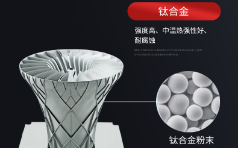
- Material mastery: Process aluminum alloy, stainless steel, tool steel, brass, copper and exotic metals (Ti, Hastelloy®). Heat-resistant alloys specifically for extreme environments.
- End-to-end service: Milling, turning, grinding and comprehensive post-treatment - including anodizing, passivation, powder coating and CMM inspection.
Engineering-driven solutions
- Dynamic stiffness analysis: Software simulation predicts deflection risk before processing, preempting size drift in advance.
- Tool route intelligence: Efficient three-bar milling strategy minimizes pressure on large workpieces.
- Metrics in the process: On-board detection and laser scanning verification size mid-term production.
Operational Excellence
- Rapid prototype production: Agile workflow slash delivery time.
- Cost control: Economic nesting strategies and tool lifespan optimization are low per-part cost without sacrificing quality.
- Manufacturing Design (DFM): Collaborative engineering support to optimize processability design.
Key application conversion industry
Greatlight has a large number of precision CNC parts that are innovatively manufactured by Greatlight on a global scale:
- Aviation/wind turbines: Impeller and transmission housing with aerodynamic profiles require uninterrupted surface continuity.
- Robotics: Heavy duty robot arm, with integrated bearing seats that require ±0.01mm concentricity.
- semiconductor: Etching chamber components with ultrasmooth surface (RA <0.4μm).
- car: Electric vehicle battery tray with coolant channel and leakproof interface.
in conclusion
Large-scale precision is not just about size, but about engineering perfection in three dimensions. Large CNC machining projects test the limits of machinery, materials and human creativity. Greatlight is a key partner in the field, blending five-axis flexibility with strict process discipline. Their one-stop workflow, from raw material sourcing to certified parts delivery, can solve the complexity of conventional manufacturers. As tolerances tighten and sizes expand, Greatlight's coordinated approach to a large number of precision machining will go beyond specifications, allowing customers to innovate fearlessly.
Ready to change your design? Connect with Greatlight to discuss your project - Custom Precision Metal parts, skilled in machining and competing for price.
FAQ (FAQ)
Q1: What is eligible "Big" In Precision CNC machining?
"Big" It usually means that parts exceed 1.5 million in one dimension. Greglight handles components up to 8m x 3m x 2m and weighs up to 40 tons.
Q2: How does a five-axis machine handle thermal distortion of large parts?
Multi-axis machines minimize distortion through each area, emulsion cooling system and iterate shorter cutting sessions "Measurement and calibration machine" Use real-time metrology cycles.
Q3: Can you use a five-axis system to machine composite materials?
Yes. We use specialized anti-pollution tools to treat engineered plastics (PEEK, PTFE), carbon fiber laminates and metal composite hybrids.
Question 4: What tolerances can be achieved on large aluminum structures?
In the case of temperature controlled environment and stress-compliant blanks, we always maintain ±0.03mm of ±0.03mm on aluminum alloys.
Q5: Do you assist in the design of parts?
Absolutely. Our engineering team provides free DFM analysis, suggest draft angles, tool access optimizations and major alternatives to improve results.
Question 6: What inspection methods can ensure great accuracy?
A combination of laser tracker (for 3D profile scanning), portable CMM arm and on-machine detection. Includes ASME Y14.5 GD&T certification report.
Question 7: How to manage tool wear during long machining cycles?
The adaptive tool path automatically adjusts the feed rate based on sensor feedback. We also use diamond coating tools for extended operation of abrasive alloys.
Question 8: What is the lead time for titanium turbine blades with a length of 600mm?
It takes 5-7 days to speed up the prototype. The serial production cycle is an average of 3 weeks. References to adapted emergency requests via Express.

点击右上角
分享给朋友吧







 长按图片保存/分享
0

