 钜亮五金-精密五轴数控加工服务


24H咨询热线:
180-2756-7310












定制服务热线
180-2756-7310

专业服务、快速报价
提供建模、免费改模
质量问题、免费重做
顺丰包邮、可开专票
Corrosion-resistant CNC alloy processing
发表时间: 2025-09-14 00:35:54
作者: 东莞市钜亮五金科技有限公司
浏览:
Face the challenge: Master corrosion-resistant alloy CNC processing to require application
The relentless pursuit of performance, life and safety in key industries will often depend on one stubborn characteristic: corrosion resistance. Ordinary metal is completely inadequate when components face harsh chemical environments, brine atmospheres, extreme temperatures or require minimal maintenance in just a few decades. This is where the complex interactions of corrosion-resistant alloys and advanced manufacturing capabilities such as five-axis CNC machining become crucial. Greatlight's position is the intersection of these demanding requirements, providing unparalleled expertise in machining the toughest materials for the most challenging applications.
Why corrosion resistance is not just coating
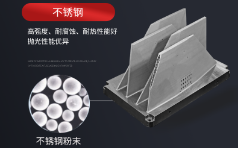
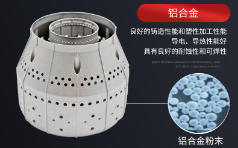
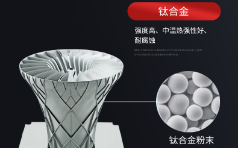
Often, corrosion resistance is mistakenly seen as something you add back Manufacturing - plating, paint or coating. Although the surface treatment has its place, for truly mission-critical components, the metallurgy itself must Inherent resistance. The paint can be fragmented, scratched, worn or degraded, exposing a fragile matrix from below and causing catastrophic failure. Corrosion-resistant alloys (CRAs) like stainless steels (316L, 17-4PH, 304), titanium alloys (Grade 2, 5 Ti-6Al-4V), nickel alloys (Inconel 625, 718, Hastelloy C276, Monel), and specialized aluminum alloys form passive oxide layers that self-repair, offering robust protection built into the very fabric of the material.
The necessity of precise processing of CRA
However, these powerful materials present unique processing challenges. Their properties - high strength, toughness, tendency to work hardening and low conductivity - are well known to be difficult to cut. Attempting to process CRA with standard techniques or insufficient equipment usually results in:
- Too much tool wear: Carbides quickly reduce cutting tools, increase costs and lead to mid-term processes that are inaccurate in size.
- Poor surface effect: Incorrect speed, feed or tool path leaves a rough, hardened surface that can actually negative Corrosion resistance and creates pressure lifters.
- Work hardening: Certain alloys (especially austenitic stainless steel and nickel alloys) can harden quickly when improperly cut, making subsequent processing more difficult and can lead to cracking.
- Thermal distortion: Low thermal conductivity captures heat at the cutting interface. This heat can distort the part, changing its metallurgy (impact corrosion resistance) and damage the tool.
- Complex geometric limitations: Simple 3-axis machines often require multiple setups and complex fixtures to perform complex parts, increasing costs and the possibility of errors, especially when it comes to hard-to-hold CRAs.
Five-axis CNC advantages: Conquer the CRA challenge
This is the specialization of Greatlight in Advanced Five-axis CNC machining A game-changer for being a corrosion-resistant part:
- Unrivaled geometric freedom and reduction settings: Complex shapes, deep cavity, undercut and composite angles are common in aerospace, medical implants or chemical process parts. This is revolutionary for CRAs and minimizes alignment errors between settings that may compromise critical tolerances.
- Best tool directions and access: Dynamic tool positioning allows cutting tools to maintain the optimal orientation of each particular cut throughout the complex geometry. This can improve chip evacuation (critical in some fudge alloys like aluminum or titanium grades), reduce cutting forces, and allow access to impossible features using a 3-axis machine - all of which helps improve tool life and surface effect.
- Upper surface integrity: Accurately control tool contact angle and continuous, smooth cutting paths minimize the occurrence of work hardening and produce near mesh parts with special surface finishes. This original surface is the basis for maximizing the inherent corrosion of the alloy. Five-axis milling usually eliminates the need for secondary grinding or polishing.
- Enhanced process stability and heat management: The ability to dynamically tailor tool paths by optimizing chip formation and evacuation helps manage cutting forces and assist dissipation. This reduces thermal stress on the tool and workpiece, minimizing distortion and protecting metallurgical integrity.
- Efficiency and cost-effectiveness: While five-axis machining may have high initial programming complexity, setup, fixtures, lead times, drastic reduction in waste due to errors and secondary finishing operations often translate into substantial overall cost savings and faster delivery, especially for complex CRA parts.
Material expertise: the foundation of success
choose Correct Corrosion-resistant alloys are just the first step. Processing its success requires in-depth understanding of materials science and proven processing parameters:
- Substance-specific strategies: Greatlight engineers have an in-depth understanding of different CRA families - understanding the quirks of machining double-chain stainless steel with titanium with taxes. This knowledge determines tool selection (grade, coating, geometry), cutting parameters (speed, feed, cutting depth), coolant application (type, pressure, volume) and tool path strategies for each unique material.
- Easing and strengthening work: Careful applications such as using sharp tools with specialized geometry and sharp tools using climbing milling to prevent problematic hardening areas.
- Thermal management: Optimized cutting data, precisely targeting the high-pressure coolant at the cutting interface (promoted through the five-axis direction), and using appropriate tool coatings to absorb heat and protect parts and tools.
Huge difference: Beyond processing
In addition to advanced five-axis technology and material proficiency, Greatlight offers a comprehensive solution:
- One-stop completion of expertise: We won't stop processing. We provide critical post-processing services tailored to CRAS, such as:
- Precise passivation of stainless steel for maximum corrosion resistance.
- For electropolishing of ultra-smooth, contaminant-free surfaces.
- Expert blasting (media type and pressure control) for final texture or removal of oxides.
- High fusion cleaning process to remove any processing residue.
- Quick customization and prototype: Our capabilities enable us to quickly transform your design into corrosion-resistant components into high-precision prototypes or production parts, thus accelerating your development cycle.
- Quality assured: Strict inspection protocols ensure dimensional accuracy and surface quality meet the strictest standards required in industries such as aviation, medical and oil and gas.
Conclusion: Cooperate with uncompromising performance
Corrosion-resistant alloy processing is a rigorous discipline, material science, cutting-edge manufacturing technology and meticulous process control fusion. The inherent challenges of these important materials are not only obstacles. They are parameters that require expertise and complex tools. Five-axis CNC machining has its geometric freedom, improved accuracy and excellent finishing capabilities, which are often important keys to unlocking the full potential of CRA on complex, critical components.
Greatlight leverages its advanced five-axis capabilities, extensive metallurgical expertise, and a full-service solution to effectively address these challenges. We learned that the resistance of parts to degradation is not just metal, but about how metal changes. By choosing Greatlight, you can choose a partner dedicated to providing corrosion-resistant components that work reliably in the world’s harshest environments, built with precision, speed and value. Let us turn your hardest demands into lasting reality.
FAQ: Corrosion-resistant CNC alloy processing
1. Q: What is the most common corrosion-resistant alloy you machine?
A: We regularly machine a wide spectrum, including but not limited to: Stainless steels (304, 316/L, 303, 17-4PH, 416, custom grades), Titanium alloys (Commercially Pure, Ti-6Al-4V/ Grade 5, Ti-3Al-2.5V), Nickel alloys (Inconel 625, 718, 825, Hastelloy C276, X, B2, Monel 400, K500) and highly corrosive aluminum alloys (5052, 6061-T6, 7075-T6, 2024-T3).
2. Q: Why choose five-axis machining to make my corrosion-resistant parts relatively simple three-axis selection?
A: Five-axis machining effects of complex geometric shapes usually required in critical CRA applications (aerospace pipelines, medical implants, valve bodies). It can reduce the settings to improve accuracy, allowing optimal tool positioning to improve surface finish and tool life, can process difficult-to-reach functions in a single fixture and ultimately produce higher integrity parts with excellent corrosion performance, often faster, more cost-effective complex designs.
3. Q: Are corrosion-resistant alloy machines expensive?
A: Usually, yes. CRA is harder, stronger or more fudge than standard steel or aluminum, causing tools to wear faster, cut slower, and often require more professional tool and machine power. but, Total cost Must consider value - Component life, reduce maintenance and prevent catastrophic failures. Greatlight optimization process to maximize efficiency and minimize processing costs within these inherent constraints.
4. Q: How to ensure that the final part retains maximum corrosion after processing?
Answer: This is very important. We adopt a variety of strategies: using material-specific processing parameters to prevent work hardening/overheating, implement very fine surface treatments directly from the machine, select non-resistance coolant, perform post-cut bonding, and provide precise finishing services such as precise diffuse or specially designed to enhance the power of the oxide layer. The five-axis function itself makes a significant contribution to reducing treatment and achieving superior surface quality.
5. Q: Can you handle rapid prototypes and mass production in corrosion-resistant alloys?
Answer: Absolute. Our advanced five-axis CNC machining center and expertise enable us to efficiently produce high volume, highly complex prototypes for design verification and development, and seamlessly transition to larger production runs. We utilize process optimization to ensure cost-effectiveness of each volume.
6. Q: Which industries usually require corrosion-resistant CNC processing?
A: Key sectors include aerospace and defense (engine parts, structural components), medical and surgical (implantation, instrumentation), oil and gas (downhole tools, valves, accessories), chemistry and petrochemical (pumps, pumps, reactors, seals), marine and off-road and off-road (ocean and off-code), offshore (hardware, sensors), and food and beverage (food and beverage equipment).
7. Q: I have a complex design that requires dimension accuracy. What tolerances can you keep with Cras?
Answer: Five-axis CNC machining essentially provides high accuracy. For typical CRA machining, keep tolerances (±0.001 in (±0.025 mm) within ±0.001 in (±0.025 mm) for key features on appropriately sized parts. With specific processes and meticulous verification, stricter tolerances can be achieved.
8. Q: How does Greatlight deal with the challenges of hardening work during processing?
A: Our strategies include using specialized geometry to use very sharp cutting tools, adopting specialized geometry for solid materials, adopting specific tool paths to maintain consistent chip load (avoid friction rather than cutting), temperature control and chip evacuation with reliable high-pressure coolant, and selecting the best spindle speed and feed rate based on deep knowledge.
Ready to deal with the most demanding corrosion challenges? Contact us today. Our team of experts is ready to work with Precision CNC machining corrosion components to leverage five-axis technology and integrated finishing services for unparalleled performance and value.

点击右上角
分享给朋友吧







 长按图片保存/分享
0

