 钜亮五金-精密五轴数控加工服务

24H咨询热线:
180-2756-7310












定制服务热线
180-2756-7310

专业服务、快速报价
提供建模、免费改模
质量问题、免费重做
顺丰包邮、可开专票
CNC machining: an accurate guide
发表时间: 2025-09-14 11:13:17
作者: 东莞市钜亮五金科技有限公司
浏览:
Unlocking manufacturing excellence: the function of five-axis CNC machining
Accuracy is not only the goal of modern manufacturing, but also the cornerstone of innovation. As the industry lies in the boundaries of aerospace, medical equipment and automotive engineering, demand for complex, high-tolerance components has increased exponentially. This is Five-axis CNC machining Completely transforming the possible ways to transform raw materials into complex masterpieces with microscopic accuracy. For engineers and product developers dealing with these challenges, understanding this technology is not optional and is essential.
What is five-axis CNC machining?
CNC (Computer Numerical Control) machining uses programming software to guide cutting tools in subtraction manufacturing. Traditional 3-axis machines move tools linearly along X, Y and Z planes, but Five-axis CNC increases rotational motion Along two additional axes (usually A and B). This allows the cutting tool to approach the workpiece from almost any angle in a single setup. Imagine engraving a turbine blade or biomedical implant without repositioning the parts – the shaft shaft makes this effective accuracy a reality.
Why five axes? Key Advantages
1. Complex geometric shapes, simplified
Five-axis machining eliminates multiple settings for the tilt function. Curved surfaces, undercuts and organic shapes such as aerospace impellers or surgical tools are processed in one operation. This reduces human error and ensures perfect alignment of all geometries.
2. Top surface finish
Continuous tool contacts the workpiece, optimizes cutting angles and reduced vibrations to smoother finishes. This minimizes after-processing and is critical to aesthetics and functionality, such as automotive manifolds or optical components.
3. Faster production and lower cost
The combined setup cuts machining time by up to 70% compared to the 3-axis method. Less fixtures, less manual intervention and minimize waste conversion to cost efficiency - Prototyping and Mass production.
4. Unrivaled precision in exquisite materials
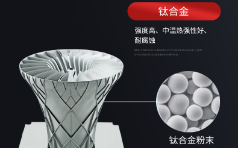
Hard metals such as titanium or brittle composites require gentle, precise tooling. Five-axis machines maintain optimal cutting force and prevent deflection and retain material integrity for critical applications.
5. Innovation without compromise
From lightweight aerospace lattices to fluid dynamic medical parts, five axes enable the design that once was "Unable to shoot." It enables engineers to innovate freely.
Materials and Applications: Greatlight exceeds
Greglight uses five-axis function to process various materials:
- Metal: Aluminum, stainless steel, titanium, brass and exotic alloys.
- Plastics and composites:PEEK, PTFE, carbon fiber.
- Special Applications: Rapid prototype, mold and high-clothing assembly.
Industry Services:
- aerospace: Turbo blade, engine frame.
- Medical: Implants, surgical instruments.
- car: Cylinder head, suspension parts.
- vitality: Pump housing, valve system.
Why you look like your strategic partner
exist Greatwe are more than just manufacturers - we are the precise partners. Our approach combines state-of-the-art technology with deep industry expertise:
- Advanced equipment: Industry-leading five-axis CNC center with real-time monitoring of micron-level tolerances (±0.005mm).
- End-to-end solution: From CAD/CAM support to post-treatment (anodizing, polishing, electroplating), we provide ready-made parts.
- Agile customization: Fast turnaround of custom designs, whether for single-type prototypes or batch production.
- Cost-efficiency: The best machining strategy maximizes the use of materials and minimizes waste, saving you.
- Quality Commitment: Perform rigorous process checks on CMM and ISO 9001 compliance to ensure reliability.
Turn your vision into reality
Five-axis CNC machining is not just about removing metal, but about adding value. By eliminating design compromises and accelerating production, it enables the industry to build lighter, stronger and smarter industries. For engineers facing a pressing deadline or complex geometry, work with experts in the form of images Great Meaning more than 20 years of expertise without sacrificing budget or timeline.
Ready to improve your project? Contact Greatlight for a quote about custom precision parts – flawless, competitive and on time delivery.
FAQ: The mystery of five-axis CNC machining
Q1: What is the difference between five-axis CNC and 3-axis or 4-axis?
A: Although the 3-axis machine is cut in three linear directions (X, Y, Z), the five-axis increases rotation around the two axes (e.g., a tilt tool or a rotating workpiece). This allows for processing complex angles without repositioning, improving accuracy and speed. Only one rotation axis is added to the four axis.
Q2: What materials can be processed using five-axis CNC?
A: Almost all processable materials: metal (aluminum, steel, titanium), plastic, composite materials, and even certain ceramics. Greatlight specializes in challenging alloys and high-performance polymers.
Q3: Are five-axis suitable for prototypes?
Answer: Absolutely! It accelerates prototypes by generating complex parts in one setup. Ideal for functional testing and design verification.
Question 4: How does Greatmight ensure the accuracy of tight tolerance items?
A: We combine rigid machine platform, precise tools and real-time metrology. Verify parts using a coordinate measuring machine (CMM) to meet specifications within microns.
Q5: Can you handle surface finishes?
A: Yes - We offer milling, turning, grinding and post-treatment such as anodizing, powder coating or laser etching to meet your requirements.
Q6: Which file formats do you accept for part design?
A: We use standard CAD formats: Steps, IGES, SOLIDWORKS and AUTOCAD. Our engineers optimize the manufacturability of tool paths.
Question 7: Are five-axis parts more expensive?
Answer: Not sure. Although the machine is costly, reduced setup and faster cycles usually reduce the total cost per part with multi-stage 3-axis machining.
Question 8: Which industries benefit the most from the five axes?
A: Aerospace (turbines, frames), medical (implant, equipment), automobile (performance components) and energy (valves, connectors) - any field requires sophisticated precision parts.
Work with Greatlime- Accurate engineering conforms to ruthless innovation. Your most challenging design is worth mentioning.

点击右上角
分享给朋友吧







 长按图片保存/分享
0