 钜亮五金-精密五轴数控加工服务


24H咨询热线:
185-8846-0782












定制服务热线
185-8846-0782

专业服务、快速报价
提供建模、免费改模
质量问题、免费重做
顺丰包邮、可开专票
Designing 3D printed Medusa headdress
发表时间: 2025-09-20 16:48:55
作者: 东莞市钜亮五金科技有限公司
浏览:
Gorgon Reborn: Making Myths with Metal 3D Printing - In-depth Design of Medusa Headdress
The myth of Medusa, the snake of Gorgon, the gaze of the snake turns people into stones, attracting humans for thousands of years. Her face is effective, terrifying, and iconic. Converting this powerful symbol into a wearable work of art, especially a headdress, presents a unique challenge. This is where precision, flexibility and artistic potential Metal 3D printing Shine, enabling designers and creators to bring truly unique and powerful Medusa headwear to life. From initial concepts to tangible, compelling accessories, this journey is a fascinating interaction between artistic, mythological and cutting-edge manufacturing.
Conceptualization: Beyond the Snake
Designing Medusa headdresses started early before drawing the first CAD series. It requires a deep understanding of the aesthetics and narrative required:
- Explain the myth: Is this classical Greek (severe, terrible) or is it a more modern, stylized shot? Should it evoke horror, power, grace or mix?
- Ergonomics and wear resistance: The headdress must be balanced, comfortable (intentionally imposed on the unwired situation), and securely securely. The distribution of weight - especially with numerous serpentine elements is crucial - is crucial.
- Serpentine Symphony: Deciding the portrayal of the snake is the key. Should they coil and texture realistically? Abstracted into flowing tendrils? Actively prepare for a strike? Will they frame their faces, rise sharply or cascading downwards?
- Scale and impact: Is it a subtle circle with grocery snakes or a dramatic crown that hangs over the wearer's head? Proportion affects substance selection, weight and printing strategy.
Digital Genesis: Modeling the Crown of Gogon
As the concept consolidates, design uses CAD (Computer Aided Design) software to enter the digital realm. This stage is where Precision conforms to artistic quality:
- Parameter accuracy: CAD allows for the creation of complex, interlocking serpentine shapes that are nearly impossible to engrave or traditionally cast. The coils, proportional textures and fanged details of each snake can be carefully controlled.
- Biologically inspired modeling: Tools such as engraving modules or dedicated digital engraving programs in advanced CAD software can create highly organic, flowing serpentines with realistic scales, muscle definitions and lifelike poses. Fragmented surface modeling ensures smooth transitions.
- Dynamic composition: It is crucial to achieve a sense of movement. CAD allows designers to iterate endlessly over the snake’s arrangements (their orientation, overlap and interact) to create visual flow and vivid, twisting effects.
- Structural analysis (simulation): Basic Finite Element Analysis (FEA) simulations can be digitally integrated to identify potential weaknesses in thin snake necks or complex joints that may fail during printing or wear, thereby reinforcing before the promised metal.
Realizing the Myth: The Power of Metal 3D Printing
This is where Vision really fits modern manufacturing. Printed Medusa headdresses that cannot be realized through traditional methods:
- Unparalleled complexity: Metal additive manufacturing (AM), especially techniques such as selective laser melting (SLM) or direct metal laser sintering (DML), build the upper head layer through microscopic layers in metal powder. This allows for seamless integration of complex internal passages, complex primers required in realistic serpentine forms, and countless small and delicate parts directly within the main structure.
- Majesty of the materials:
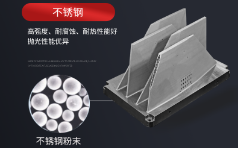
- Stainless Steel (316L): It has excellent strength, corrosion resistance (critical for a piece to wear near the skin) and polishability. A versatile and cost-effective option for complex designs. Gremight excels in handling high-definition stainless steel components.
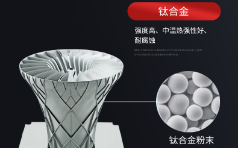
- Titanium (Ti6al4v): The pinnacle of lightweight strength and biocompatibility. It is crucial to minimize weight without sacrificing durability. With a unique grey finish that enhances the modern metal gorgon aesthetic.
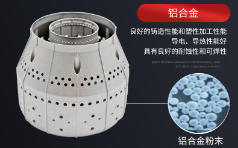
- Bronze or copper alloy: Over time, their warm tones and ability to develop natural patina provide stunning visual appeal and adds to the old charm. Careful process control is required during printing and post-processing. Greatlight's expertise extends to complex printing of challenging alloys.
- Printing Strategy and Support Engineering: Success depends on meticulous printing preparation:
- Support structure: Essential for overhanging elements such as open snake jaws or striking poses. These temporary structures are sacrificed to print and then deleted. Their location requires deep expertise to minimize scarring and post-processing labor while ensuring successful printing.
- direction: How headwear on the build board affects the finish, supports demand and potential thermal stress. Optimization direction is crucial to quality and cost.
- The solution is important: Fine layer heights (e.g. 20-30 microns) are often required to capture complex details of scales, fangs and eyes without the need for a lot of manual rework. Greglight Leverabes is capable of advanced machines with ultra-high resolution metal prints.
Art of Transformation: Post-processing Perfect
Appearing from the printer is an important milestone, but the journey is not over yet. Original 3D printed metal parts require precise finishing:
- Support removal: Carefully extract the support structure using specialized tools (e.g., Cutters, EDM) to avoid damaging fragile underlying functions.
- Surface Improvements:
- blasting: Media blasting (sand, glass beads, alumina) cleans the surface and provides a consistent matte surface that hides minor layered lines and supports scars.
- Hand polishing and finishing: For high gloss areas or inaccessible complex details that are inaccessible to the machine. Skilled craftsmen will carefully polish and polish snake scales, fangs and smooth surfaces. This stage is crucial for visual appeal and wearer comfort (eliminating sharp edges).
- roll: Vibration or rotation of a specific medium can further smooth the surface and edges, thereby adding gloss or satin finishes.
- Chemical treatment: Passivation (for stainless steel) enhances corrosion resistance. Anodizing (for titanium) can introduce amazing colors. The chemical softening of bronze/copper will produce a unique aging or textured effect.
- Assembly and integration (if applicable): For multi-part printing, precise alignment and connection (welding, bonding, mechanical fixing) ensures structural integrity and seamless final work. This may include integration setup "Eye" (Gemstone, glass) enters the snake's head.
Conclusion: Myth meets metal innovation
Designing and manufacturing Medusa headdresses through metal 3D printing is much more than creating jewelry. This is the act of modern alchemy. It blends ancient storytelling with cutting-edge technology, breaking the boundaries of wearable art. The complex serpentine form, requiring aesthetic elaboration and structural integrity, finds a perfect implementation in the precision and freedom of additive manufacturing.
Metal 3D printing allows for details, complexity and material expression levels that traditional methods cannot match. The result is that the headwear is not only worn, but it is indeed reflect The powerful, complex nature of its mythical inspiration. It becomes a testament to the vision of designers, the boldness of the wearer, and the transformative power of technology mastered by professional manufacturers. Such works are far from turning others to stone, and will inevitably attract people's attention, cause dialogue, and become a unique artifact of contemporary creativity.
FAQ: Making Medusa Heads of Medusa
Q1: How much does a 3D printed metallic Medusa headdress usually cost?
A: The cost varies greatly depending on size, complexity (number/complexity of snakes), material selection (titanium>bronze/stainless steel>aluminum), required resolution, surface finish level, necessary support structure and labor. While simpler designs may start to be lower, the complexity inherent in real Medusa’s work often requires high-end AM processes and significant post-processing, which adds to the investment. Providers like Greatlight can provide accurate quotes based on specific design documents and requirements.
Q2: Which metal is best for Medusa headdress?
A: No single "The best" Elements - Depend on the design objectives:
- Stainless Steel (316L): Best All-round Player: Corrosion-resistant, corrosion-resistant, cost-effective complex shapes.
- titanium: Best for large/lightweight parts, excellent strength to weight ratio, biocompatibility.
- Bronze/Bronze: Best for unique aesthetics, warm tones, exquisite patina abilities, but it is more challenging to print and finish accurately. Discuss your vision and budget with the manufacturer for the best choice. Greglight can provide advice on wearability and aesthetics on material properties.
Q3: How long does it take to make one?
A: There are multiple stages of the timetable:
- Design/final: Days to weeks (various).
- Print preparation (simulation, support gen): 1-3 days.
- Actual printing: For large, intensive high resolution designs, ranging from very small parts to over 60 hours.
- Post-processing: Highly variable - Support removal (1-2 days), thorough finishing/polishing (days to weeks for intricate details).
Plan a few weeks from final design to completion. Established manufacturers like Greatlight offer detailed timelines.
Question 4: Can I make it wearable for a long time?
A: Yes, but key considerations are required:
- Weight distribution: Design optimization center of focus. Lightweight materials (e.g., internal titanium lattice structure) can help.
- Suitable and comfortable: Internal profile must Keep the head smooth and ergonomic.
- Fill/Belt: The safety of the internal filling/comfort layer and adjustable belt/buckle are often critical for comfort during wear. Precise printing ensures accurate fit.
- Material suitability: Biocompatible materials (such as titanium, some stainless steels) are ideal for skin contact.
Q5: The durability of 3D printed metal headwear?
A: With proper post-processing, the proper design and manufacturing of metal 3D printed parts can be very durable. The near-filled density achieved by processes such as SLM/DML is close to that of the forged metal. Thin snake neck or details remain potentially fragile points; the design reinforces these areas where possible. High-quality post-treatment eliminates stress points and smooths the surface to prevent cracks. Like any gorgeous jewellery, it should be carefully processed and stored. Greatlight ensures material integrity through strict process control.

点击右上角
分享给朋友吧







 长按图片保存/分享
0

